It converts seismic oscillations to electricity, piezoelectric effect and wireless electricity …nikola tesla wasn’t doing anything new.
I believe that such a complex machine would utilize both electrical and mechanical vibrations. Tesla built a couple devices which generated mechanical vibrations including his “earthquake” machine (steam-powered oscillator) and a vibration (health) platform upon which people would stand. I also recall reading an article confirming that his wireless power system would utilize both electrical and sound vibrations.
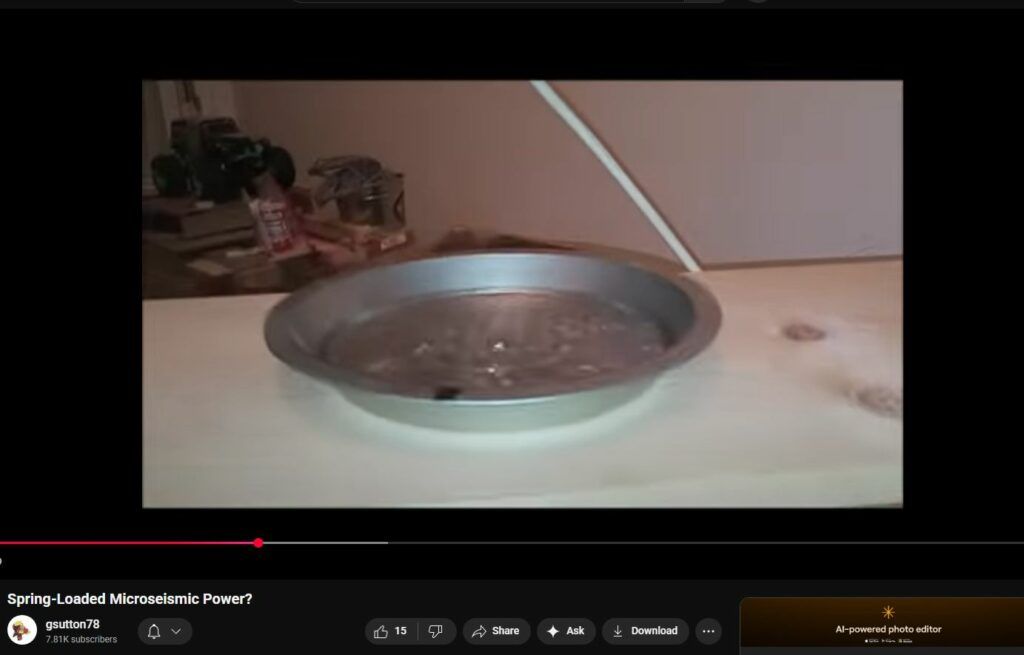
Transcript
Click to reveal
0:00
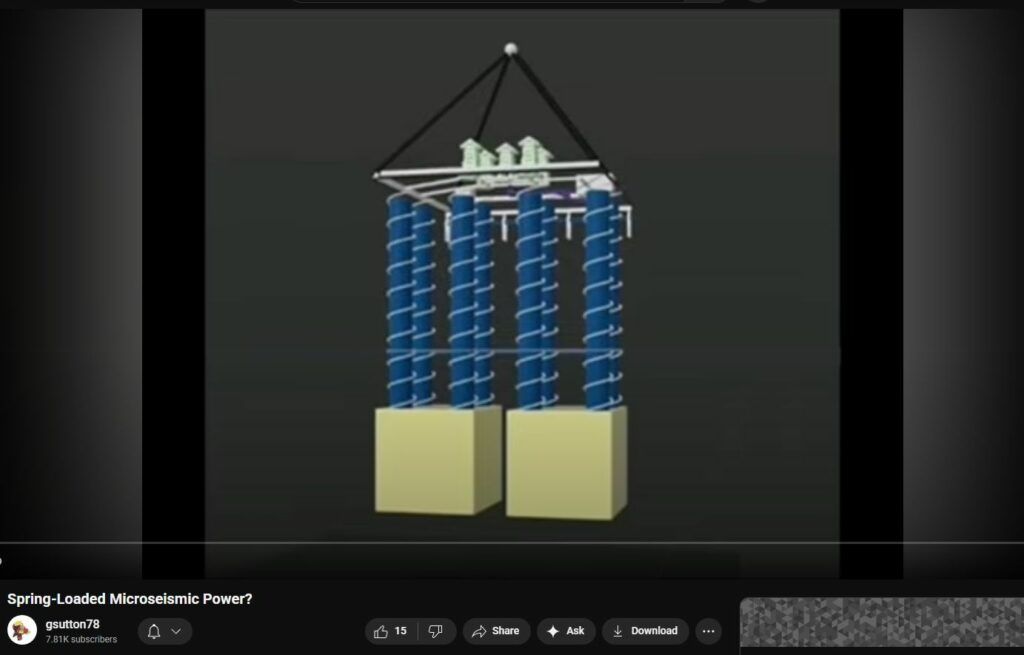
So this curious contraption was made in
0:02
the attempt to deduce a possible
0:04
function of the mega structure that is
0:06
alleged to be concealed beneath the
0:07
pyramid of Coffrey.
0:09
The SAR rendering appears to possess
0:11
definitive vibrational elements similar
0:13
to what are called vibration tables as
0:16
well as seismometers.
0:19
Both devices incorporate spring and mass
0:21
elements placed in series.
0:24
Seismometers receive and display seismic
0:26
energy while vibration tables apply
0:28
vibrational forces to a mass. Put the
0:31
two together and we'd have a device
0:33
which can receive seismic energy and
0:35
convert it into a vibratory force.
0:38
This force could be used for many
0:40
different purposes.
0:43
The top platform of the SAR rendering
0:45
supports what looks like several
0:46
unflyably heavy superructures.
0:49
The top view shows two of what appear to
0:51
be super massive prisms. The one on the
0:54
right being rectangular and about twice
0:56
the size of the one on the left, which
0:58
is more of a cube.
1:00
The larger rectangular one especially
1:02
resembles what are known as the black
1:03
boxes of the sarapium of Sakara.
1:06
Believed to be sarcophagi of the sacred
1:08
apis bulls of the ancient Egyptian
1:09
religion,
1:11
these boxes apparently weigh in excess
1:13
of 100 tons each.
1:16
But the dimensions of the prism on the
1:18
subterranean structure appear to be much
1:20
much larger, perhaps closer to 450 ft
1:23
long with a width of 200 ft.
1:27
These figures come from the supposition
1:29
that the SAR rendering it is to scale.
1:32
In previous videos, we saw how the
1:34
apparent tuning forks mounted on the
1:36
structure would be about 300 ft long if
1:38
scale, as they appear to be about 17th
1:41
the length of the exposed portions of
1:43
the shafts, which are 2100 ft.
1:47
300 ft would be a length nearly equal to
1:49
the height of the Statue of Liberty from
1:51
the base. And if so, then the length of
1:54
the tuning force can be used to
1:55
approximate the dimensions of the other
1:57
superructures.
1:59
If the height of the larger prism is the
2:01
same as the width, then the total volume
2:03
could be up to a colossal 18 million
2:06
cubic feet.
2:08
Assuming that the monolith is composed
2:10
of solid limestone, then the weight
2:11
would be about 1.35 million tons.
2:15
This figure is 818 times the weight of
2:17
the famous forgotten stone, the heaviest
2:20
stone at Bellback in Lebanon. A monolith
2:23
which weighs a mass of 1650 tons.
2:27
Even if the proposed prism is hollow
2:29
with 50% empty space, that's still an
2:32
unbelievable 650,000 tons.
2:36
The mass of the smaller prism would then
2:38
be about half of these proposed figures.
2:42
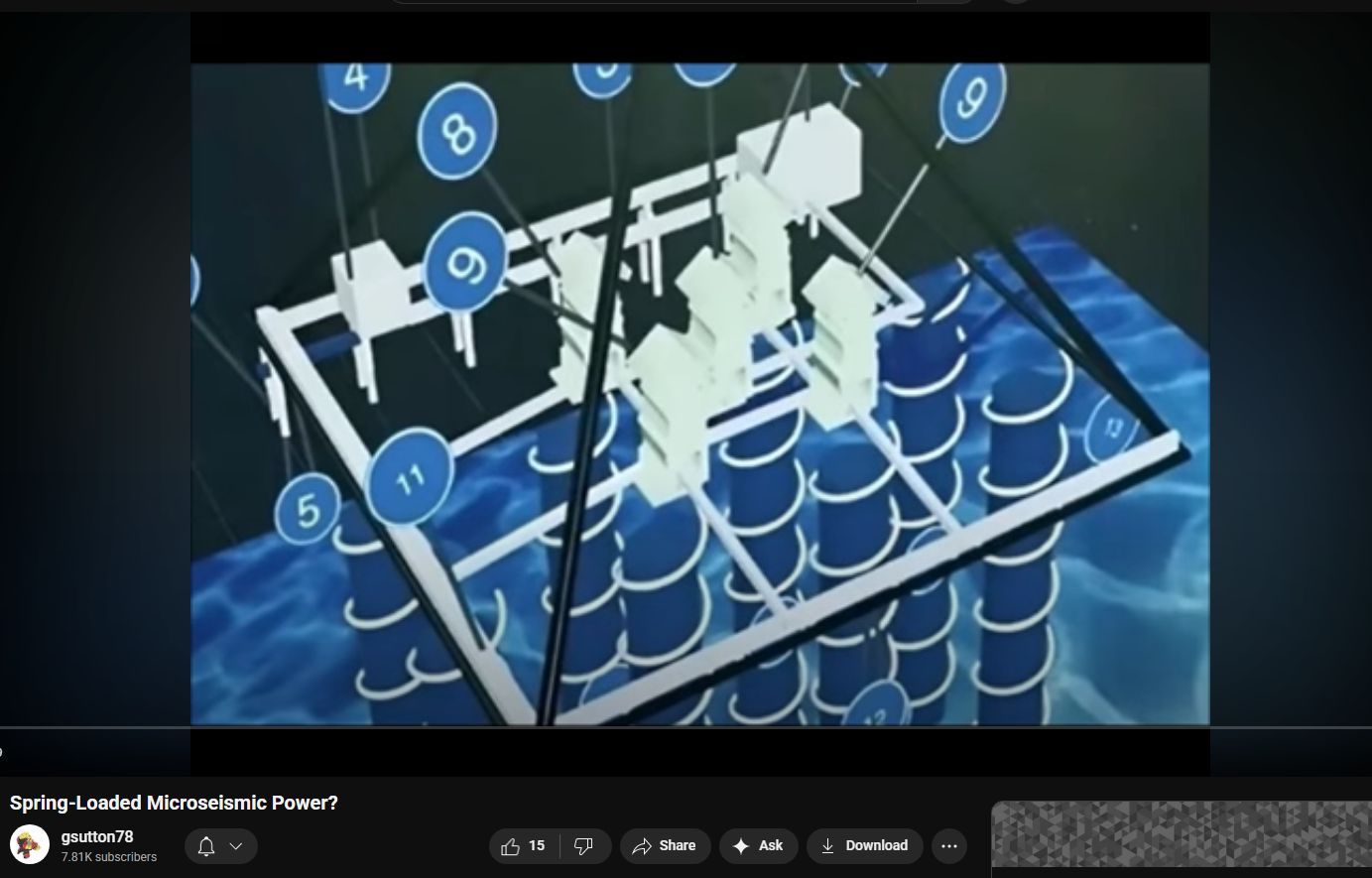
We can also see that there are five
2:44
stress relieving chamberlike
2:45
superructures.
2:47
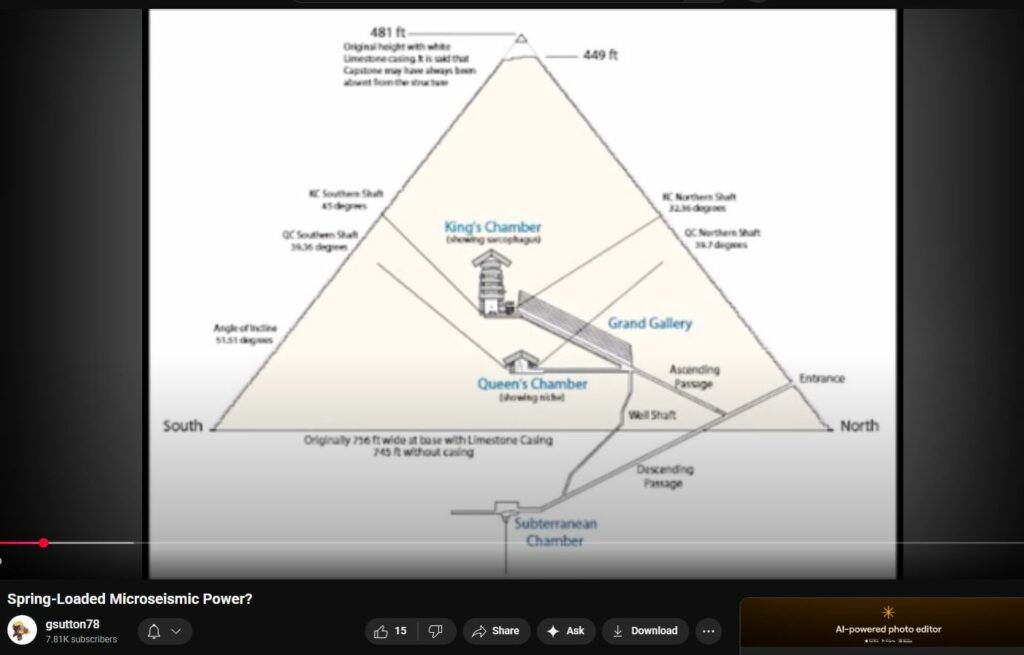
A stress relieving chamber superructure
2:49
is composed of a series of five separate
2:52
horizontal spaces layered alternately
2:54
with massive granite slabs.
2:57
The mainstream consensus for the purpose
2:59
of this assembly is to distribute the
3:01
immense weight of the partial
3:03
surrounding mass of the pyramid above
3:05
the king's chamber preventing it from
3:07
collapsing.
3:09
It is a structural feature found only in
3:11
the Kufu pyramid as it is the largest
3:13
and heaviest of the three.
3:16
However, there are alternative theorists
3:17
who refute the mainstream consensus
3:19
claiming that the relieving chambers
3:21
don't actually relieve any pressure and
3:23
hence serve an entirely different
3:25
purpose.
3:27
The total height including the gable
3:29
roof is estimated to be up to 213 ft
3:32
with the total assembly weighing in at a
3:34
colossal 2500 tons.
3:37
This is 50% heavier than the bailbeck's
3:40
forgotten stone. But the proposed
3:42
coffrey subterranean mega structure has
3:44
five of these assemblies.
3:46
If they are the same size of the one
3:48
inside of the Kufu pyramid, then their
3:50
combined mass will be an astonishing
3:52
12,500 tons.
3:55
However, if the SAR rendering is to
3:57
scale that using the previous estimated
4:00
300 ft length of the tuning forks, the
4:02
five superructures could be several
4:04
times higher and much much heavier.
4:08
This is not including the weight of the
4:09
Titanic forks or the platform base
4:12
itself.
4:14
If the purpose of the relieving
4:15
superructure above the king's chamber is
4:17
indeed to grant support to the inner
4:19
pyramid, then it follows that its
4:21
counterparts on the platform will have
4:22
the same purpose.
4:25
It also follows that the stress
4:26
relieving capacity will be five times
4:28
greater as a collective, but likely far
4:30
greater if the rendering is the scale,
4:32
as these versions would be considerably
4:34
larger.
4:36
This presumed support function would
4:38
make sense because at least from the
4:40
angle shown here, the top of the
4:42
platform is attached directly into the
4:44
Coffrey pyramid's base like a Titanic
4:46
plug into a socket.
4:49
Hence, these multiple relieving
4:50
chamberlike assemblies might be helping
4:52
to support a significant amount of the
4:54
pyramid's weight.
4:57
If this is the case, it is unlikely that
4:59
the loaded platform itself was designed
5:01
to oscillate up and down.
5:04
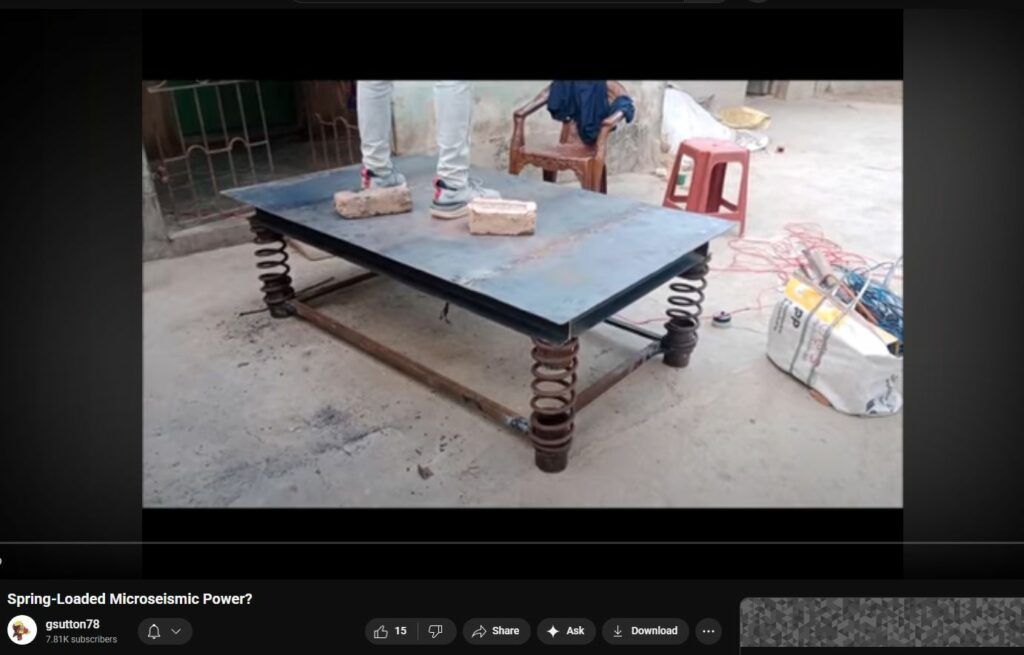
Instead, the springs might be
5:06
rhythmically pushed upwards against the
5:08
fixed base by the Earth's microcosmic
5:10
vibrations in a way similar to that
5:12
demonstrated in the model here.
5:21
It's not an exact likeness, but we can
5:23
imagine the magnet stack and solenoid as
5:25
representing the Earth's microismic
5:27
vibrations.
5:29
The platform above the solenoid
5:30
represents the large cube structures
5:32
from the rendering which seemingly rest
5:34
on the Earth's surface deep within the
5:35
cavern.
5:38
We then have the shafts which function
5:39
as vertical stabilizers for the springs.
5:43
Above this is another wooden deck which
5:45
is meant to represent the mega
5:46
structures loaded upper platform.
5:50
A top this is glued a stack of wooden
5:52
pieces as a loaded connector which is in
5:55
turn connected to a long board.
5:59
The wooden pieces represent the presumed
6:01
loadbearing relieving superructures
6:03
while the long board represents the
6:05
bedrock in the base of the Coffrey
6:06
pyramid.
6:09
This area of the course is fixed and
6:11
therefore the upper platform beneath is
6:13
fixed.
6:15
Activating the contraption at its main
6:17
resonant frequency of 11 hertz. And we
6:19
see how the motion in the springs
6:21
generate Faraday waves in the pan of
6:23
water on the upper surface.
6:26
This demonstrates that the oscillations
6:27
of the springs are converted into
6:29
infrasonic vibrations at what would be
6:32
the earth's surface and any adjacent
6:34
infrastructure.
6:36
The actual frequencies from the earth of
6:38
course will be lower by a factor of
6:40
about 100 but higher frequencies can be
6:43
derived from different sonic vibrations
6:45
through harmonic progression.
6:48
John Warchily apparently used this
6:50
method to progress frequencies from the
6:52
audio range to well past the X-ray and
6:55
gamma radiation frequency ranges.
6:59
In the next demonstration here, the
7:01
aluminum plate is preloaded with
7:03
horizontal tension. When the device is
7:06
activated again, the resulting acoustic
7:08
lubrication reduces friction enough to
7:10
cause the pre-loaded plate to slide.
7:13
We've seen this demonstrated on much
7:15
heavier masses in previous videos. The
7:18
technique can potentially be used on
7:19
masses in the multi-tonon range, energy
7:22
being the only real limiting factor. As
7:24
usual,
7:26
we know that maximum energy transfer
7:27
occurs at resonance. But in this
7:29
particular model, energy is not
7:31
maximized as the vibrational and
7:33
structural elements are not all in tune.
7:36
And as such, a lot of energy is lost.
7:41
There's ample room to perfect the model.
7:44
Already, I can see at least one
7:46
opportunity to improve. For instance,
7:48
the stacked pieces here likely dissipate
7:50
a significant amount of vibratory energy
7:53
due to what is called acoustic impedance
7:55
mismatch.
7:57
In this phenomena, the stack pieces
7:59
create an interface which results in
8:00
acoustic energy absorption or damping
8:03
along with reflection and scattering
8:06
even when the modular pieces are made of
8:08
the same material.
8:10
It's very similar to eddiurrens in a
8:12
transformer being dampened by laminating
8:14
the core material.
8:16
Even though the individual pieces are
8:18
pressed together tightly, the electrical
8:20
currents are dampened because the
8:22
junctures still present significant
8:24
resistance.
8:26
Acoustic systems are similar in that any
8:28
transmission interface will conduct
8:30
energy more efficiently if created from
8:32
a solid piece of material.
8:36
As in the previous iteration of the
8:38
contraption, tuning forks can be mounted
8:40
on various spots just as they appear to
8:42
be in the SAR rendering.
8:44
Again the transverse oscillations of the
8:46
springs induces longitudinal vibrations
8:48
in the tuning forks.
8:51
Unfortunately the frequency which causes
8:53
maximum vibration in the forks is
8:55
different from that which causes maximum
8:56
oscillation in the springs.
8:59
The springs natural frequency would need
9:01
to be an exact subharmonic of the
9:03
natural frequency of the tuning forks
9:05
for maximum energy development.
9:08
Everything in tune means maximum energy
9:10
transfer. And since energy as the
9:12
capacity to do work is equal to force
9:15
times distance, we can say that greater
9:17
vibrational energy will result in a
9:19
greater capacity to exert force over a
9:22
distance. Hence, larger masses could be
9:24
moved over greater distances.
9:28
Despite its lack of efficiency, the
9:30
model gives some idea of how such a
9:31
system will work on a larger scale.
9:34
We can indeed see how powerful
9:36
infrasonic vibrations can be induced
9:38
into the base and structure by the
9:39
oscillating springs without there being
9:41
any overall translational movement of
9:43
the platform itself.
9:46
For clarification, Dell Pon, author of
9:49
the book universal laws never before
9:51
revealed and John Warley enthusiast
9:54
defines vibration as the rhythmic motion
9:56
of an object within itself. Whereas
9:59
oscillation is the perceptible rhythmic
10:00
motion of an object itself usually in
10:03
reference to external fixed points.
10:06
Hence we can classify the rhythmic
10:08
motion of a compression spring as
10:09
oscillation while the rhythmic motion of
10:12
a tuning fork gong or soner stone will
10:14
better be classified as vibration.
10:17
But it must be stressed that such a
10:19
system will only work optimally if all
10:21
of the pertinent elements are in tune.
10:24
This includes any free masses to be
10:26
moved or manipulated.
10:28
We might understand better with this
10:30
radio equivalent.
10:32
If we were to broadcast radio
10:34
frequencies from a large buried radio
10:36
transmitter with a protruding antenna,
10:39
the weather for a telecommunications or
10:41
wireless power, any receivers on the
10:43
surface will have to be tuned to the
10:45
broadcast frequency in order to receive
10:47
the signal or transmitted power.
10:50
The acoustic system will work exactly
10:52
the same way. Any masses or acoustic
10:55
devices which are to receive the energy
10:57
will have to be tuned to the acoustic
10:59
broadcast frequency or some harmonic of
11:02
it.
11:05
This brings us to a possible function of
11:07
the absolutely unfathomable amounts of
11:09
weight at top the platform.
11:12
Adding mass to an oscillating or
11:14
vibrating system increases the energy
11:16
potential of that system provided the
11:18
oscillation or vibration amplitude
11:20
remains the same. Also,
11:24
adding or removing masses to or from any
11:26
vibrating or oscillating system changes
11:28
its natural frequency.
11:30
Thus, one of the functions of these
11:32
structures, the prisms in particular,
11:34
could have been a way to help tune the
11:36
gigalithic machine.
11:39
We can see here how adding mass in the
11:41
form of small disc magnets to each of
11:43
the tuning forks, steel tines, reduces
11:46
its resonant frequency considerably.
11:50
A spectrum analyzer app reveals a
11:52
frequency of 432 hertz with no mass.
11:57
With one magnet on each time, the
11:59
frequency is reduced to 427 hertz.
12:03
With two on each time, the reduction is
12:06
to 389 hertz. And with four on each
12:09
side, the frequency reduces to 367
12:12
hertz.
12:14
The same principle is seen with the
12:15
barrel resonator here.
12:18
A 2.71lb steel cylinder is added to the
12:21
center of the vibrating barrel bottom
12:23
where it is held in place by the large
12:25
magnet inside.
12:28
This reduces its resonance frequency
12:30
from about 50 Hz to 27 Hz.
12:34
Replacing this mass with one weighing
12:36
5.8 lb reduces this further to 21 hertz,
12:40
thus allowing some degree of tuning of
12:41
the resonator.
12:44
As previously mentioned, if the upper
12:46
platform is attached to a fixed position
12:49
inside of the pyramid base, then it
12:51
would not be able to oscillate up and
12:52
down as in the proposed manner here.
12:56
However, increasing mass at top the
12:58
platform will still have an effect on
13:00
the frequency of the resulting
13:01
vibrations.
13:03
This is because there is still a degree
13:05
of elasticity even within the stiffest
13:07
of materials which allows vibrations to
13:09
travel.
13:12
As long as the elastic limit is not
13:13
exceeded, stiff materials will remain
13:16
intact even in the presence of intense
13:18
vibration.
13:20
This describes the hard stones of the
13:22
Giza complex and indeed stones in
13:24
general perfectly.
13:27
Needless to say, such a system would
13:29
require an astoundingly delicate and
13:31
skillful design. Because though the
13:33
generation of vibrations which can be
13:35
used as a power source is desired, their
13:37
strength should not be so excessive that
13:39
the surrounding infrastructure is
13:40
compromised or damaged.
13:44
One way to prevent excessive vibration
13:46
in certain areas on a large vibrating
13:49
surface is to strategically place large
13:51
masses on key points.
13:54
This creates localized nodes and can be
13:57
a practical method to prevent
13:58
vibrational energy from acting and
14:00
accumulating in those areas.
14:03
This the same principle as pressing the
14:05
finger at different points on a guitar
14:06
or violin string.
14:10
Oscillations and vibrations only at the
14:12
point of pressure are attenuated while
14:14
the rest of the string is free to move.
14:18
With a machine as large as the Coffrey
14:20
mega structure and the surface it is
14:22
connected to is masses of truly colossal
14:25
sizes will be required to create
14:26
acoustic nodes.
14:29
In fact, a collection of nodes directed
14:31
along certain lines might enable
14:33
purposeful control over the direction
14:35
that the vibrational energy flows.
14:40
This is similar to how electrical
14:41
insulation prevents the flow of
14:43
electricity into certain areas and along
14:45
with metals grants fine control over the
14:47
flow of electricity.
14:51
As with megawatt or gigawatt levels of
14:53
electricity, the ability to contain and
14:55
channel the vibrational energy is
14:57
paramount.
15:00
But of course, the obvious question is
15:02
how to even go about putting such vast
15:04
vibrational energy to practical use.
15:08
We know how to use large amounts of heat
15:09
and electricity. But how would we
15:11
utilize vibrational energy of a similar
15:13
order of magnitude
15:17
just as with heat and electricity? We
15:19
can derive various effects from sonic
15:21
vibrations depending on how we release
15:23
the energy. The magnitude and effects
15:25
and how long they last depending on how
15:27
quickly the energy is released.
15:30
This is understood as power.
15:34
If we take a given amount of
15:36
electricity, store it in a large
15:38
capacitor and discharge it through a
15:40
thin highresistance filament, we can
15:42
obtain both heat and light for a few
15:44
seconds or even minutes.
15:47
But if we take this same amount of
15:48
energy and discharge it much more
15:50
quickly through a low inductance copper
15:52
coil of low wire gauge and resistance,
15:55
then that energy will manifest as a
15:57
powerful magnetic transient sufficient
15:59
to propel a piece of copper or aluminum
16:01
resting a top
16:05
These examples show that the same amount
16:07
of energy can be discharged at different
16:09
rates and through different conduits in
16:11
order to achieve one macro effect that
16:13
is distinct from another.
16:17
Vibrational therapy,
16:19
acoustic lubrication,
16:21
sonic cutting, and disintegration are
16:24
just but a few practical manifestations
16:26
of sonic power.
16:29
These results are feeble, but imagine a
16:32
power level hundreds of thousands of
16:34
times greater, developed from energy
16:36
originating from deep within the earth,
16:39
ultimately fueled by the meanderings and
16:41
interactions of trillions of tons worth
16:43
of ocean water.
16:46
If we could harvest and accumulate
16:47
enough of this energy within the right
16:49
frequency bands and release it quickly
16:51
and efficiently, we could derive
16:53
practical effects of motivity, lighting,
16:55
and much more, just as we presently do
16:58
with electromagnetism.
17:02
So, in summary, one theory for the
17:04
alleged Coffrey subterranean structure
17:06
is of a spring-loaded device to harness
17:08
the Earth's microismic energy.
17:12
In short, the microismic energy from the
17:14
earth will oscillate the springs.
17:17
Once the springs are set into rhythmic
17:19
motion, they will have tremendous
17:20
momentum.
17:22
This would hold true even if the actual
17:24
vertical displacement were relatively
17:26
minute as the size and weight of the
17:28
elements are so extreme.
17:32
These oscillations would in turn
17:33
generate corresponding infrasonic
17:35
vibrations of tremendous energy stored
17:37
in potential and kinetic forms.
17:41
A portion of the developed energy could
17:43
then be conducted and transmitted
17:44
throughout the adjacent stone
17:46
infrastructure.
17:49
Another portion of the spring's oscilly
17:51
energy will be converted into
17:52
longitudinal vibrations by the tuning
17:54
forks.
17:57
These forks will store, manage, and
17:59
radiate this infrasonic energy in a
18:01
manner similar to Nicola Tesla's
18:03
wireless power system, but with sound
18:05
rather than electricity.
18:09
The electrical power from Tesla's
18:11
specialized towers would flow through
18:13
both the air and the ground in an out
18:16
and return circuit.
18:19
Energy from a large acoustic mechanism
18:21
would likely have a similar
18:22
characteristic as we know that sound
18:24
vibrations can couple to and travel
18:26
through the negative air of open
18:28
atmosphere
18:30
through the air and hollow conduits such
18:32
as shafts and tunnels and even solid
18:34
conduits such as stone, metal and wood.
18:40
Thus the energy would be conducted from
18:42
deep within the earth to the surface and
18:44
stored within the surrounding
18:46
infrastructure in the form of acoustic
18:47
fields sustained by harmonic resonance.
18:52
The vibrational energy could then be
18:53
tapped for a variety of purposes perhaps
18:56
even to construct the great pyramids
18:58
themselves.
19:00
Is a very different power source than
19:02
those we are familiar with. But I
19:04
believe it or some variant of it would
19:07
be both viable and practical.
19:12
The idea of using sound as a practical
19:14
power source may be ridiculous to some,
19:17
but consider that just as many people
19:19
would have once thought the same of
19:20
electricity 225 years ago.
19:24
In 1800, when Volta demonstrated the
19:27
first modern battery, it was likely
19:29
little more than just an interesting
19:30
curiosity.
19:33
The battery stood 2 feet tall and
19:35
generated only a few volts, barely
19:37
enough to power three of today's LEDs.
19:41
Few people of the time will have had any
19:43
idea of its full range of potential
19:45
applications.
19:47
But fast forward to today and we have
19:49
batteries powerful enough to accelerate
19:51
a 3500 lb electric vehicle from 0 to 60
19:54
mph in less than 2 seconds.
19:58
A present reality which as a theory two
20:00
centuries ago will have been scoffed at
20:02
and quickly dismissed.
20:06
Prophets of the future are few and far
20:08
between and often deemed as misfits and
20:10
crackpots during their perspective ages
20:13
of humanity.
20:15
This likely also applies to prophets of
20:17
the past.
20:20
Is it possible that the help that some
20:22
fringe theorists believe the builders of
20:24
antiquity had to have had in order to
20:26
build the ancient structures came not
20:27
from above in the form of
20:29
extraterrestrials, but rather far below
20:31
from the very Earth itself.
20:35
One solid assumption which could be made
20:37
is that if this colossal and complex
20:39
subterranean machine is indeed real and
20:42
built before anything else on the Giza
20:44
plateau, then considering the masterful
20:46
skill and engineering required to even
20:48
begin to build such a structure, the
20:51
planning and building of the pyramids
20:52
themselves would have been relatively
20:54
easy by comparison.
Visited 5 times, 1 visit(s) today