“That crackling sound that you’re hearing is all of the lightning activity on the planet.” 5:00 in
let’s ignore the work of Luigi Rota w/ earth currents/frequencies /battery piles/aeroballistique levitation , patents, &c circa 1920… after all, it’s a waste of time nowadays w/ Tesla’s AC power degaussing the planet…
Transcript
Click to reveal
All right. Well, we're up here on the
0:07
hill um where the shack is. You can see
0:10
these lines going down straight towards
0:12
town. Um there's about a mile and a half
0:15
that we of land that we have for this.
0:19
So, the lines come up.
0:23
It's a culmination of 10 years of work
0:26
uh fixing, repairing, replacing holes,
0:29
replacing mass, running wire, and
0:31
eventually a fully completed 1,400T long
0:35
antenna bridge. And it's not even
0:38
finished yet.
0:48
So these lines terminate here coming in
0:51
and
1:01
okay. So what what's our setup here?
1:04
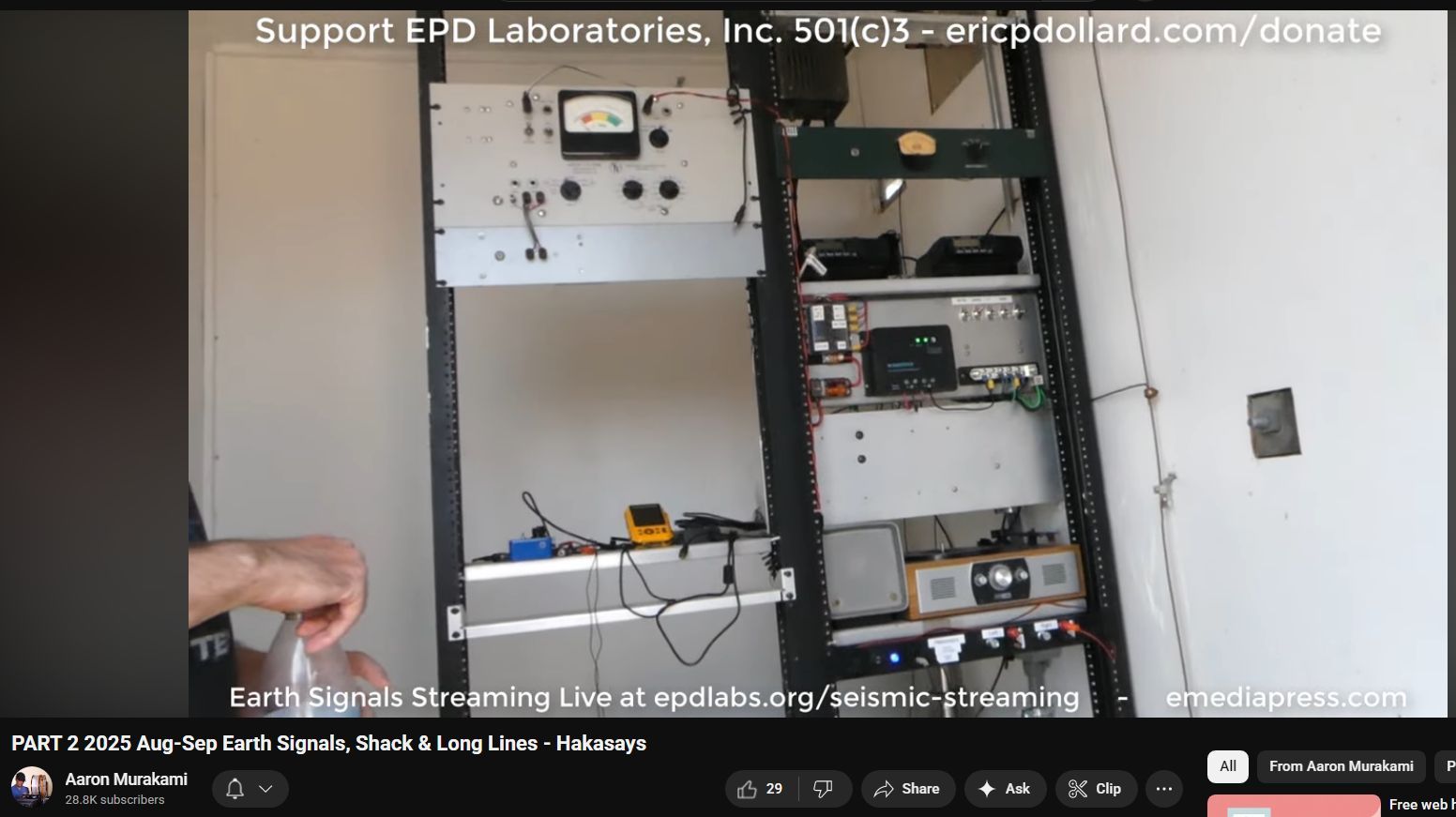
So the feed the original feed line comes
1:07
in from a a cell link that's mounted up
1:09
high outside. It leads into this uh
1:12
Wi-Fi access point which is essentially
1:15
uh it's a 3D enclosure 3D printed
1:18
enclosure for one of those little cell
1:20
phone data only MiFi plans. Uh that data
1:24
runs through to this uh data logger
1:26
which is essentially a Raspberry Pi
1:29
modified to run on 12 to 20 volt solar
1:33
uh which makes it appropriate for our
1:34
stuff. Uh it also has to have separate
1:36
power supplies to power some of the
1:38
other equipment we have. For example,
1:40
the uh the uh cell phone Wi-Fi requires
1:43
uh I believe 12 volts to operate. And uh
1:47
in order to get that feed, I had to have
1:49
a second supply that uh power or
1:51
Ethernet that supplies the Wi-Fi.
1:54
In addition to that, there's a third
1:55
power supply in here that is a 12 to
1:57
24vt converter that provides the uh
2:00
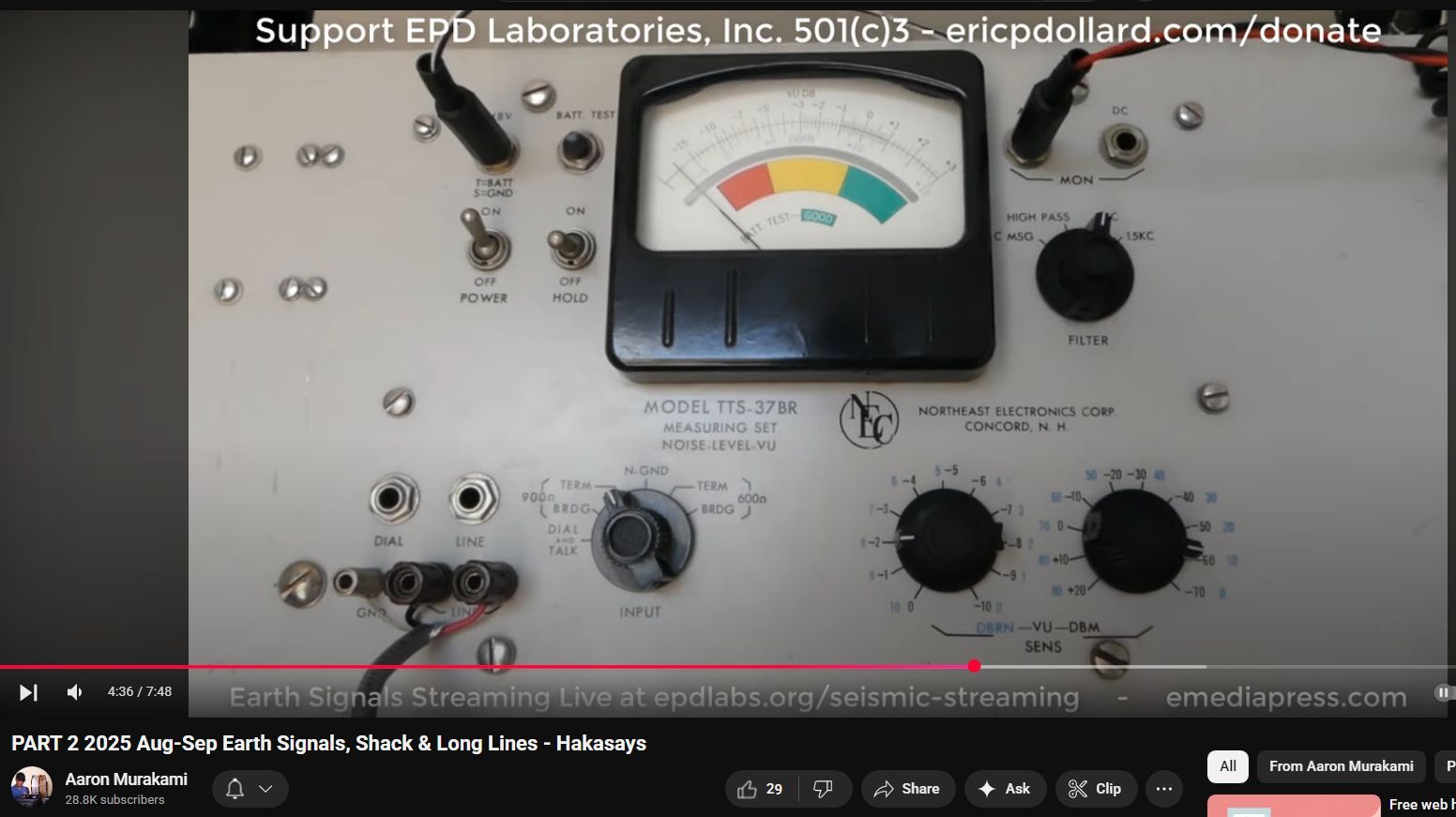
voltage that's necessary to run the 37
2:03
bra, which is the actual audio, the
2:06
actual line recording equipment. Uh that
2:09
1400 ft antenna field comes all the way
2:12
across those towers and eventually comes
2:14
through some filtering systems uh and
2:16
leads in right here which leads into the
2:19
input of the 37 Bravo. This is an audio
2:23
audio line test equipment
2:26
and uh what it's normally made for doing
2:28
it's normally made for testing noise and
2:30
minimizing interference on the original
2:32
POTS telephone network. In this case,
2:35
we're actually looking for the noise.
2:36
So, it makes the perfect system for
2:38
amplifying that type of thing. Uh, so
2:40
this takes the raw signals that are on
2:42
that line, amplifies them to a to a
2:44
region that we can pick them up. Goes
2:46
through what is essentially audio output
2:49
down the feed and re leads into the
2:53
audio input junction on the data log.
2:56
The audio input is it's essentially a
2:59
sound card that's mounted onto the
3:00
Raspberry Pi. And uh essentially all the
3:04
a lot of the work in development is not
3:06
so much in the uh hardware itself. It's
3:08
relatively simple Raspberry Pi people
3:11
put together besides the power. Uh but
3:13
the much larger issue is this is a this
3:16
is a Linux based PC that's sitting in a
3:18
shack in the middle of nowhere in the
3:20
Nevada desert. So you have to make sure
3:22
that uh everything is very battle
3:25
hardened, resilient, uh uh handles
3:29
reboots, can allow to be maintained
3:31
remotely uh and continually streams
3:34
external over to the internet to our
3:36
servers where you can actually listen to
3:38
them yourself.
3:40
Uh this whole system at the moment is
3:43
running on battery power on a 12volt
3:46
battery pack. eventually want to hook
3:48
this up to one of the solar panels on
3:50
the roof. So essentially this entire
3:52
feed, the data logger, the cell phone,
3:55
Wi-Fi, the 37 Bravo can all operate
3:58
independently as one powered unit and
4:01
they could conceivably run this system
4:03
uh 24/7 without uh without stopping. And
4:09
uh that would fit some of our longer
4:10
goals which is once we start getting the
4:12
signals recorded and analyzed and start
4:15
picking apart the signals from the noise
4:18
we'll get a better understanding of what
4:19
we're dealing with and we might be able
4:21
to start making forecasts.
4:24
Uh in addition to that uh a lot of the
4:26
work in development is just getting the
4:28
physical design and infrastructure in
4:31
place. So the really good news is that
4:33
now that we have a functioning system,
4:35
it's exceptionally easy to uh make
4:38
copies of it and start putting up
4:40
multiple stations in other locations
4:42
across the planet or across the country
4:44
at first. Uh I just happen to have the
4:47
37 Bravo is the ideal for this. The
4:50
sound that you hear, which you hear
4:52
there's a a low frequency buzz, which is
4:54
essentially the power line noise from
4:56
the nearby town. And then you hear this
4:58
little crackling sound. It's like that
5:00
popcorn crackling. Uh that crackling
5:03
sound that you're hearing is uh all of
5:06
the lightning activity on the planet at
5:09
the moment. So this is actually a global
5:12
receiving device which makes it really
5:13
interesting. And uh for the research and
5:16
development purposes, this uh it's
5:18
essentially listening to the ionosphere
5:21
and whenever there's issues that happen
5:23
both in the in the sky for solar
5:26
activity as well as within the earth
5:28
causes changes to to the way these
5:31
signals interact and operate. So I can
5:34
see for for example what might happen
5:37
before a large seismic event is these
5:39
crackles might get more uh more densely
5:42
packed and louder and and closer
5:44
together. So instead of hearing these
5:45
little pops and cracks here and there,
5:47
that meter might be pegged all the way
5:49
top and you hear a continuous rush or
5:52
roar of
5:54
constant high power activity going on.
5:57
But uh I haven't seen that yet. So
5:59
that'll I believe that was Eric's
6:00
observations for his previous stations
6:03
in the '9s. It
6:05
was and anybody can go to ericp
6:07
dollar.com just search uh keyword
6:10
landers for the blog posts
6:14
pictures whatever it's all it's all in
6:16
there along with the the charts.
6:18
Yeah. And Eric's research originally was
6:21
he had chart reporters and things that
6:22
were taking these types of measurements.
6:25
And uh he had correlated some changes in
6:28
ionospheric activity with uh seismic
6:31
events that were occurring both locally
6:33
in California and across the world. So
6:37
now that we have a more modern system
6:39
set up, we can record much higher
6:41
quality audio. We can record the live
6:43
feed directly from the source, have it
6:46
stored and analyzed at our leisure. So
6:48
when something does happen, uh, we're
6:50
prepared. We can go back in time. We can
6:53
listen to the recordings. We can see how
6:55
the signals changed and, uh, a couple
6:59
good seismic events might allow us to
7:01
calibrate this equipment. And, uh, in
7:04
the relatively near future, as in maybe
7:06
within a few years from now, we could
7:07
start making uh, reliable and accurate
7:10
forecasts.
7:11
So sky is the limit.
Visited 5 times, 1 visit(s) today