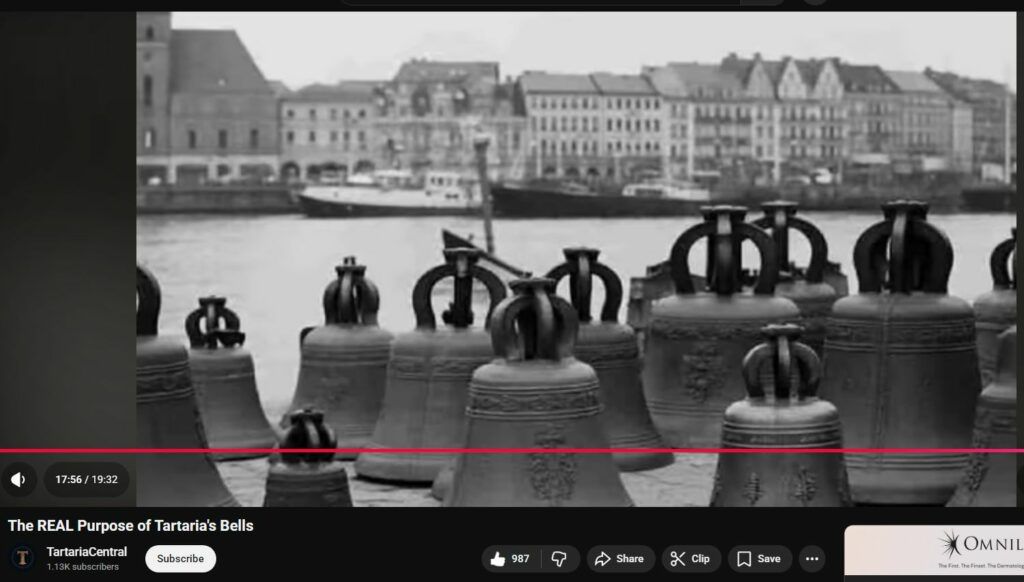
Internal concentric circles / rings carved in. “The sound does not fade as it [is expected]; it gathers somehow beneath the dome.” — “We tune them not for the ear but for the air.” Tuned to 112 Hertz. Electrical cables connecting bells to domes. [[So the bells were the oscillators and the domes the emanators? Receivers? Resonant system of signalling, like tuning a radio.]]
This should give everyone a clue as to the why of the Ukraine war. Many old structures were still standing there. Many old structures still stand across the entire world. Wars have been a primary tool in the destruction of these question raising buildings that were becoming increasingly hard to explain to an aware population. It’s accepted far easier than wrecking balls and bulldozers destroying beautiful pieces of historic architecture for no apparent reason. In America, take notice that some of these buildings still stand. What are they now? Government buildings, churches, and Masonic temples. Very little gets my dander up these days but, this obvious betrayal of the truth of our history eats at me.
Every war targets the oldest structures. It’s deliberate to destroy the history and the technology the buildings have built into their design.
“The surest way to destroy a people is to deny and obliterate their own understanding of their history.” – George Orwell
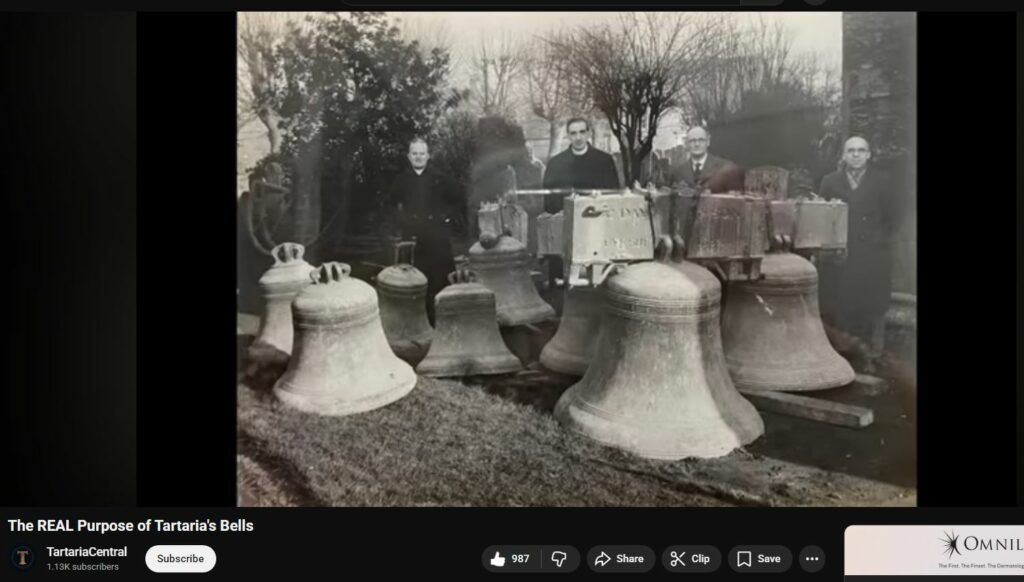
before the church bells always rang before storm, but not to alarm but to dispel clouds. it always worked. if not, the storm was 90% weaker. now only dosen churches on islands keep real bells like these. in my place since the old bell men died, they put speakers and play bell sound. but it’s not the same when it lack real frequency
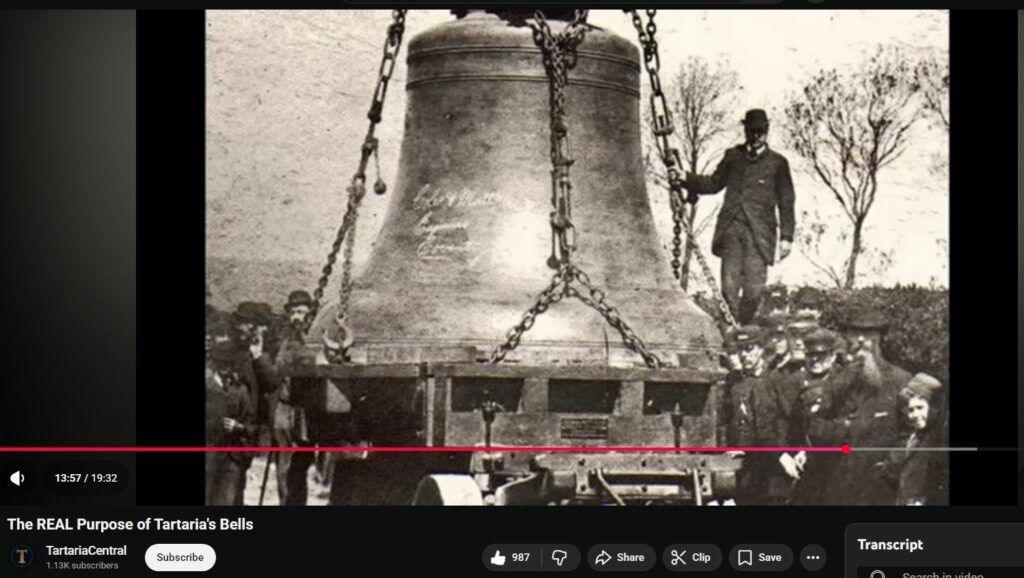
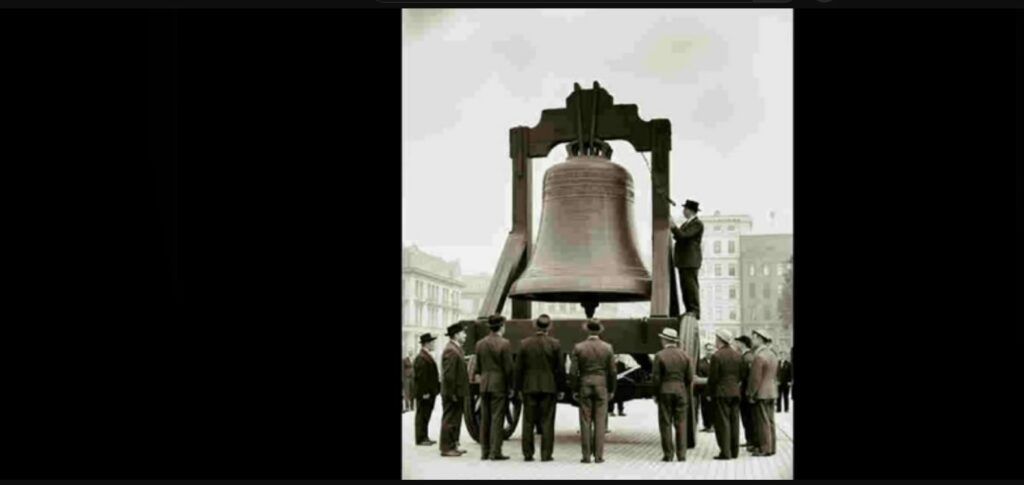
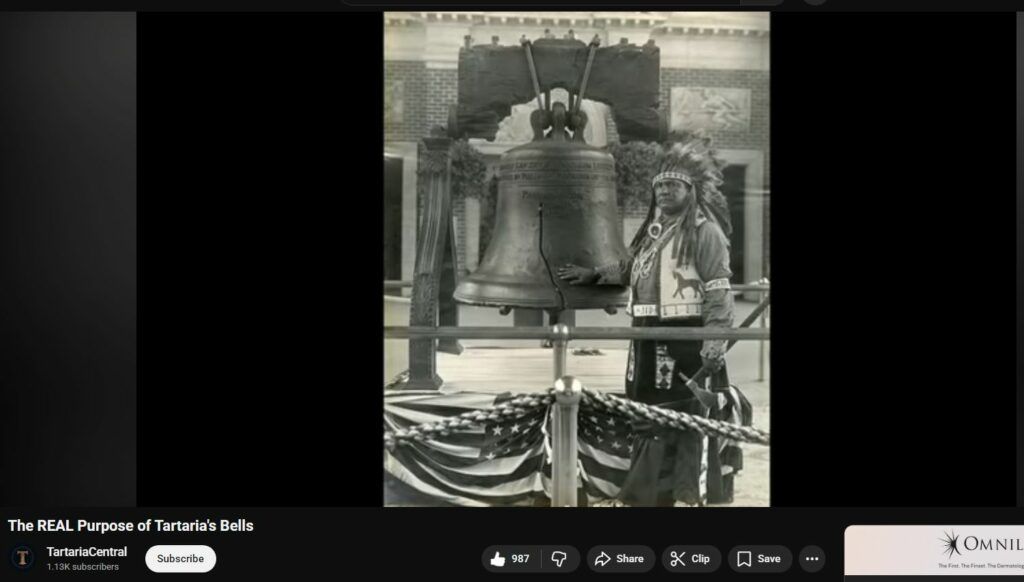
This is why the liberty bell has a crack. Symbol of how they got rid of the technology. Mocking and sort of bragging in secret , boasting their control
Major mistake in your narration. Usage of the metric system. If you really paid attention, Old World Technology & Architecture didn’t use metric. Metric is easy, not accurate. Base 12 & 16 are far more accurate and superior which were used by the Tartarians & the Old World. Stop using a modern flawed system to describe advanced Ancient Tech.
Look at what was destroyed during the illegal Iraq war
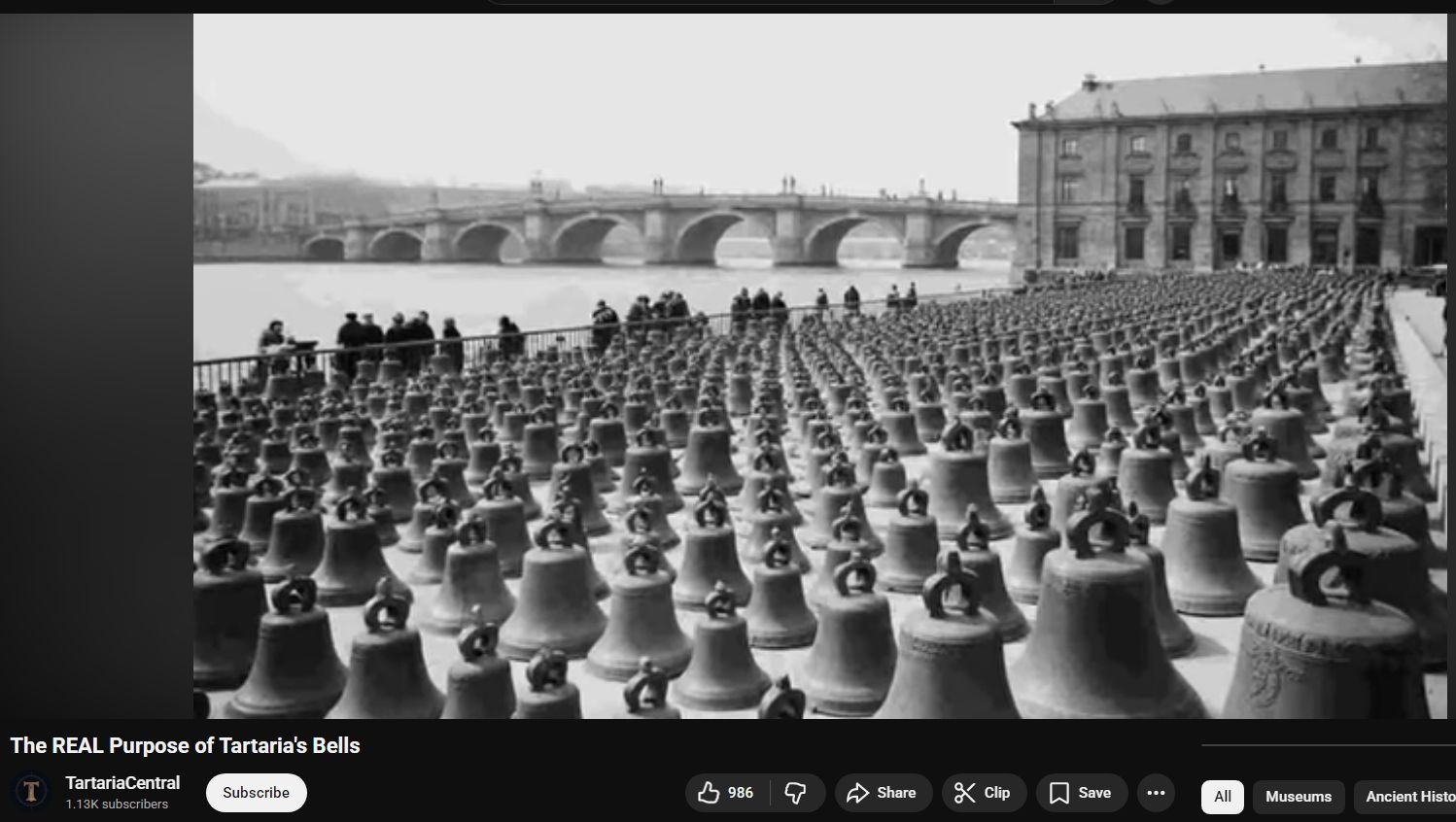
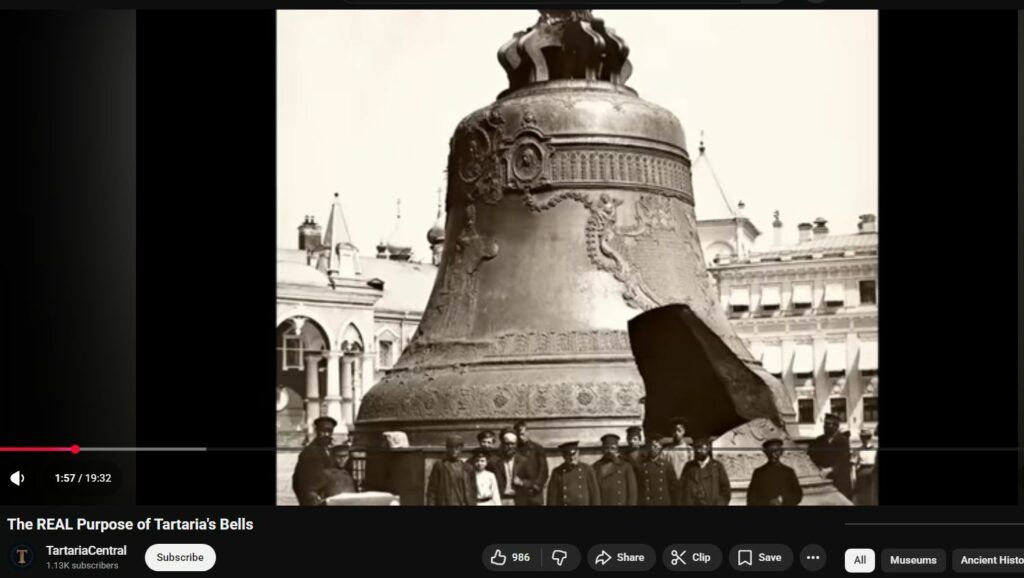
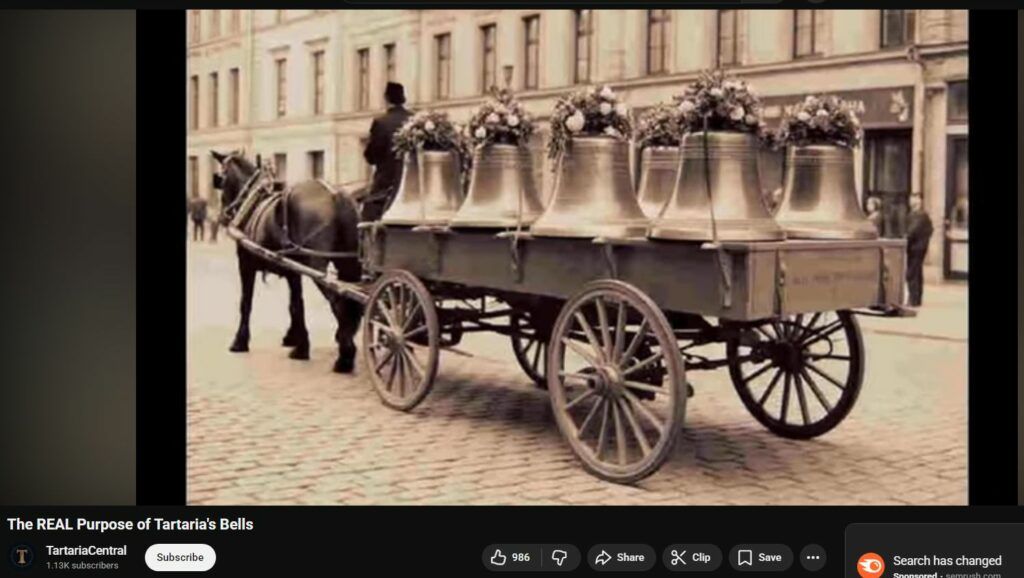

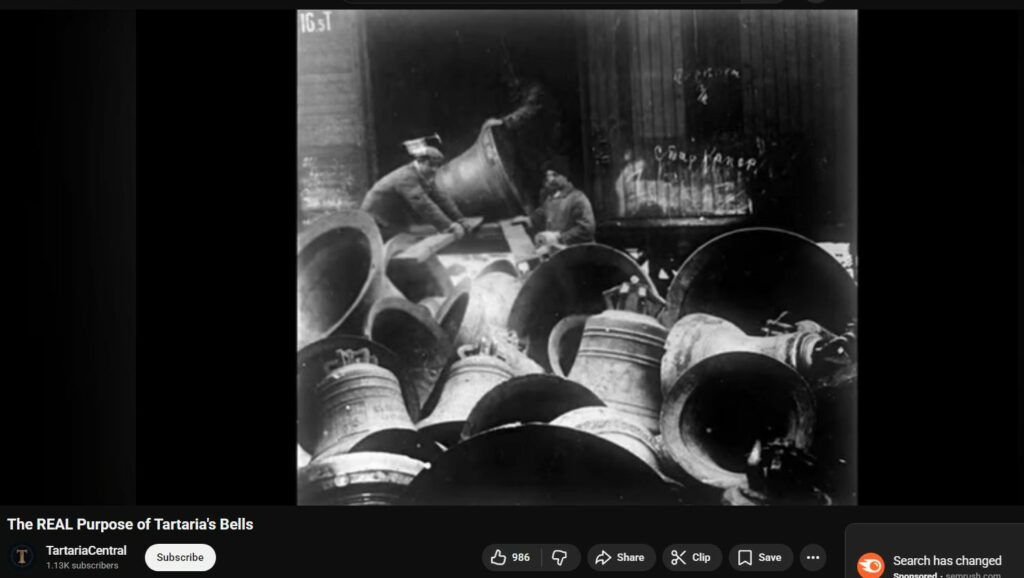
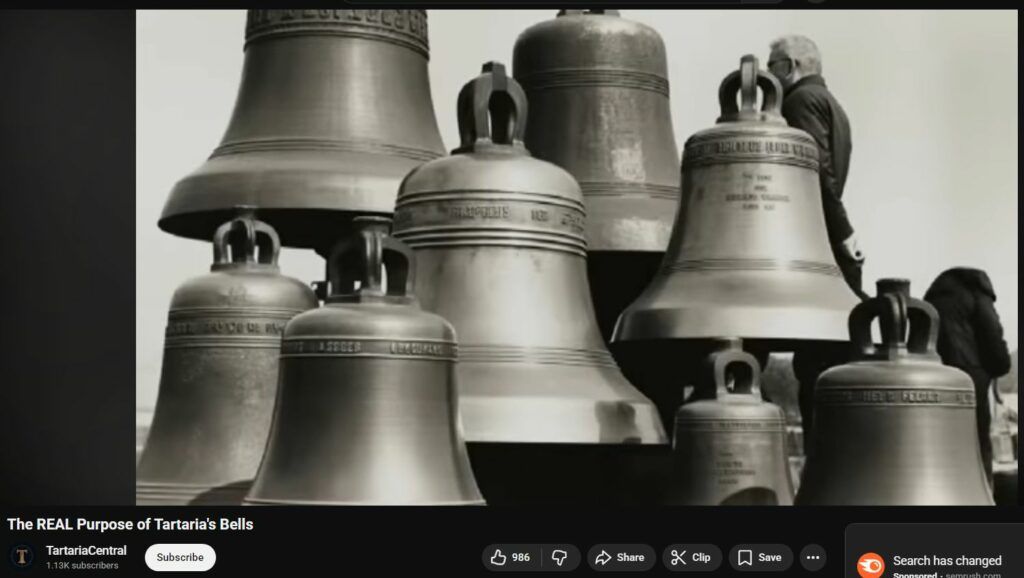
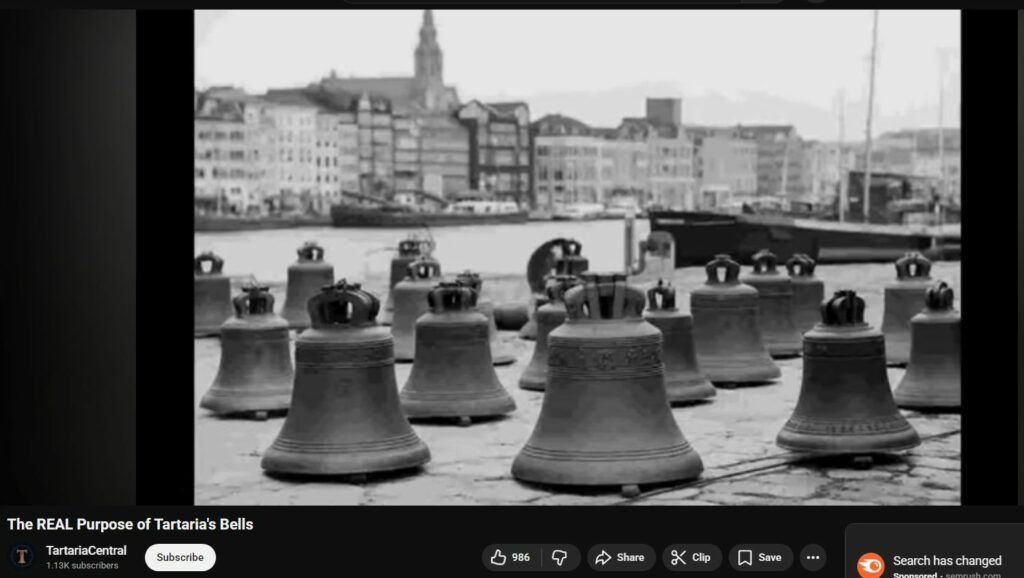
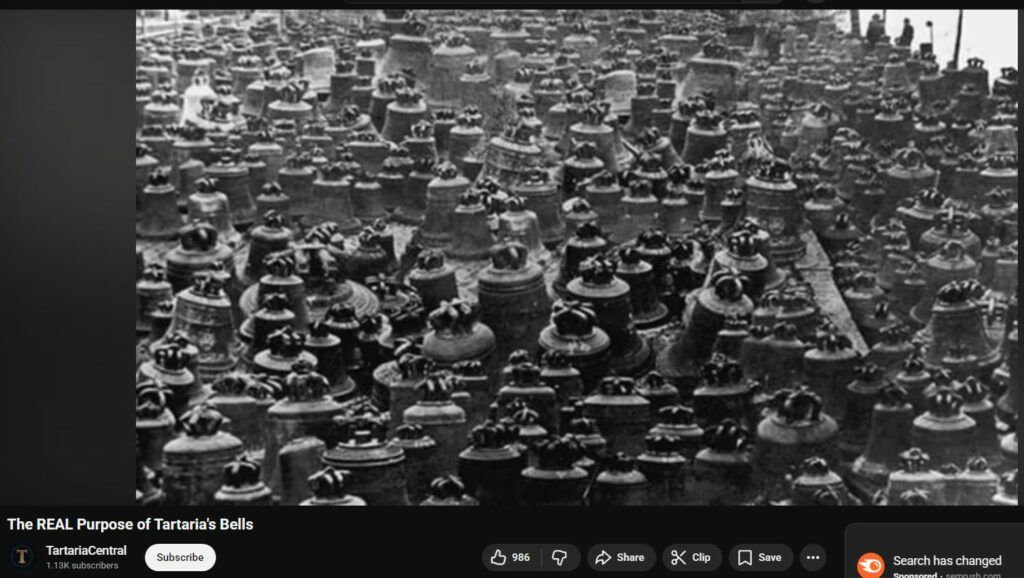
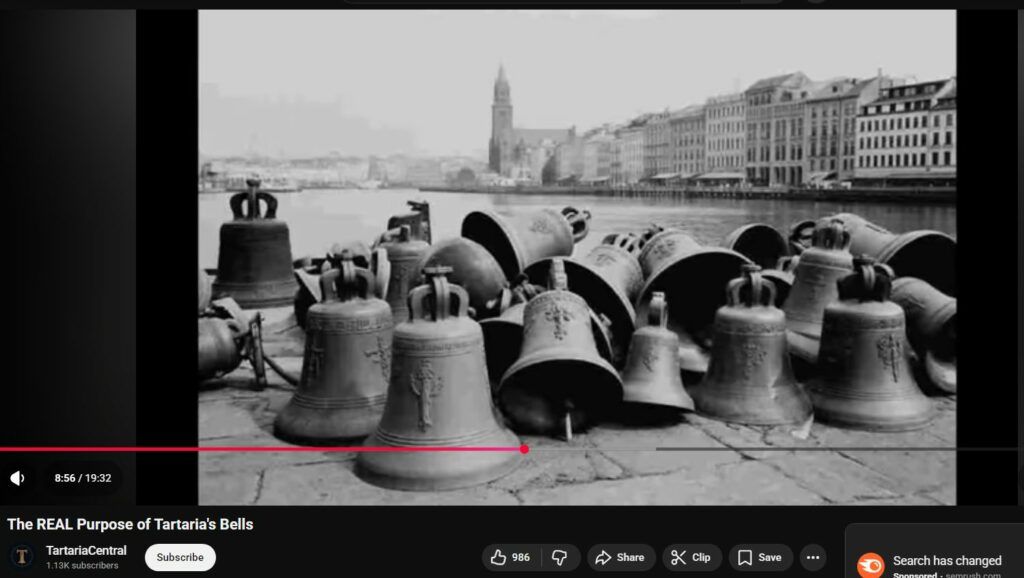
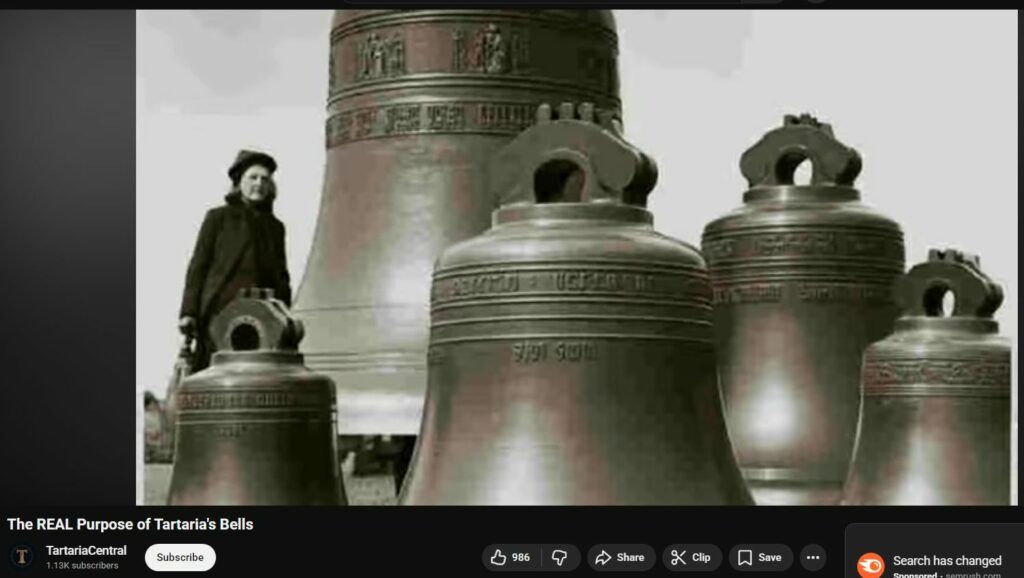
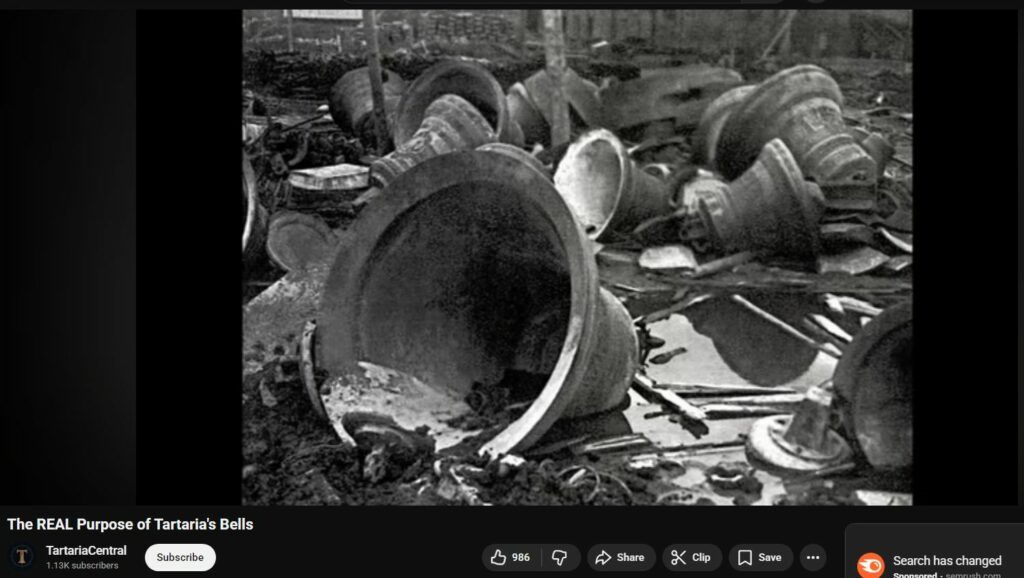
“It rang without being struck, during certain hours of the day, always the same tone. We thought it was a miracle. It made the candle flames burn sideways.” — 11:10 in
“Acoustic transmission of electric potential” – physics paper draft
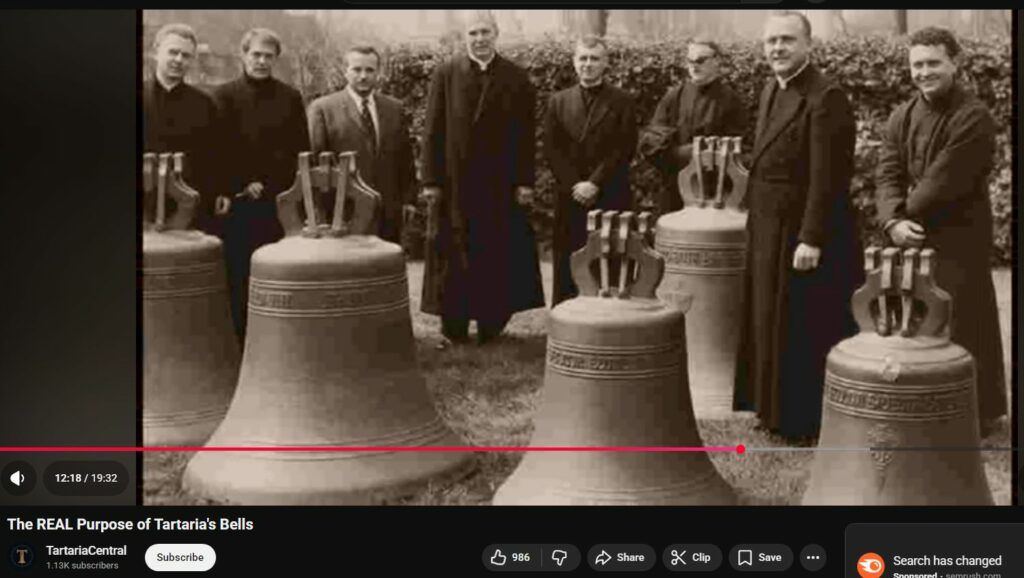
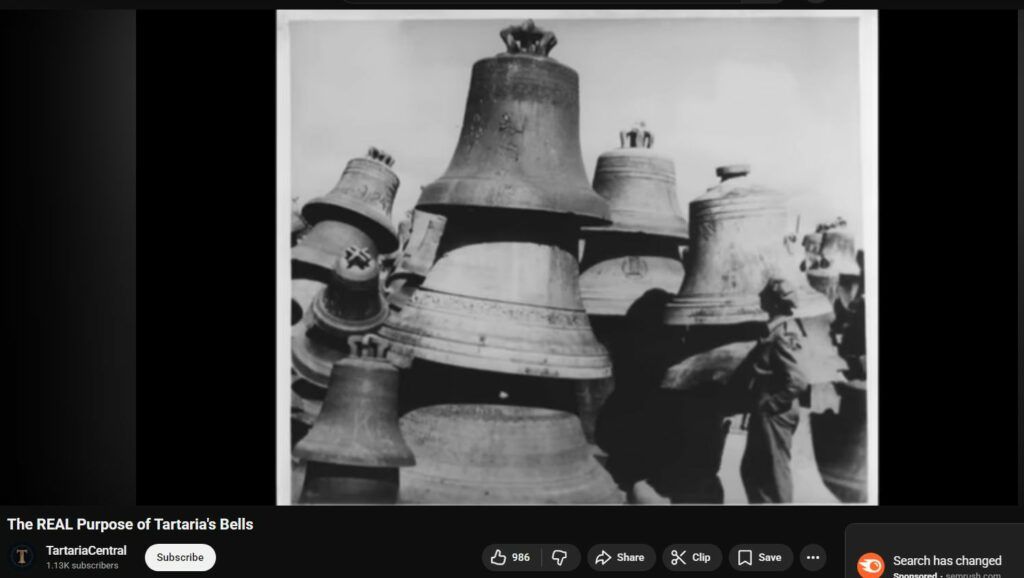
Transcript
Click to reveal
Kiev, 1896. Industrial exhibition
0:03
grounds. In a quiet corner of pavilion
0:06
4, restoers opened a crate marked
0:09
acoustic ornaments. Do not strike.
0:13
Inside lay fragments of bronze, curved
0:15
and resonant, each stamped with a number
0:18
and a faint sigil shaped like
0:20
overlapping circles. The catalog listed
0:23
them as decorative pieces. Yet no record
0:25
describes their installation. When
0:27
lightly tapped, the metal emitted a hum
0:30
at precisely 112 hertz, low enough to
0:33
vibrate the glass display cases nearby.
0:36
One photograph from that same hall shows
0:38
a bell suspended above what appears to
0:40
be an electrical generator, but in later
0:44
prints, the object is painted out.
0:46
Curators called it a retouching error.
0:49
Dust lingers in the air. The bronze
0:52
flickers like something alive. History
0:55
remembers progress but forgets what it
0:57
replaced.
0:59
The bell fragment rests silent now, yet
1:02
its surface trembles as though
1:04
remembering motion. In the spring of
1:06
1873 at the International Exposition of
1:10
Paris, engineers from across Europe
1:12
gathered to present new methods of
1:14
casting large bells for civic towers.
1:17
Official pamphlets celebrated
1:19
metallurgy, harmony, and the march of
1:22
progress.
1:23
The displays gleamed beneath gaslight.
1:26
Visitors crowded around polish bronze
1:29
specimens, marveling at their weight and
1:31
tone. Yet in the archives of the
1:33
foundry, Baptiste and Phils preserved
1:37
among dusty ledgers and technical
1:39
diagrams. One sketch reveals something
1:42
unexpected. Bell interiors engraved with
1:45
concentric channels, more mechanical
1:48
than ornamental, spiraling inward like
1:50
the grooves of a turbine. We tuned them
1:53
not for the ear, one craftsman noted in
1:56
a margin, but for the air itself.
2:00
Light rain fell that afternoon.
2:03
Witnesses later described a low hum
2:05
lingering in the exhibition hall even
2:08
after the bell stopped ringing. A
2:10
vibration felt in the chest rather than
2:12
heard. The blueprints themselves bear an
2:16
inconsistency. Two different completion
2:18
dates appear on consecutive pages, one
2:21
marked 1873,
2:23
another 1877.
2:25
When questioned decades later,
2:27
archivists could offer no explanation.
2:30
The ink matched. The handwriting
2:32
remained identical. The bells had been
2:34
delivered on schedule, they insisted.
2:37
Yet something in the records refused to
2:39
align. By 1881, the design had traveled
2:42
east within the newly consecrated
2:44
Cathedral of the Transfiguration in St.
2:47
Petersburg.
2:48
Vast bronze bells were hoisted into the
2:51
tower during a ceremony attended by
2:53
clergy and state officials. Priests
2:55
claimed they marked divine hours,
2:58
calling the faithful to prayer with
2:59
tones that carried across snow-covered
3:01
rooftops. Yet, architectural drawings
3:04
discovered in 1929 reveal a peculiar
3:07
feature. metallic rods connecting each
3:09
bell to the roof's copper dome, a detail
3:12
absent from official construction plans.
3:15
Visitors to the cathedral that winter
3:17
spoke of a tingling in the chest when
3:19
the bells rang during storms, as though
3:21
the air itself grew charged. Snow fell
3:24
heavily, dampening the city's usual
3:27
clamor, except at the cathedral, where
3:29
echoes persisted long after the final
3:32
toll. One deacon recorded his discomfort
3:35
in a private journal.
3:37
The sound does not fade as it should. It
3:40
gathers somehow beneath the dome. The
3:43
installation log book, meticulously
3:45
maintained for months, ends abruptly.
3:47
Its final page is missing, torn cleanly
3:50
from the binding. In the margin of the
3:52
preceding entry, someone wrote in
3:54
cerillic, completed as instructed,
3:56
though not as designed. At the World's
3:58
Columbian Exposition of 1893 in Chicago,
4:01
the Great Colombian chime stood as the
4:03
centerpiece of the transportation
4:05
building's acoustics display.
4:07
Contemporary photographs show power
4:09
cables running beneath the bell
4:11
platform, coiled like black serpents
4:13
against the polished wood. Yet, the
4:15
official guide makes no mention of
4:17
electricity, describing the exhibit only
4:20
as a marvel of modern casting
4:22
techniques. A worker's diary discovered
4:25
in a storage crate in 1932 offers a
4:29
different account. The entries are
4:31
brief, factual, written in pencil that
4:34
has faded, but remains legible.
4:37
Second week of installation, they told
4:40
us to stand back during testing. Said
4:42
the tone could burn the skin if we got
4:44
too close. Didn't explain why. On the
4:47
back of one surviving postcard from the
4:49
exposition, collectors noted a faint
4:51
metallic dust pattern outlining the
4:54
bell's contour as if the image itself
4:56
had been magnetized.
4:58
When examined under magnification, the
5:01
particles align in radial formations,
5:04
spreading outward from the bell's crown.
5:07
The exposition's removal records,
5:09
typically exhaustive in their
5:11
documentation of dismantled exhibits,
5:14
end abruptly 2 months before the fair's
5:16
official closure. The bell is never
5:18
mentioned again following the exhibition
5:20
in Kiev of 1896.
5:23
Museum records indicate that several
5:24
bells were created and shipped to
5:26
destinations left unspecified.
5:29
Inventory logs list their weight down to
5:31
the kilogram. Note their bronze
5:33
composition with chemical precision, yet
5:36
omit any mention of their foundry or
5:38
intended use. The fragments discovered
5:40
in pavilion 4, those marked do not
5:43
strike, vibrated under certain light
5:45
frequencies, a phenomenon documented by
5:48
restoration staff but never explained.
5:51
An archivist who handled the catalog
5:54
during reorganization efforts in 1912
5:57
recalled the curator's reaction upon
5:59
first opening the crate. "He went pale,"
6:02
she wrote to a colleague. "Touched one
6:05
of the pieces, then stepped back."
6:06
"Wispered something I couldn't quite
6:08
hear. Sounded like, "These were never
6:11
meant to ring for people." A ledger
6:13
entry recording the shipment bears a
6:16
curious error. The date is listed as
6:18
1886,
6:20
10 years before the exhibition itself
6:22
took place. When cross referenced with
6:24
warehouse receipts, the discrepancy
6:26
deepens. The crate number matches, but
6:29
the contents shift between records. Most
6:32
peculiar of all, dust accumulated on the
6:35
fragments in radial patterns, spiraling
6:38
outward from each piece's center. Modern
6:41
analysts comparing the formations to
6:43
electrical experiments found them nearly
6:45
identical to patterns produced during
6:47
Tesla's early induction demonstrations.
6:50
Work that would not be publicly
6:52
presented for another decade. In 1898,
6:55
architectural plans surfaced during
6:57
renovations at the Royal Technical
6:58
Institute in Dresden. folded into a
7:01
portfolio of structural sketches. The
7:04
blueprint detailed a tower structure
7:06
labeled resonance cammer resonance
7:09
chamber marginal notes written in
7:11
careful cerillic script reference kev
7:14
harmonics and registers of sustained
7:17
frequency. When archists cross-checked
7:19
the plans against official building
7:21
files, they found no record of
7:23
construction. The tower, according to
7:25
municipal records, was never built. Yet,
7:28
aerial photographs taken during a survey
7:30
in 1910 show something unexpected. A
7:33
circular foundation on the exact site
7:36
specified in the blueprints, partially
7:38
overgrown, but clearly visible from
7:40
above. Workers clearing the area for new
7:43
construction, reported finding copper
7:45
fittings embedded in the stone, arranged
7:48
in concentric circles. Local authorities
7:51
declared it the remains of a garden
7:52
fountain and ordered the site filled.
7:55
The notes themselves present another
7:57
mystery. Under ultraviolet light, the
7:59
ink flueses faintly, a pale blue green
8:02
that modern analysts attribute to
8:05
metallic particles suspended in the
8:07
pigment. Chemical testing revealed
8:09
traces of copper and zinc in ratios
8:12
uncommon for standard writing inks of
8:14
the period. When asked to explain the
8:16
discrepancy, the institute's director in
8:19
1931 simply stated, "We cannot account
8:23
for every document in our collection."
8:25
In 1902, restores entering an abandoned
8:28
foundry in Birmingham uncovered
8:30
half-finish bells coated with graphite,
8:33
their surfaces dull and lightless. Tags
8:35
attached to each read prototype,
8:38
electrical, yet no records link them to
8:40
church commissions or civic orders.
8:43
The foundry had closed suddenly 3 years
8:45
prior. Payroll books and casting
8:48
schedules ended mid-entry. Tools left
8:51
precisely where workers had set them
8:53
down. Rainwater leaking through the
8:55
collapsed roof had corroded most metal
8:57
surfaces, reducing iron fixtures to rust
9:01
and eating through copper piping. Yet
9:04
one bell, smaller than the rest, still
9:06
resonated faintly when struck with a
9:08
wooden mallet. The tone was low,
9:11
sustained, unnatural in its persistence.
9:14
A reporter covering the restoration for
9:16
a local paper described entering the
9:19
foundry during testing. There was a
9:22
pressure in the ears like altitude. The
9:24
air felt heavy, charged. I had to leave
9:27
after 10 minutes. The foundry's final
9:30
payroll entry, written in the owner's
9:32
hand, stops without explanation. Work
9:35
halted by instruction from above. The
9:37
sentence ends there. Below it, in
9:40
different ink, someone added, "Molds
9:43
destroyed per directive. No inquiry
9:45
permitted." A photograph from the
9:47
restoration shows the bells arranged in
9:50
rows, each stamped with sequential
9:52
numbers. The final number in the series,
9:54
17, is missing. In 1905, a colonial
9:58
administrator sorting through survey
10:00
documents in Kolkata discovered a single
10:03
photograph among routine temple records.
10:05
The image showed a brass bell suspended
10:08
over metallic rods shaped like tuning
10:10
forks, arranged in a pattern too precise
10:12
to be decorative. British surveyors had
10:15
annotated it native religious device and
10:17
filed it without further investigation.
10:19
Yet the structure matched European
10:21
blueprints precisely, specifically those
10:24
labeled resonant power assembly in
10:27
technical drawings from the Paris
10:29
Exposition.
10:30
A note in the margin written in English
10:33
read replica built from exhibition
10:36
design 1896 local foundry commissioned
10:40
by visiting engineer. The humidity of
10:42
Kolkata had warped the photograph
10:44
creasing it along vertical lines and
10:46
fading the emulsion. But when examined
10:49
under infrared scanning equipment
10:51
decades later, faint traces appeared
10:54
that had been invisible to the naked
10:56
eye. electrical cables running behind
10:58
the altar connecting the bell apparatus
11:01
to something beneath the floor. The
11:04
temple itself had been demolished in
11:06
1923
11:07
during urban expansion.
11:10
No detailed records of its interior
11:12
survived. A priest who had served there
11:15
in his youth, interviewed in 1947,
11:19
recalled the bell. It rang without being
11:21
struck during certain hours of the day,
11:24
always the same tone. We thought it was
11:27
a miracle. When asked if the sound felt
11:29
unusual, he hesitated. It made the
11:32
candle flames bend sideways. A letter
11:35
dated 1910, discovered in the archive of
11:38
the Vienna Institute of Physics,
11:41
references cathedral harmonics capable
11:44
of transmitting energy through open air
11:46
without wires. The author, physicist
11:49
Carl Winer, cited bell measurements
11:52
identical to those recorded in St.
11:54
Petersburg and Kiev down to the precise
11:57
frequency of oscillation and the
11:59
thickness of the bronze at specific
12:01
points along each curve. His paper
12:03
titled Acoustic Transmission of
12:05
Electrical Potential was submitted for
12:08
publication but withdrawn before review.
12:11
University records note only religious
12:13
sensitivity as the reason. Yet Winter's
12:16
private sketches preserved by a
12:18
colleague show something extraordinary.
12:21
a map of Europe with bell tower
12:22
locations marked as frequency nodes,
12:25
their positions forming a network
12:27
pattern remarkably similar to modern
12:29
radio transmission maps. Each node
12:32
corresponded to a city where the
12:33
resonant bells had been installed. Lines
12:36
connecting them followed ancient
12:38
pilgrimage routes with uncanny accuracy.
12:41
In one corner of the sketch, Vinca
12:43
wrote, "If the interval is maintained,
12:46
the field persists indefinitely. Sound
12:48
becomes structure." The sketches
12:50
themselves exhibit an odd property. When
12:53
touched, the paper vibrates faintly
12:56
under candle light. Though whether this
12:58
is due to air currents or something
13:00
embedded in the material remains
13:02
unclear. Laboratory tests conducted in
13:04
1968 detected trace ferromagnetic
13:08
particles throughout the document,
13:10
suggesting exposure to strong magnetic
13:12
fields during or shortly after its
13:14
creation. Wincher's official biography
13:18
omits any mention of acoustic research.
13:20
In 1914, ctographers working for the
13:23
Lisbon Observatory drafted a magnetic
13:26
atlas of Europe documenting variations
13:28
in terrestrial magnetism across major
13:31
cities. The chart showed subtle
13:33
fluctuations measured with precision
13:35
instruments and verified through
13:37
multiple readings. When overlaid with
13:39
historical maps showing bell tower
13:41
locations, the resonance lines converged
13:44
at points corresponding to medieval
13:46
pilgrimage routes. Paths walked by
13:49
thousands over centuries worn into the
13:51
landscape itself. The official purpose
13:53
of the atlas studying earthquake
13:56
frequencies and preparing for seismic
13:58
monitoring networks. Yet annotations in
14:01
the margins mentioned transmissions of
14:03
unknown origin detected at regular
14:06
intervals during late evening hours.
14:09
A note dated August 1914 added, "All
14:14
data confiscated under wartime secrecy.
14:17
Further study prohibited." That evening,
14:20
fishermen on the Tagus River reported
14:22
something unusual. The bells of Sanv
14:24
Viciente rang without apparent cause,
14:27
their tone carrying across the water in
14:29
waves. No one had entered the tower. The
14:33
church was locked. Yet the sound
14:35
persisted for nearly an hour, steady and
14:38
rhythmic, before finally fading as fog
14:41
rolled in from the Atlantic. The atlas
14:43
itself vanished during the war. A single
14:46
page survived, tucked inside an
14:48
astronomy textbook sold at market. It
14:52
showed Portugal's coastline marked with
14:54
resonance measurements, each notation
14:56
accompanied by a frequency value. At the
14:59
bottom, someone had written, "Pattern
15:01
repeats at 28-day intervals." Luna
15:04
correlation suspected but unconfirmed.
15:07
Recovered diaries from Swiss engineer
15:08
Hinrich Müller, donated to Azurich
15:11
archive in 1960, detail his work on
15:15
resonant energy synchronization using
15:17
bronze oscillators. The entries span
15:20
1890 to 1916, written in a methodical
15:23
hand that grows increasingly erratic
15:26
toward the final pages. In 1895, Miller
15:30
traveled to Russia to assist in casting
15:32
what he called harmonic bells. His
15:34
technical descriptions match the St.
15:36
Petersburg installations exactly.
15:39
specific wall thicknesses, precise
15:41
copper to tin ratios in the bronze,
15:43
internal channels designed to amplify
15:46
particular frequencies while dampening
15:48
others. One entry reads, "They were not
15:51
for worship but for communication. The
15:53
priests know this. We all know this."
15:56
Yet the pretense continues. Later
15:59
entries dated 1916 show a different
16:02
handwriting, shakier, less controlled. I
16:06
heard them once more across the
16:08
mountains, he wrote. The tone carried
16:10
from Bavaria clear as if the bell stood
16:12
beside me. Impossible distance,
16:15
impossible clarity. The old network
16:17
still functions, though no one rings
16:19
them anymore. The paper itself bears
16:22
unusual marks. Heat stains along the
16:24
edges, scorching that suggests exposure
16:27
to intense electromagnetic fields.
16:30
Laboratory analysis revealed that the
16:32
ink contained iron particles in
16:34
concentrations high enough to respond to
16:36
magnetic influence. Miller's official
16:39
biography, published by the Swiss
16:41
Engineering Society, makes no mention of
16:44
bell work, acoustic research, or travel
16:46
to Russia. He is remembered primarily
16:49
for contributions to bridge
16:50
construction.
16:52
After the Great War, a directive issued
16:54
from London ordered the recasting of
16:57
church bells across Europe for peace and
17:00
remembrance. Government memos cited
17:02
metal shortages, the need to rebuild,
17:05
the symbolic value of transforming
17:07
instruments of war into instruments of
17:09
faith. Yet inventory records show
17:11
surplus reserves of bronze far exceeding
17:14
what churches required. Among the bells
17:17
marked for recasting were those from the
17:19
Kiev and St. Petersburg series labeled
17:22
in shipping manifests as obsolete
17:24
resonance types. An inspector's report
17:26
from 1920 warns of electrical
17:29
interference patterns detected during
17:32
testing recommending immediate removal.
17:35
The letter was filed, then pulled from
17:37
records 2 years later. Only a catalog
17:39
reference remains. In modern spectral
17:42
analysis, trace elements recovered from
17:45
surviving fragments of these bells show
17:47
unusual properties. PZO electric
17:50
responses far stronger than standard
17:52
bronze. Crystalline structures
17:54
suggesting precise temperature control
17:57
during casting and microscopic patterns
18:00
indicating exposure to sustained
18:01
electromagnetic fields. One bell from
18:05
the Vienna Cathedral overlooked during
18:07
the general recasting was finally
18:09
removed in 1973.
18:12
Workers reported tools behaving
18:14
strangely near it, compass needles
18:16
spinning, electrical equipment
18:17
malfunctioning. The bell is now stored
18:20
in a museum basement wrapped in
18:22
insulating material. Its tag reads
18:24
simply historical artifact. Do not
18:27
display. In 1932, a radio technician in
18:31
Chicago noted interference every time
18:34
nearby churches rang their bells.
18:37
He charted the signal, repeating hum at
18:40
112 hertz. His log book ends pattern
18:44
stable, not noise. That year, a museum
18:47
quietly dismantled its industrial sound
18:50
exhibit. The bells vanished. Chapter 12.
18:54
50 words. Across old cities today,
18:57
Lisbon, St. Petersburg, Kiev. Sensors
19:01
record low frequency vibrations matching
19:04
19th century patterns aligned exactly
19:06
with historical bell towers. When
19:09
amplified, the tone resembles a deep
19:12
harmonic pulse.
19:14
Restoration experts claim it affects
19:16
compass needles. The fragment from
19:19
Pavilion 4 still hums under specific
19:22
light, unexplained.
19:24
Its frequency travels invisibly through
19:27
glass, water, air like memory refusing
19:31
to fade.