Tens of thousands appeared worldwide within a generation, then vanished just as impossibly.
I am only 44 and live in Scotland, and I remember no one buying water and drinking from water fountains. It’s so vague a memory, they weren’t in my village but were in nearby towns. We had a tap in our local cemetery. The water was so good I used to use it as a hangover cure. In the last ten years it has been disconnected. Also they have dug out the beautiful scented roses that my granny used to pick. Why take the beauty, the health, it was all ours for free. To make life a struggle. A dull slave existence. So sad.
Running water and specifically water splashing from a height provides DOUBLE the oxygen in the air. Water holds memories. Fluoride is one of the ways we forget. Look up the ocean, oxygen and waves health effects.
Around the time that the “Big Health” was figuring out that an unhealthy population was a potential gold mine.
Also in Italy 🇮🇹 some fountains had written on the Acqua Viva that means Water Alive, they say that the benefits of drinking this water were many, also you din’t need to drink 2 lt per day, cause it hydrated much more than the dead water were are given these days.
Was in Lebanon this summer. Saw one and had to use it .. water pouring out, I filled up my glass bottle and kept on my way
The spring was there before the water fountain .. they just taped it and made it accessible to all. The different taste, is based on the the mineral composition based on the area and deposits not the fountain. The fountain was celebrating the spring itself, and where it was positioned, ie on an energy line. Ley line even better. Right near churches, as they work together in energetic harmony. It’s all about energy, and frequency.
Why were all of the tartarian bells removed ? Do you think that this is not related to that ?
Switzerland still has naturally run public fountains from the mineralized water from the mountains. Residents fill their water bottles from them to this day.
Next to breathable air, water is the most important need of humans and most animals.
Indoor plumbing with poisonous flouride added replaced healthy water in fountains with steeples which energized the water. Dental work with metal fillings began when?
Maitland in the lower Hunter Valley NSW also has tartarian buildings and I have seen photos of at least one of those drinking fountains that was here. I lived in one building were the ceiling was about 20ft tall.its called Mansfield and people are told it was a bank
We know now from Dr. Emoto that pure, unadulterated water is alive and confers health benefits to those who drink it. The people in the photos appear calm, amiable and civilized. The horses look robust and healthy. The scenes look and feel like an orderly, beautiful, sophisticated society that could have directed humans down a different, better path, more aligned with nature and working knowledge than profit, greed and expediency. There is an air of respect for all dogs, horses and people who gathered around these glorious fountains. Thank you for your videos. Most enlightening.
I remember them in Liverpool, all the way down the dock road cast iron lions heads with water pouring out of their mouth. They were in all the parks too. And in the centre of road junctions. Beats me why they removed them, the same time they took away all the public toilets, that had tiles that now sell for hundreds of pounds for one. I suspect the Freemasons are behind it as they are mental about squares and triangles.
I am only 44 and live in Scotland, and I remember no one buying water and drinking from water fountains. It’s so vague a memory, they weren’t in my village but were in nearby towns. We had a tap in our local cemetery. The water was so good I used to use it as a hangover cure. In the last ten years it has been disconnected. Also they have dug out the beautiful scented roses that my granny used to pick. Why take the beauty, the health, it was all ours for free. To make life a struggle. A dull slave existence. So sad.
Potomac River forming southwestern border of Washington DC has been flooding again this week with 600 million gallons of raw sewage (that’s 60 Exxon Valdez spills); last week it was at least another 300 million gallons. An attack is long underway against pure, clearn water.
Jesu of Vati in Rome Ital have been ‘in-charge’ of “higher edu” for far too long. They literally exist to “counter” the Prot Refor, of which America leads the way. Maybe the lies, deceptions are part of the “countering” ?
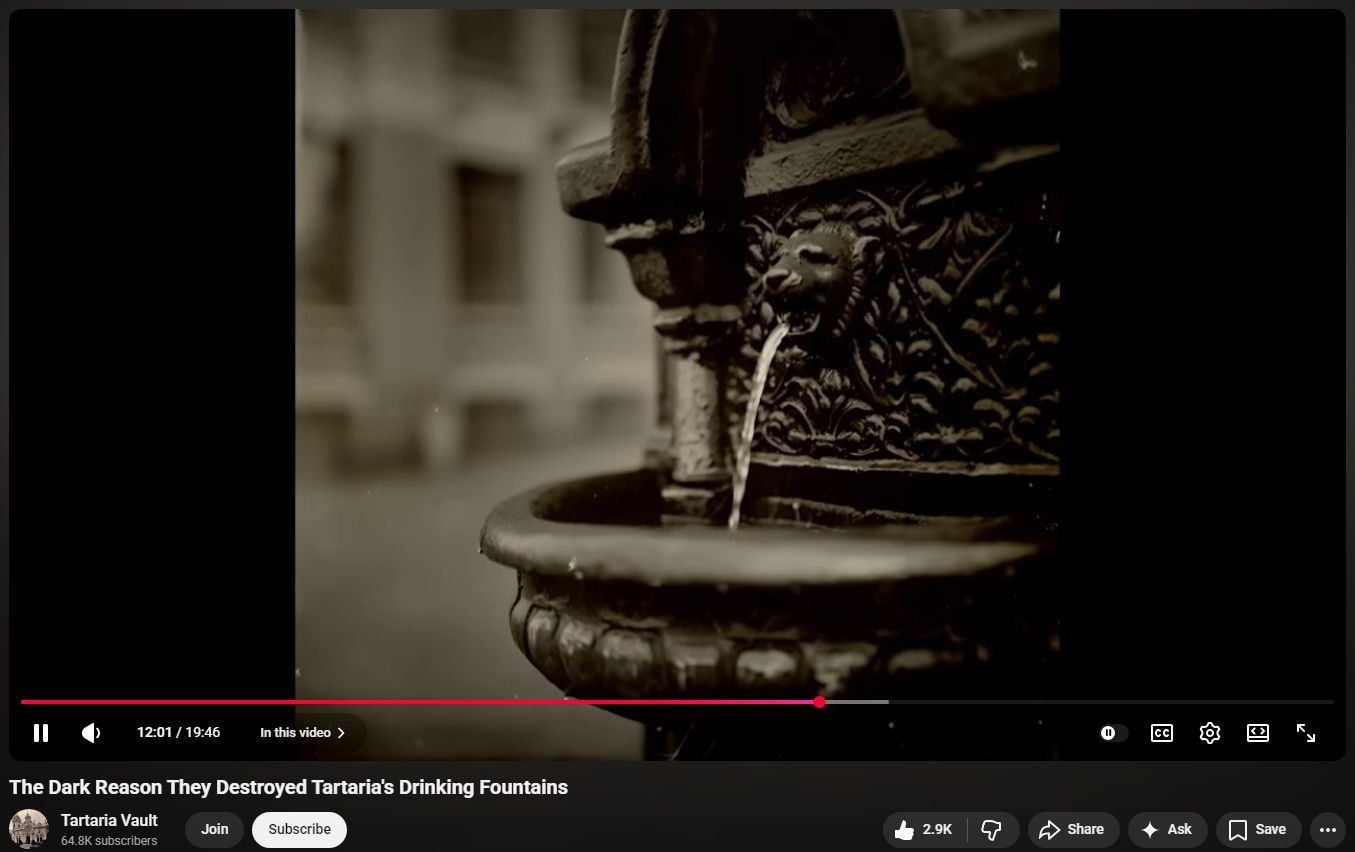
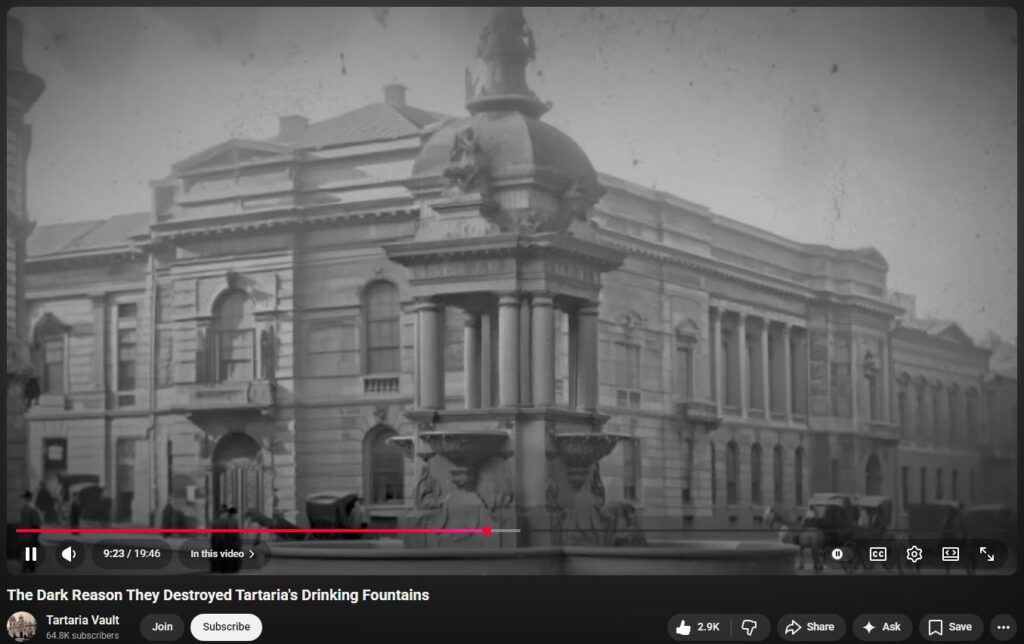
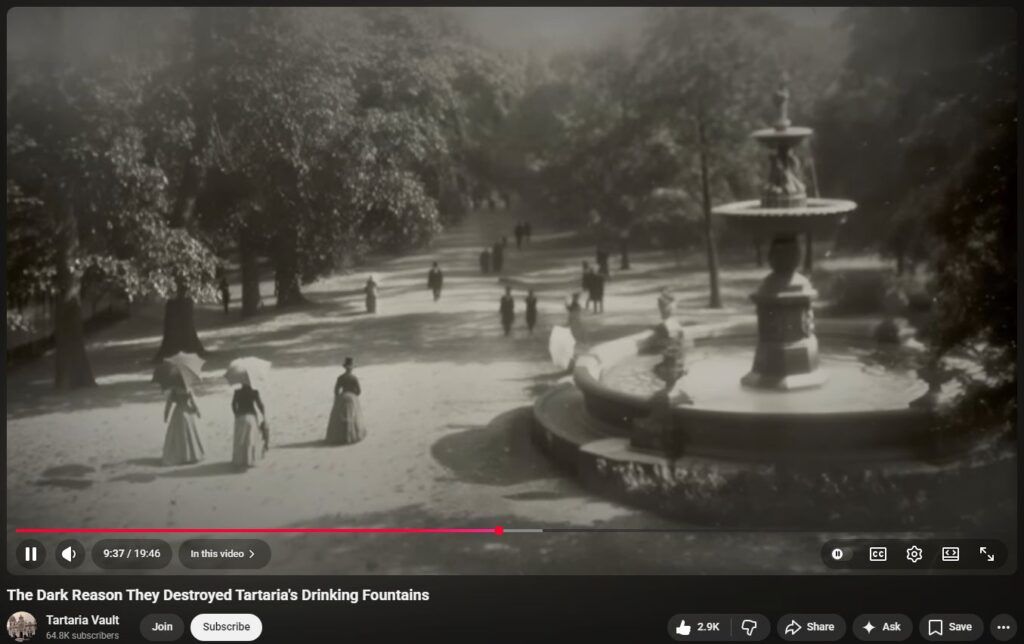
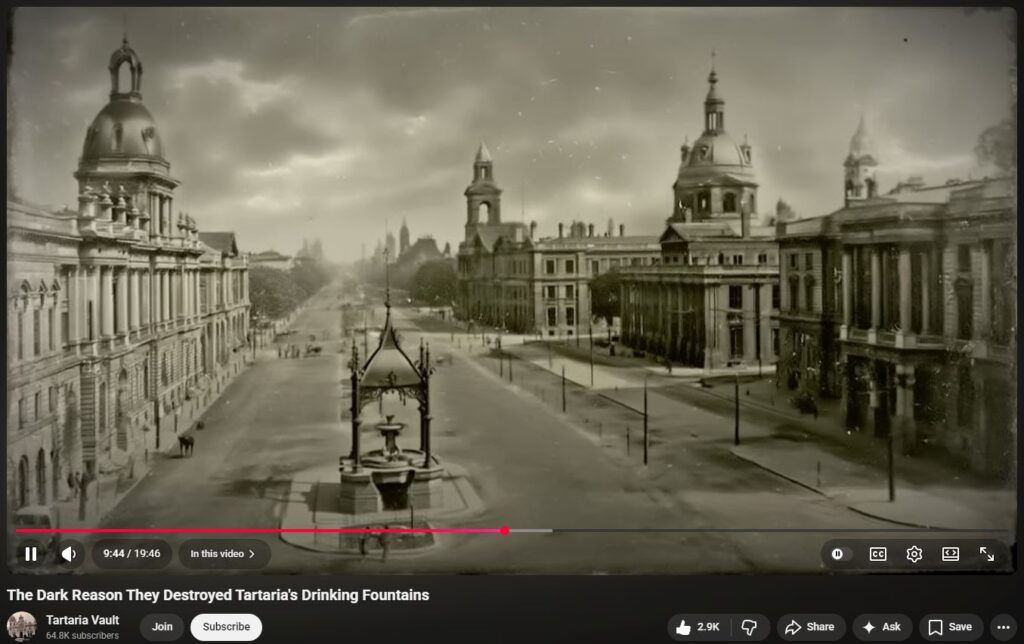
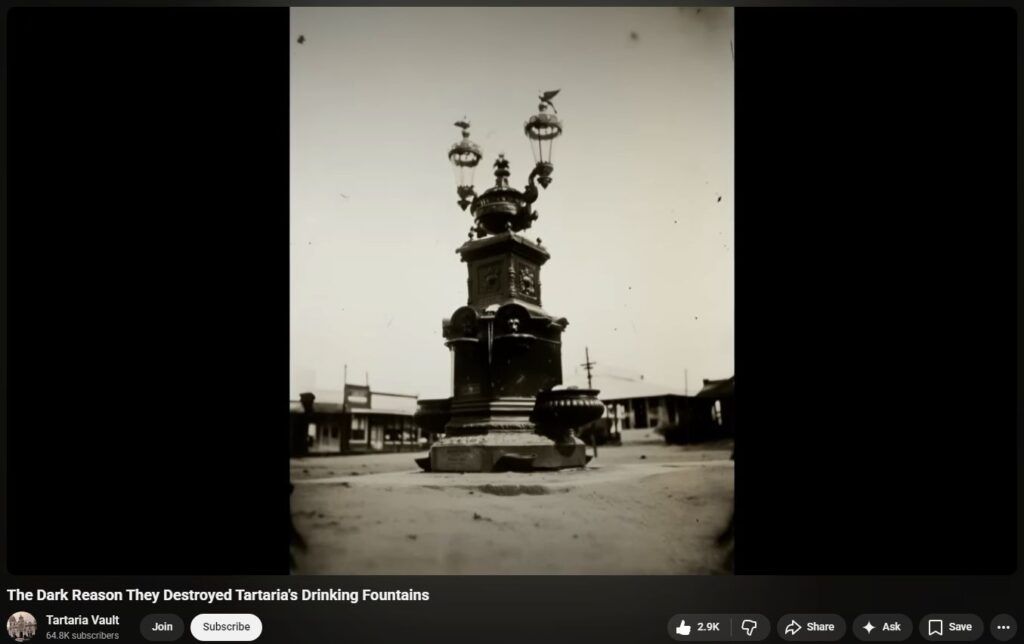
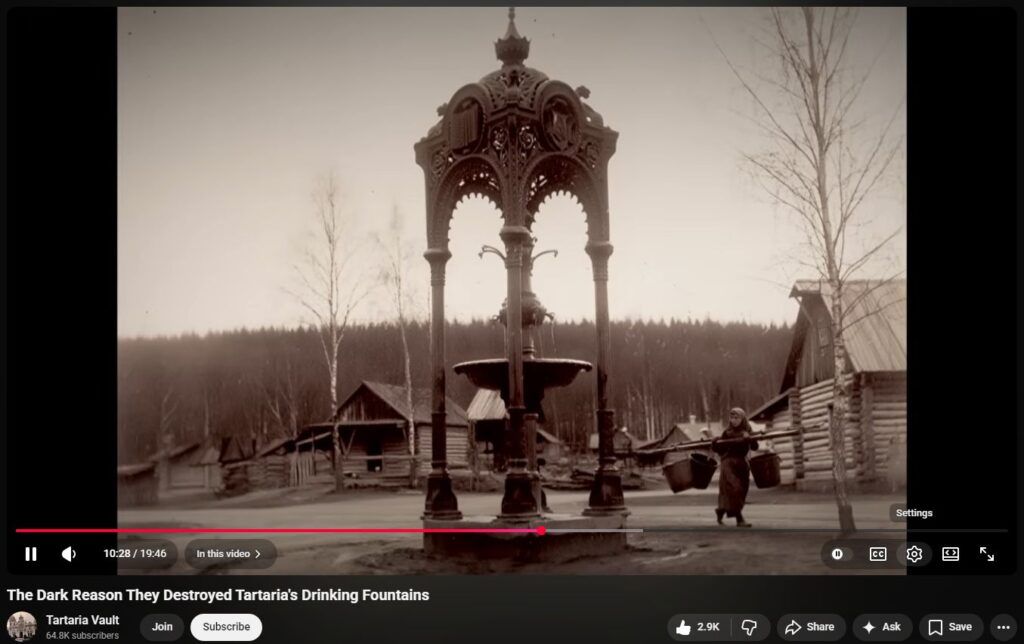
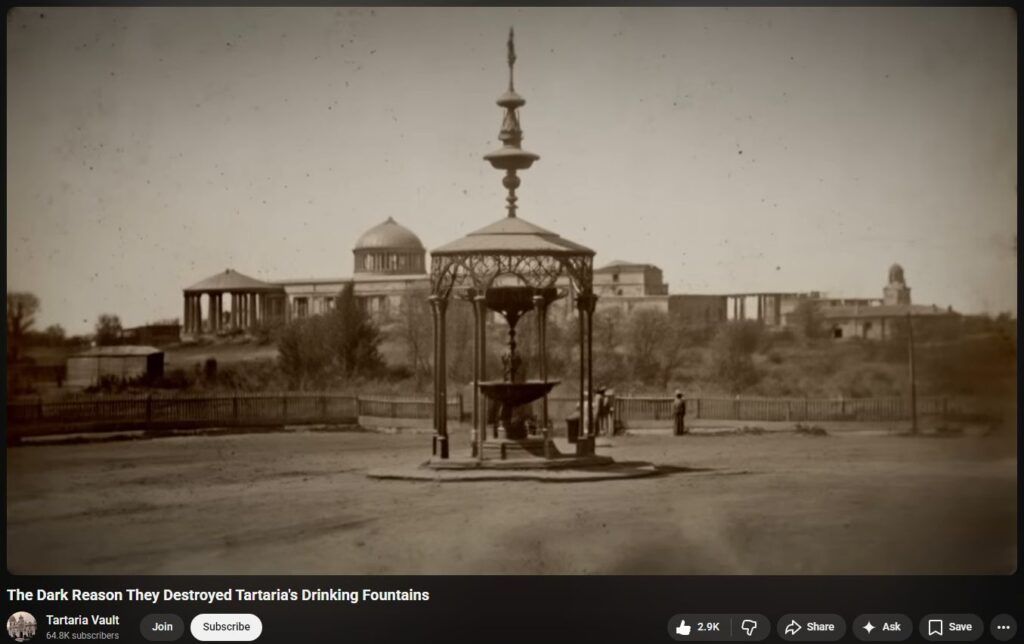
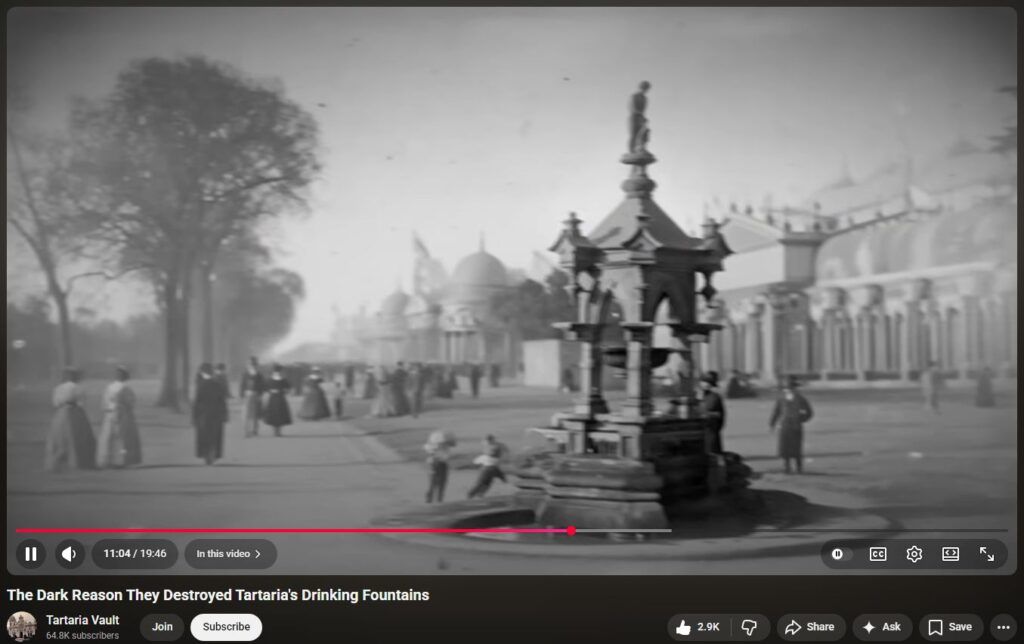
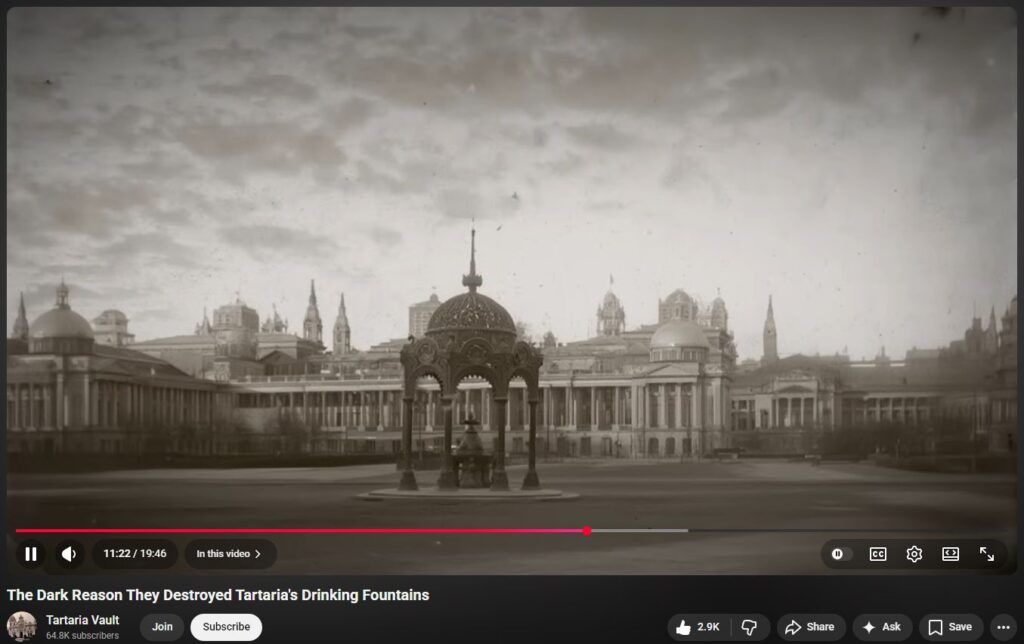
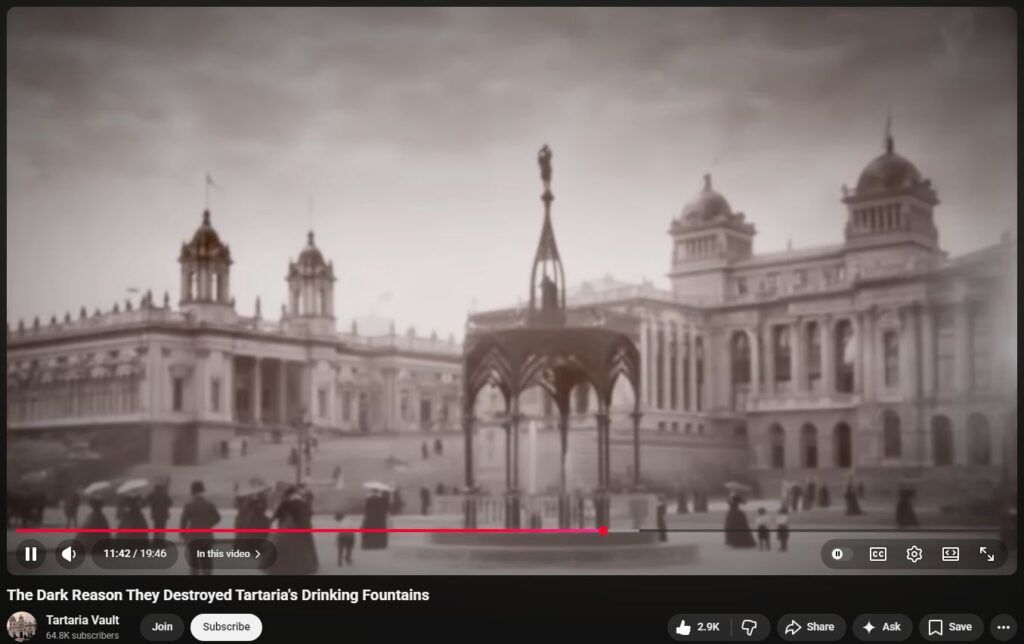
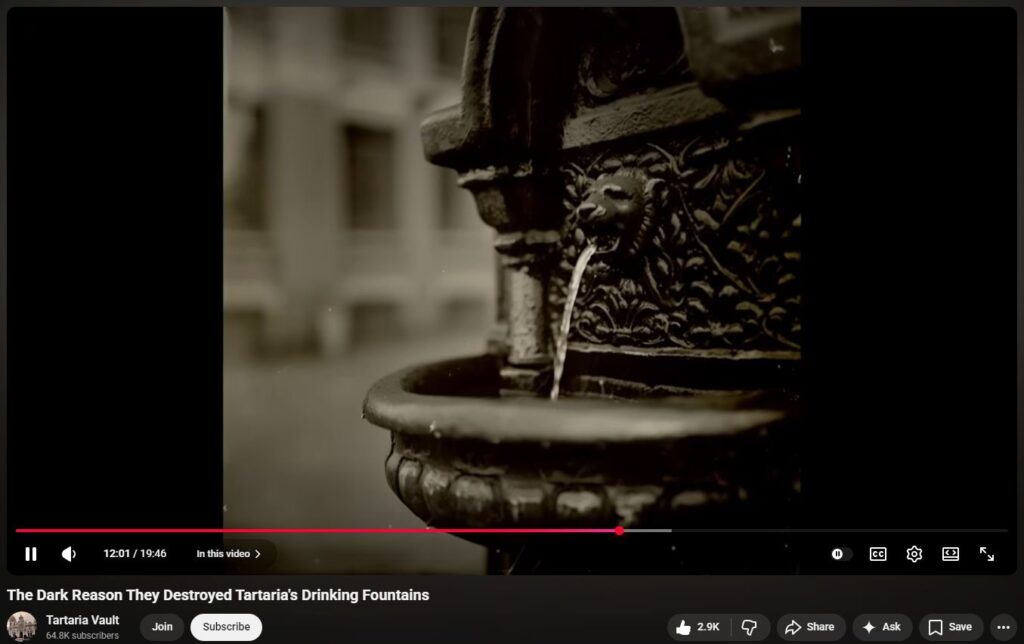
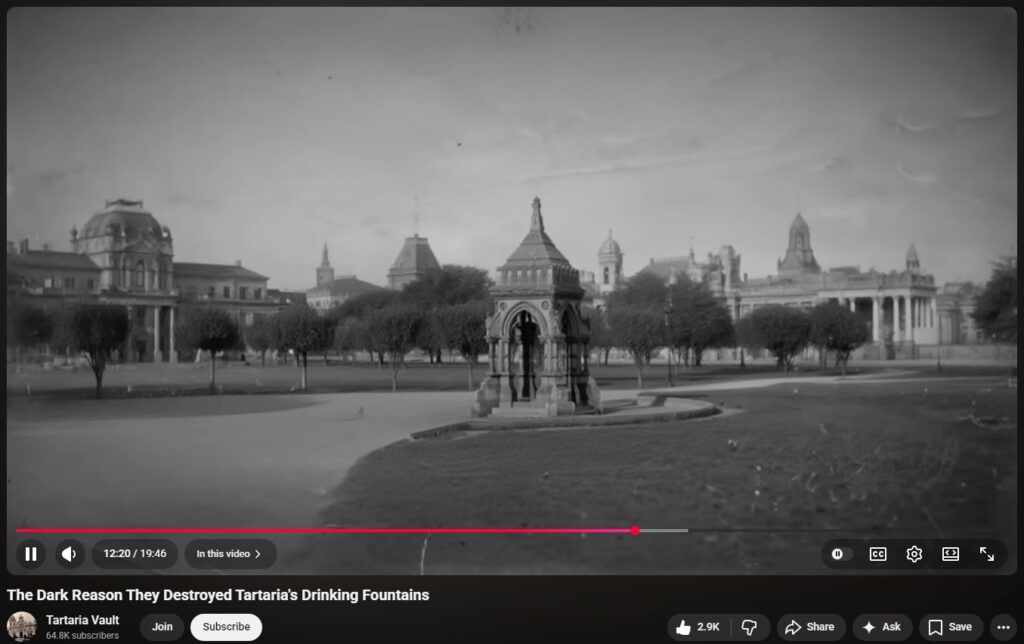
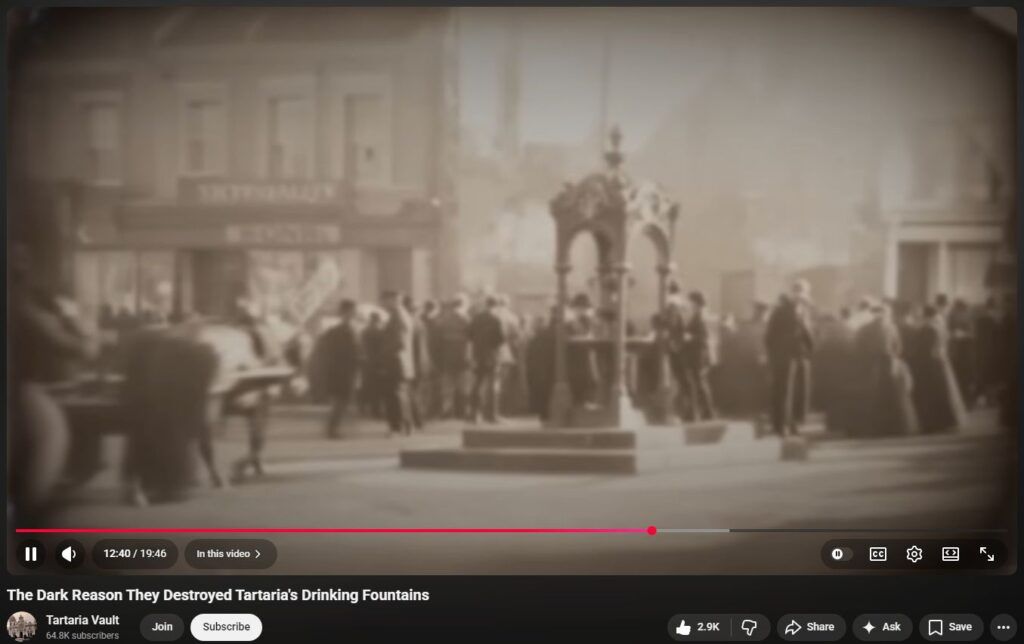
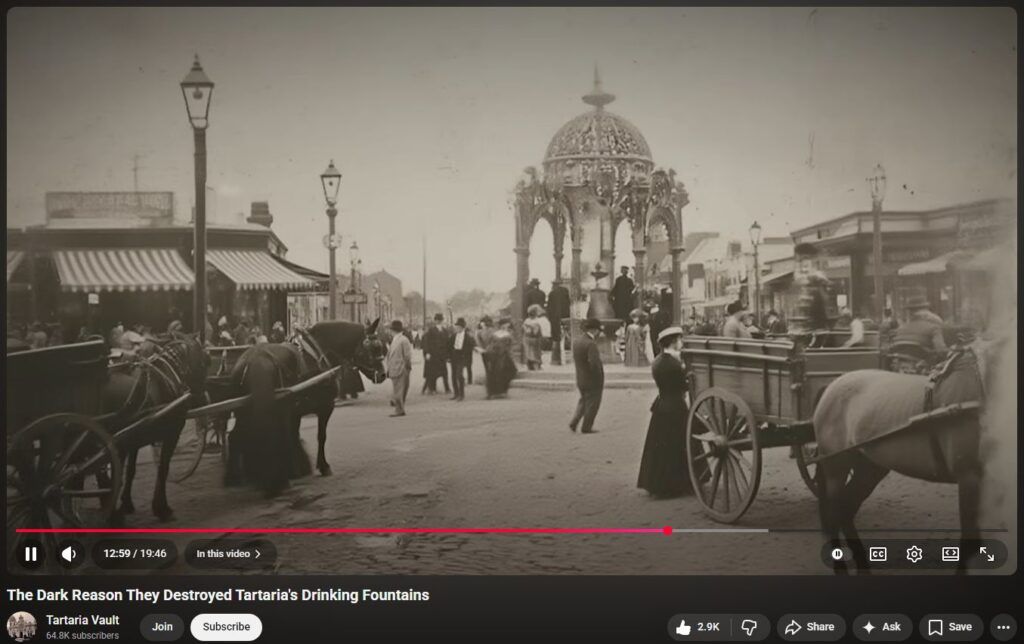
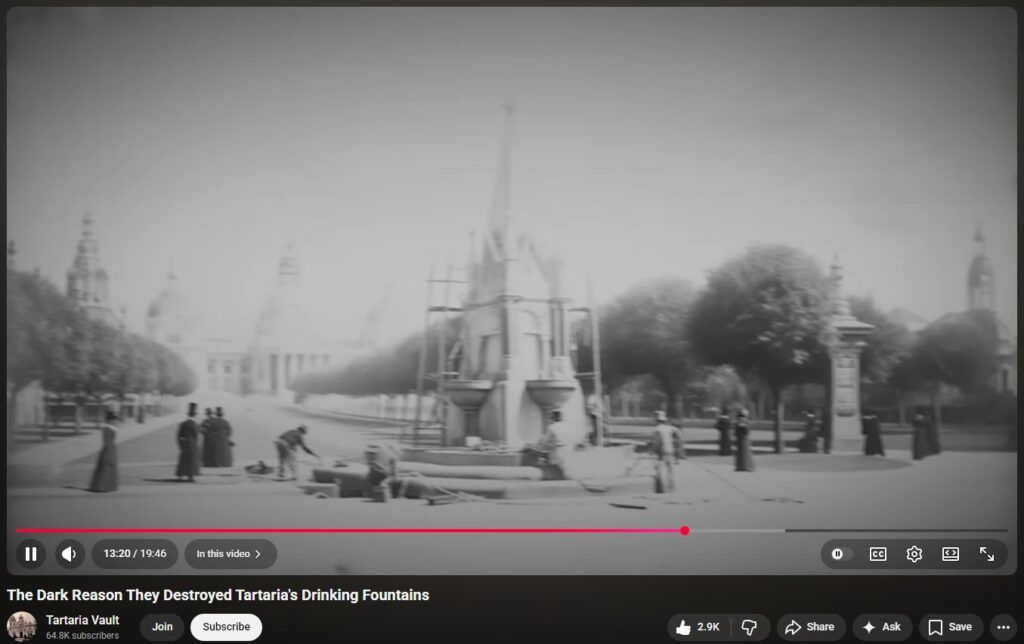
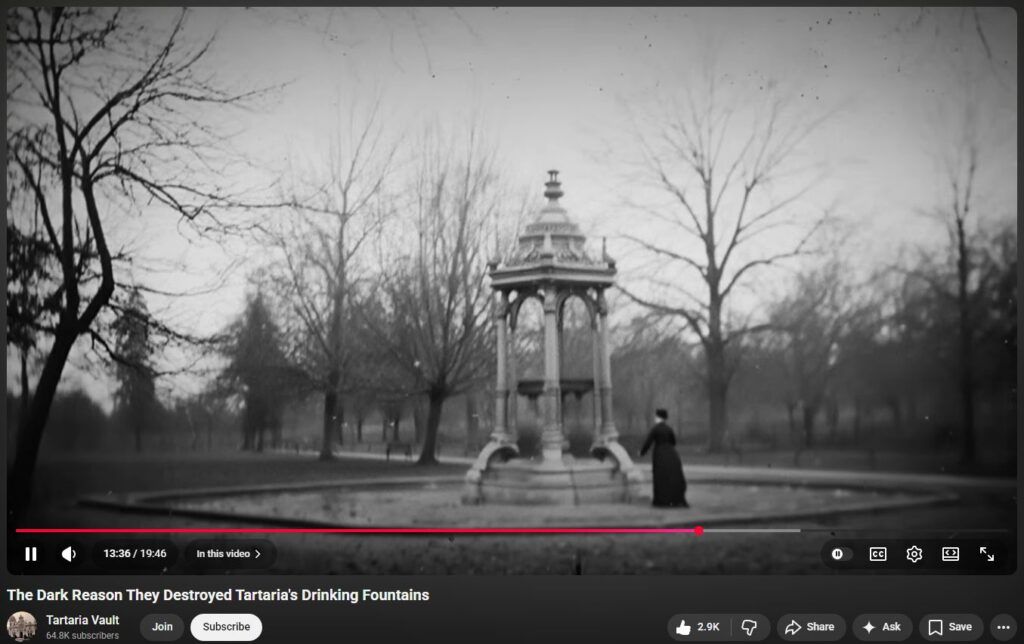
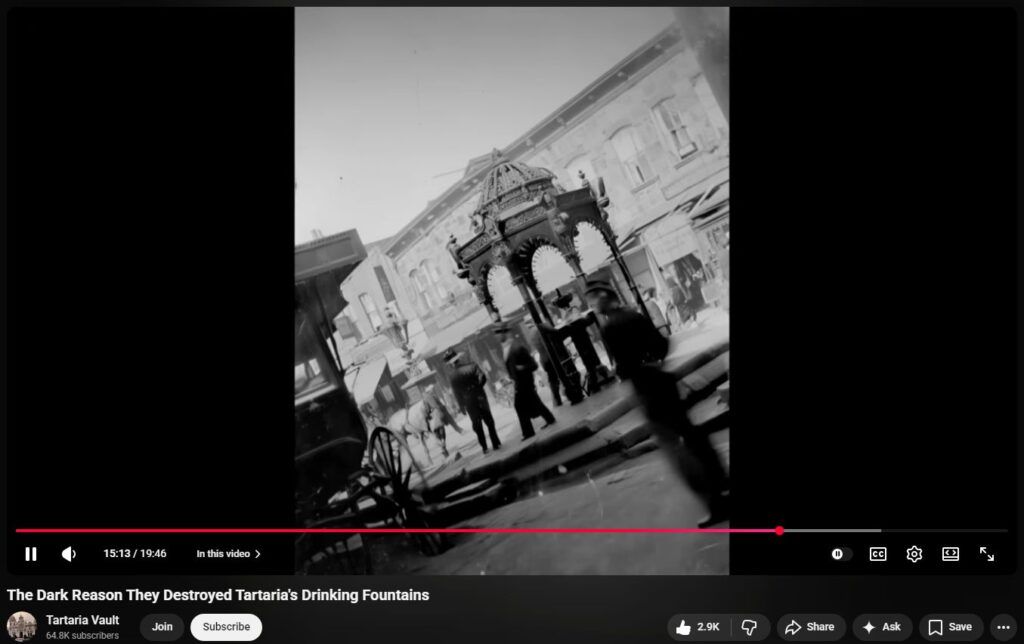
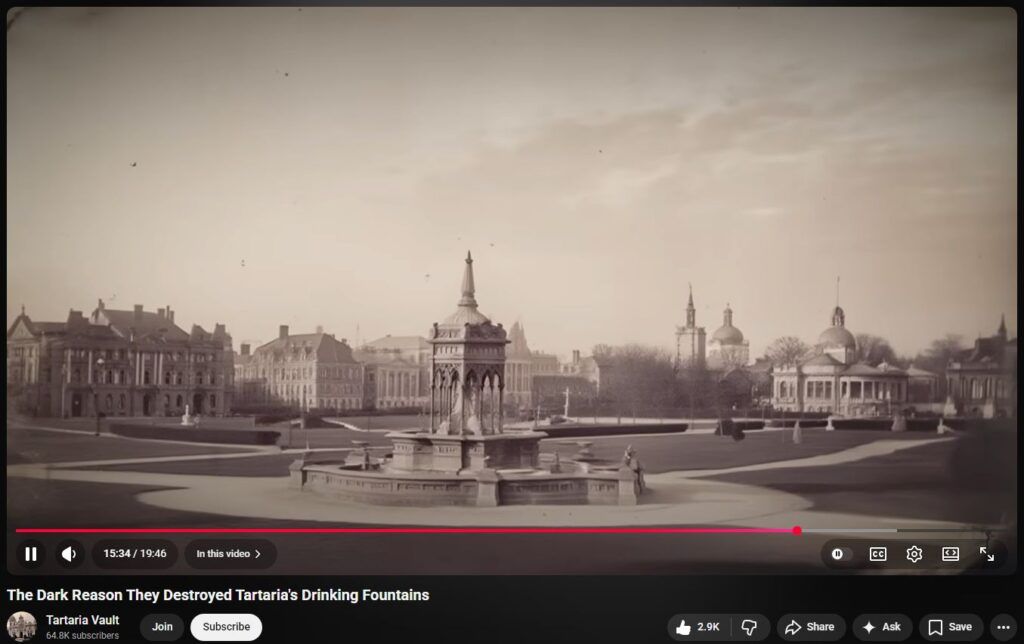
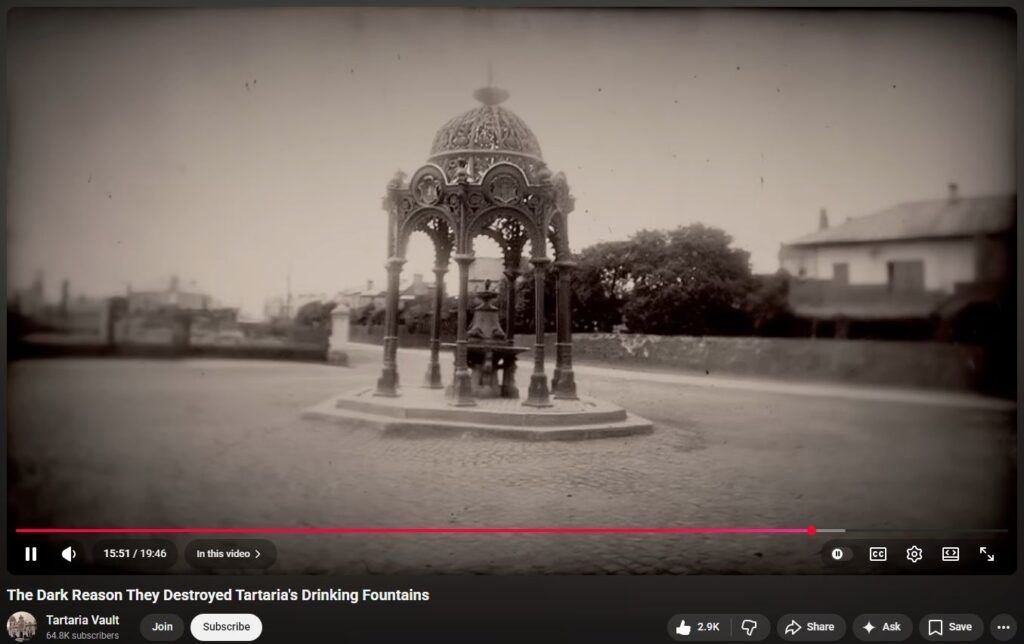
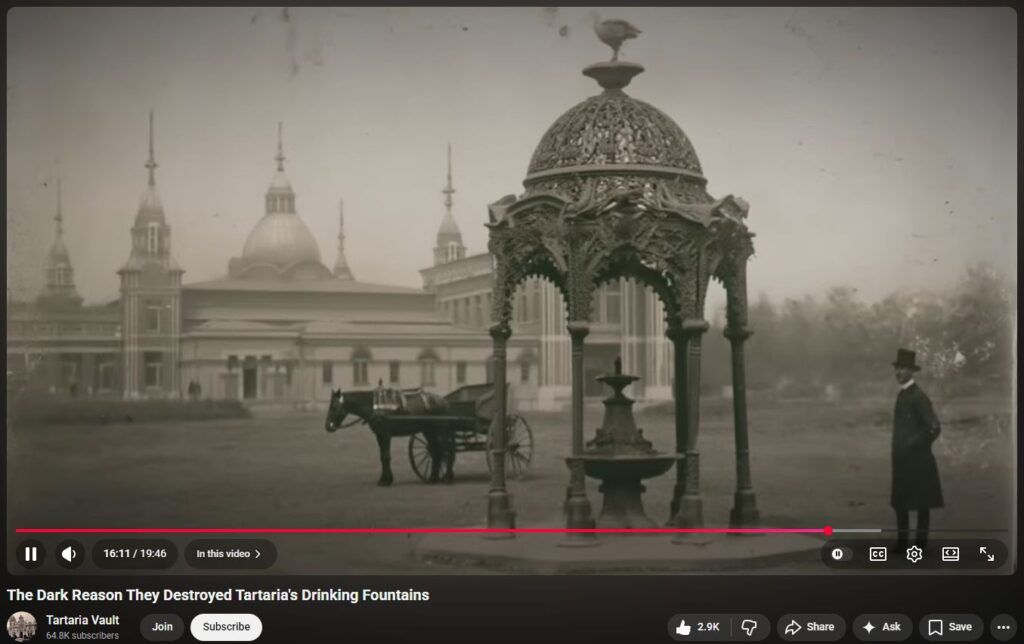
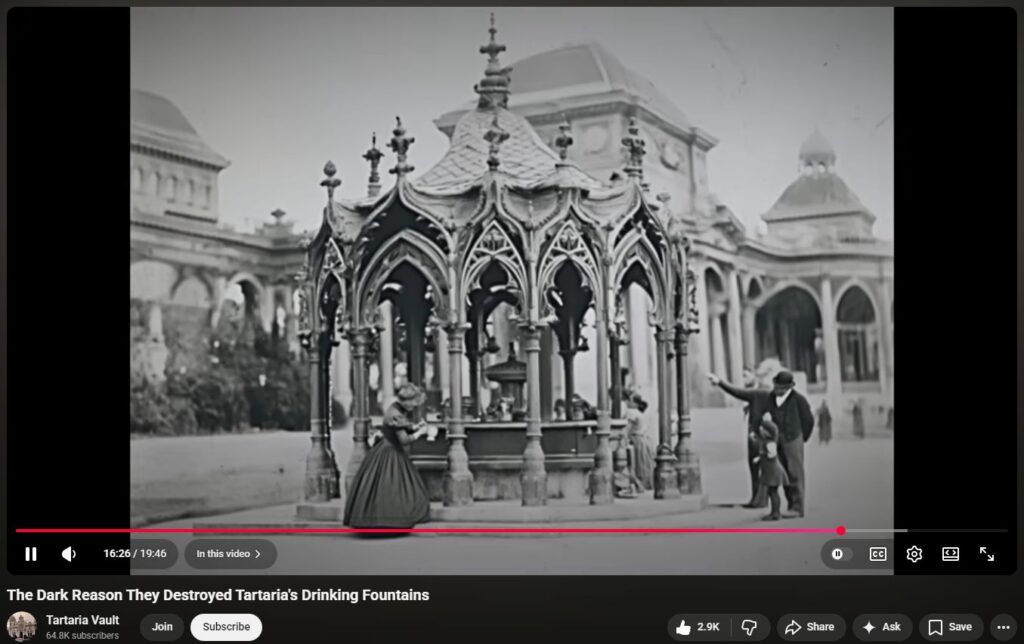
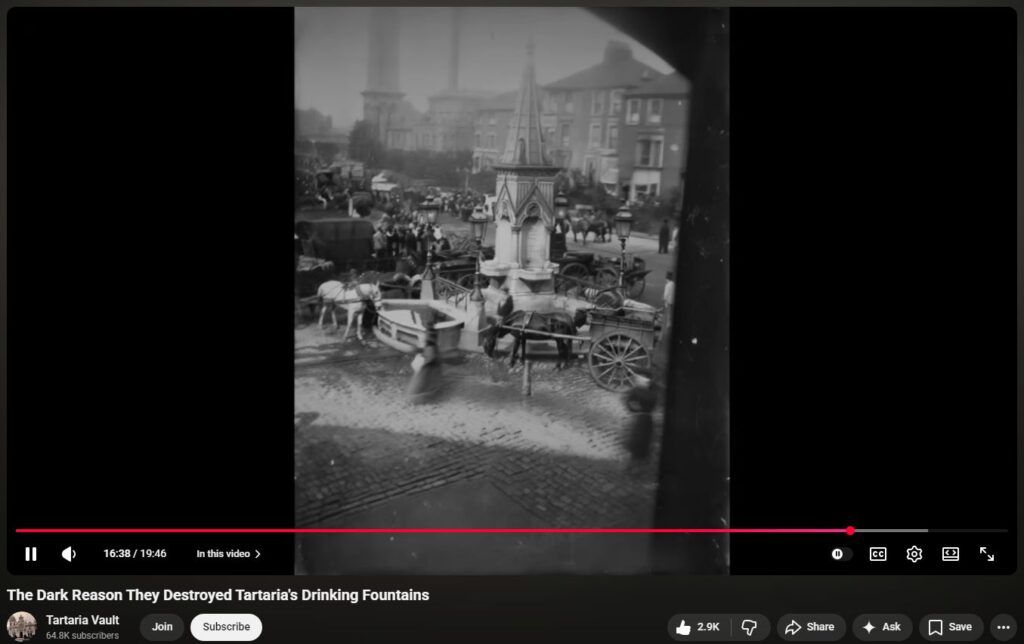
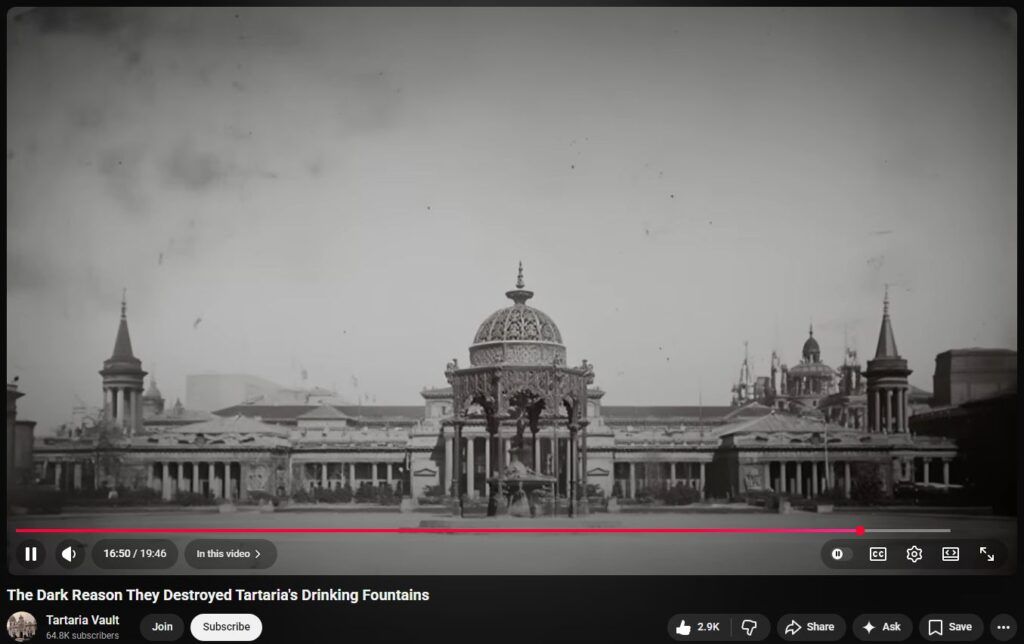
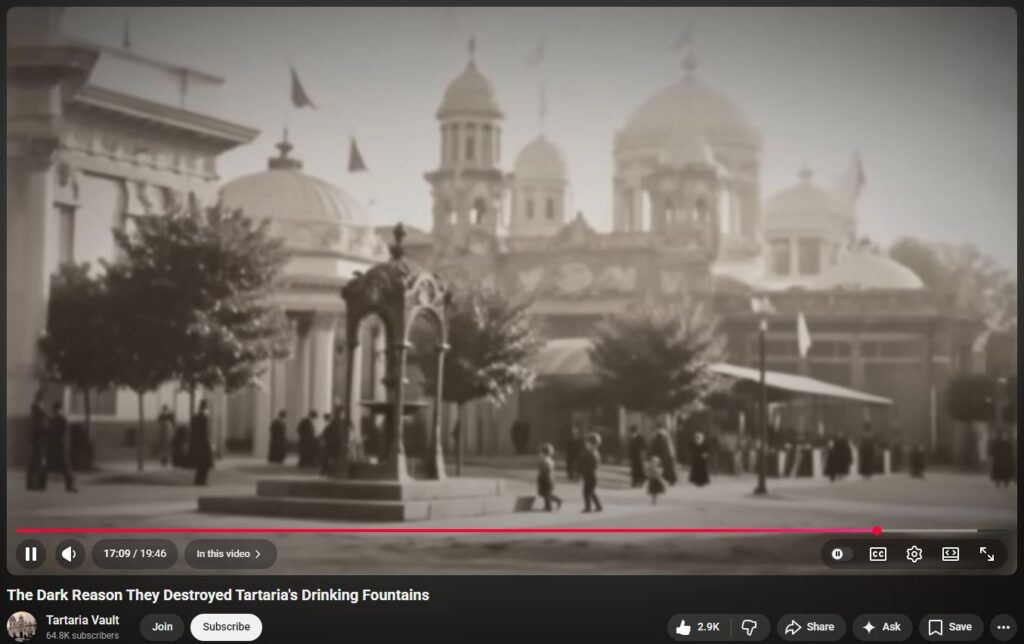
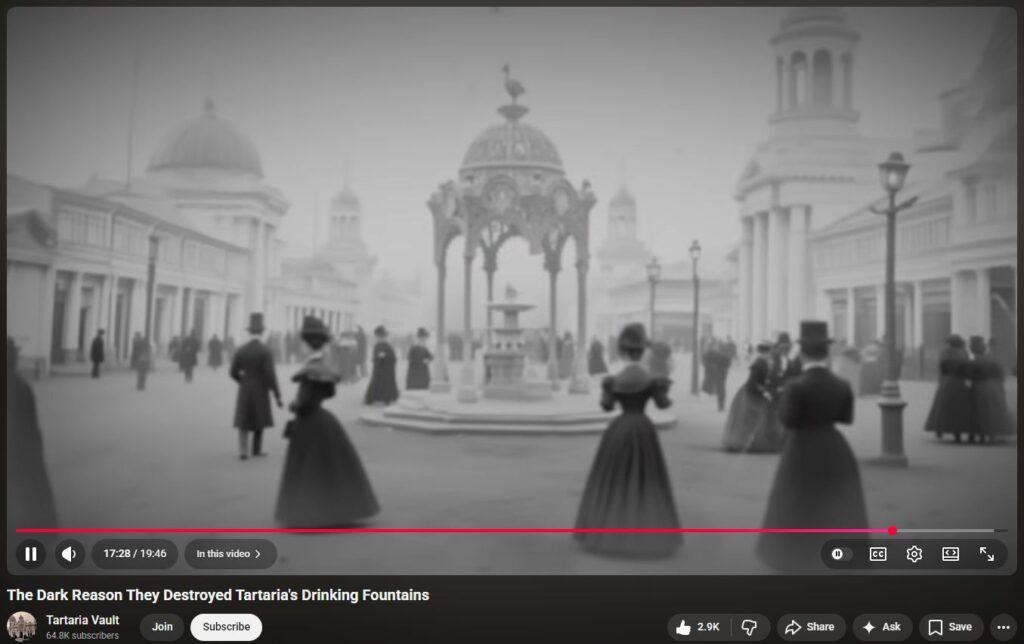
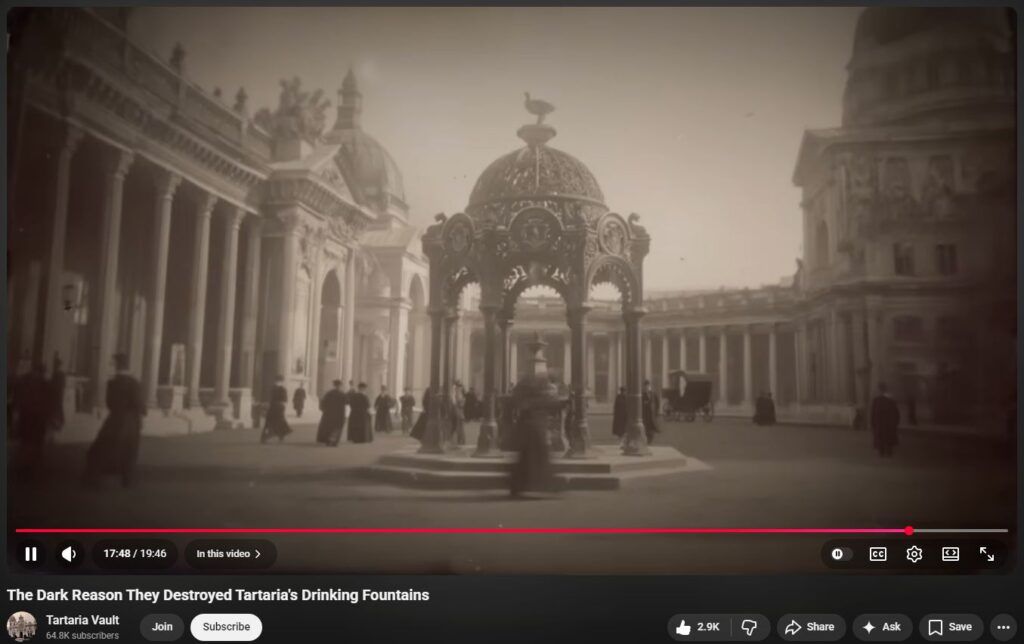
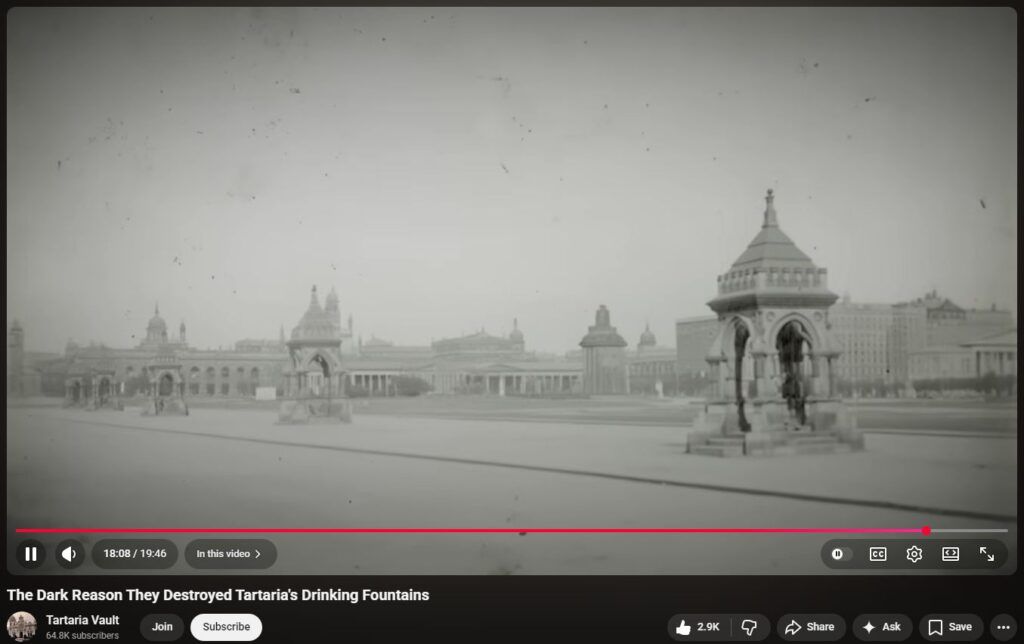
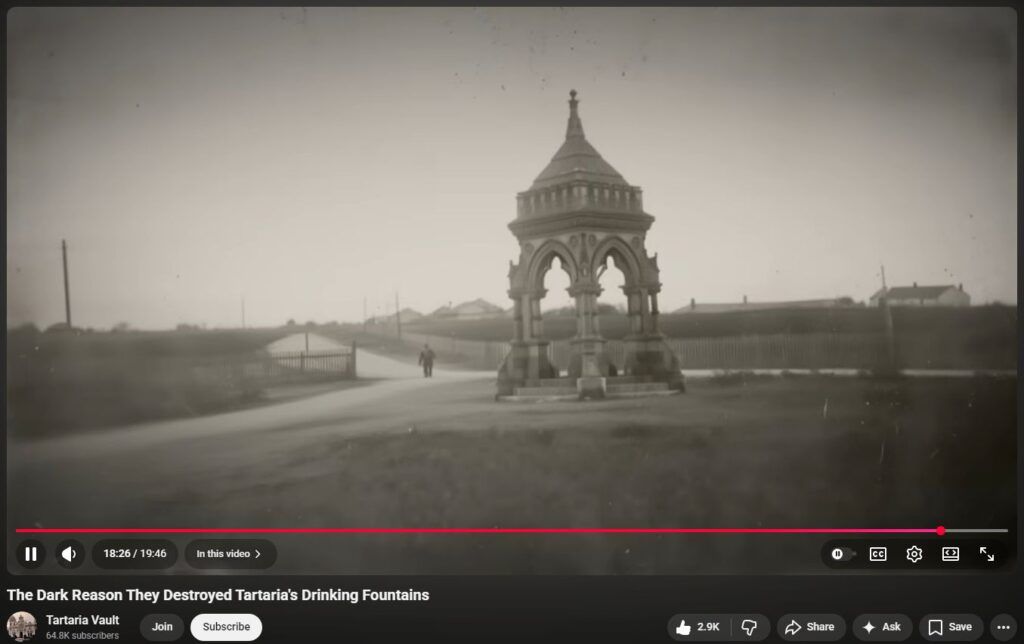
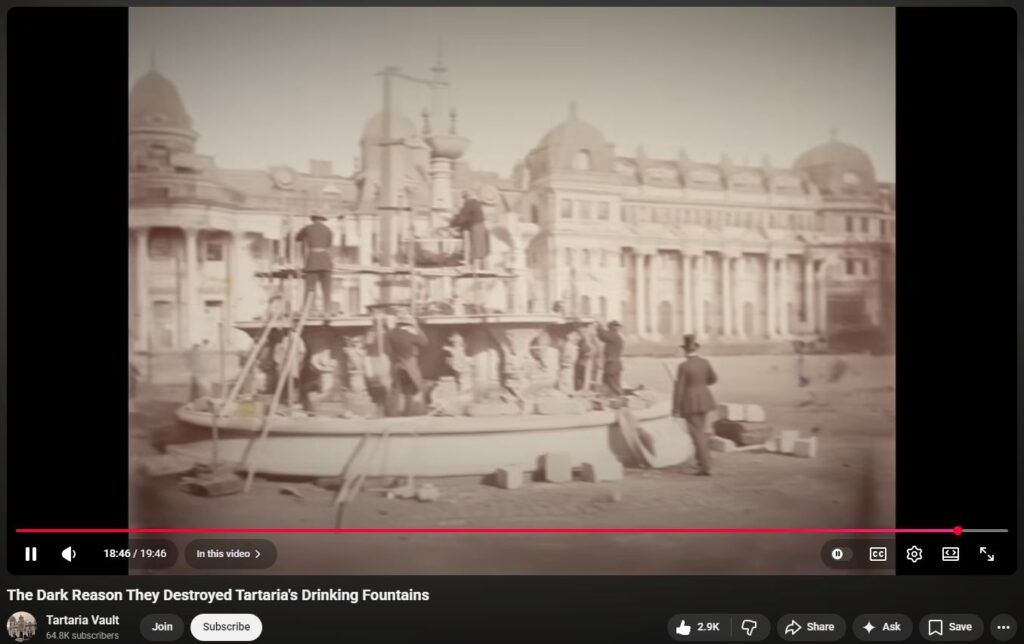
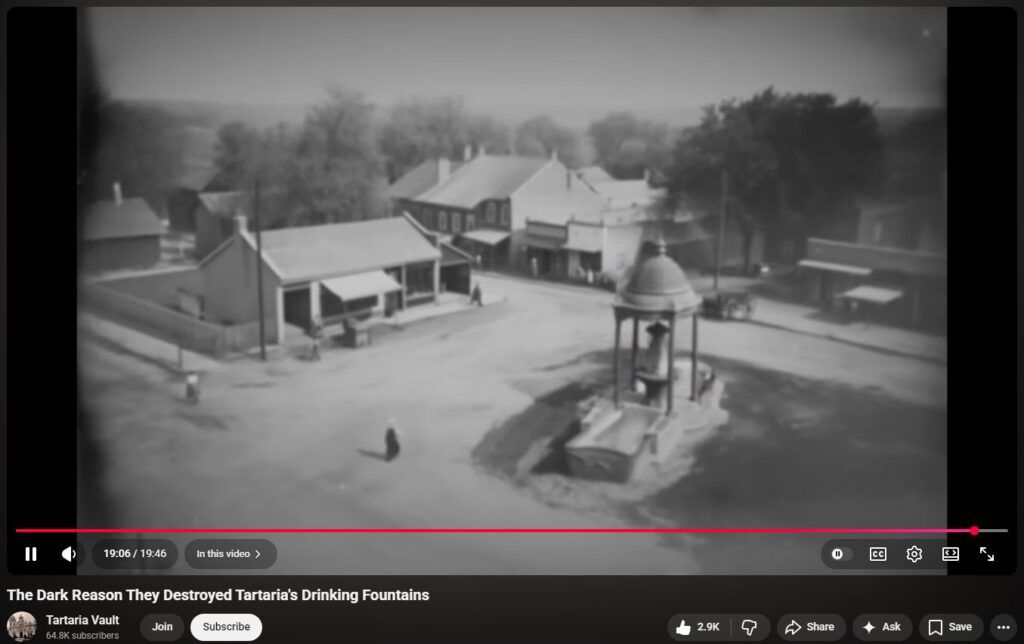
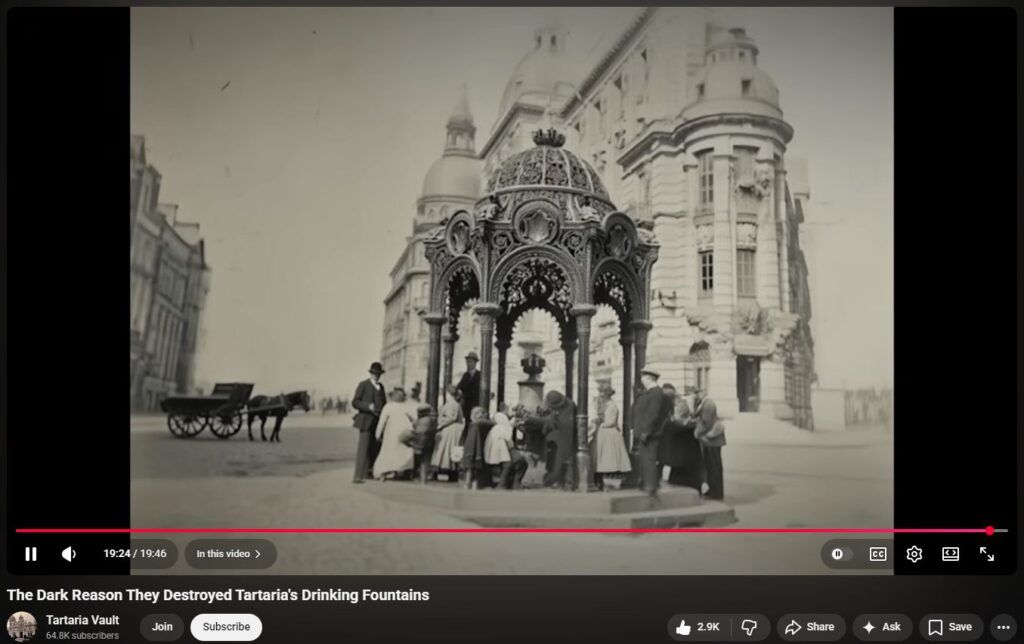
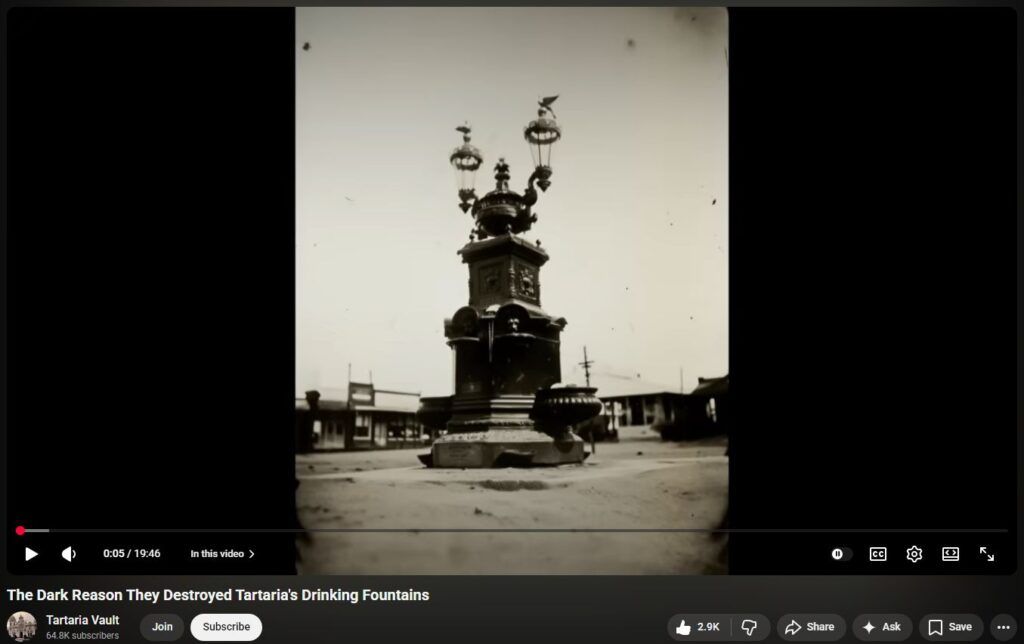
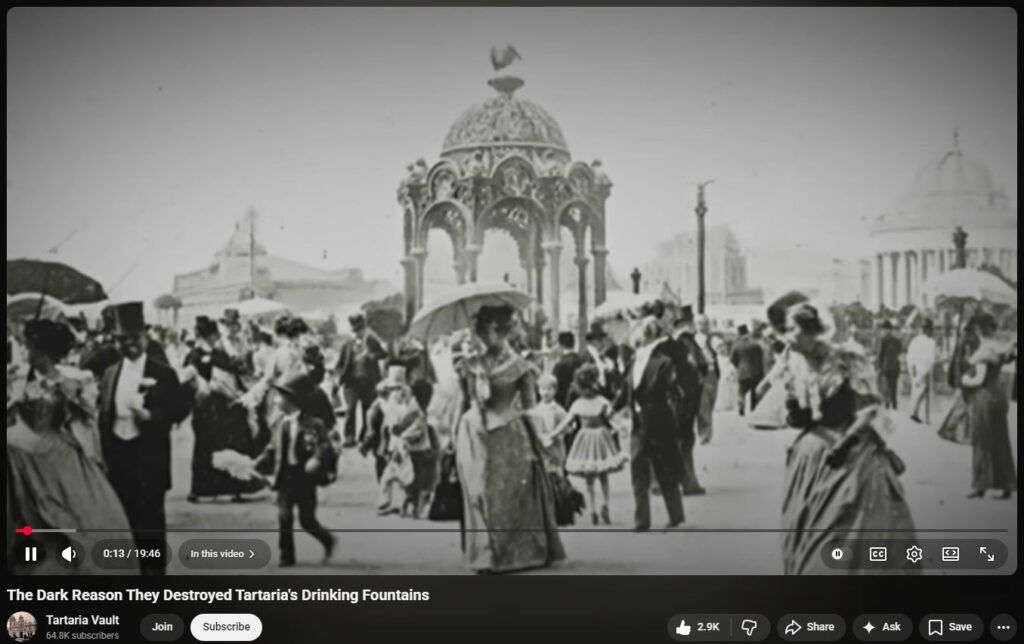
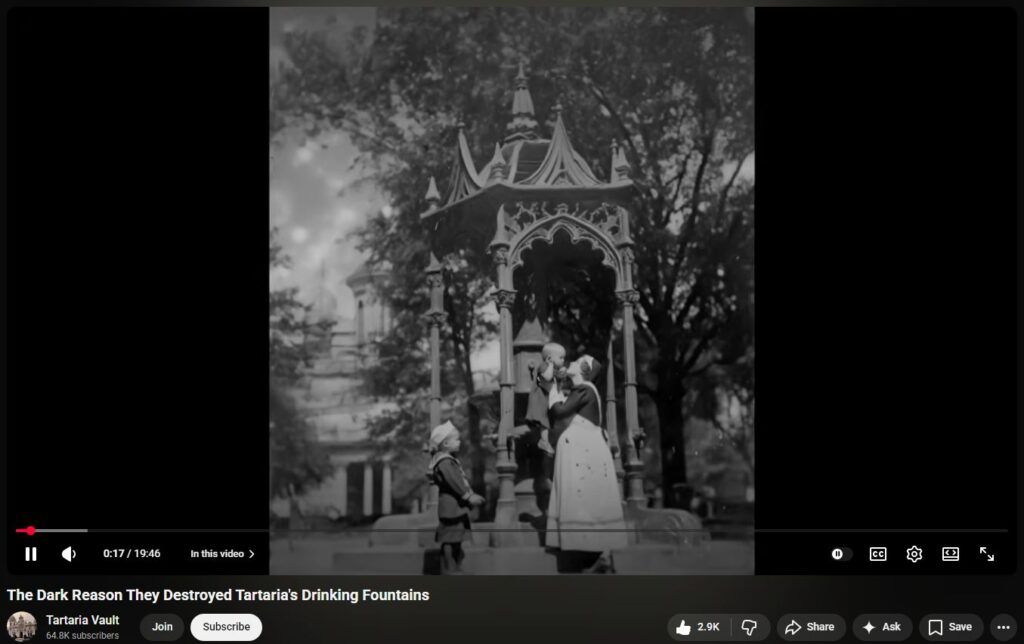
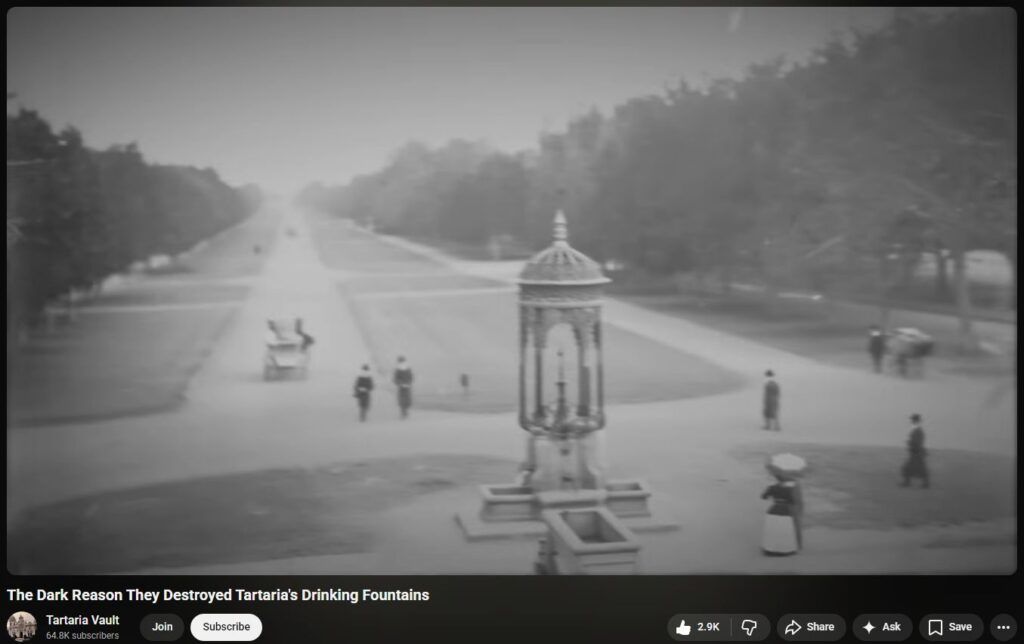
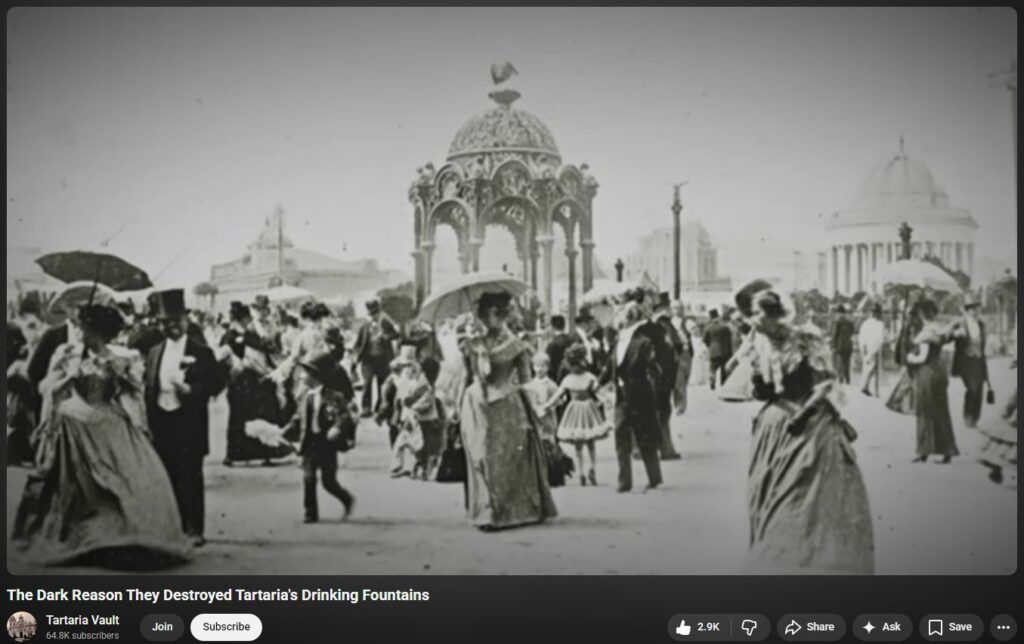
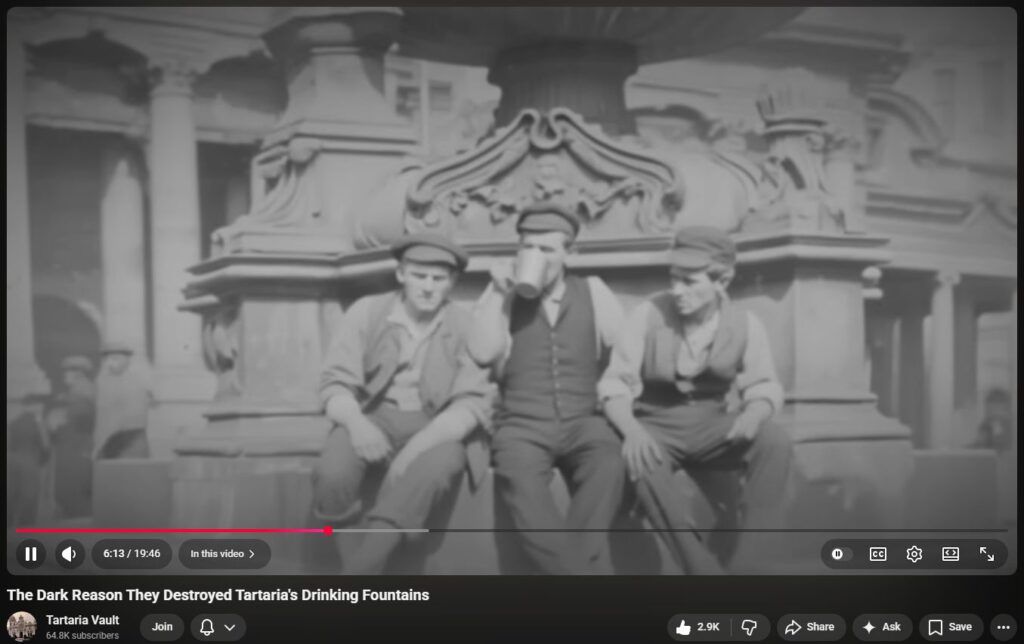
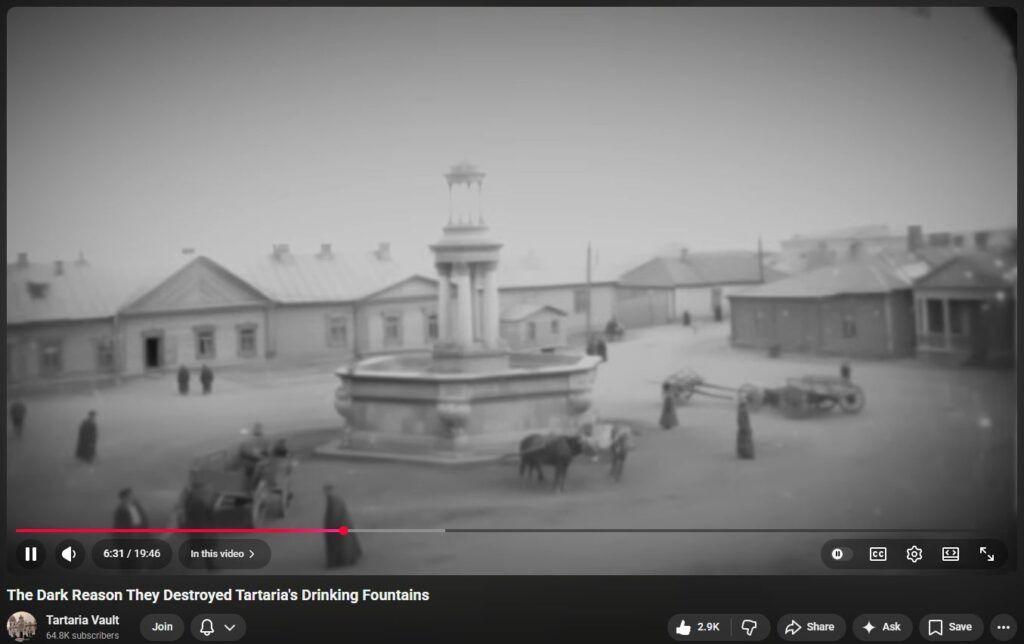
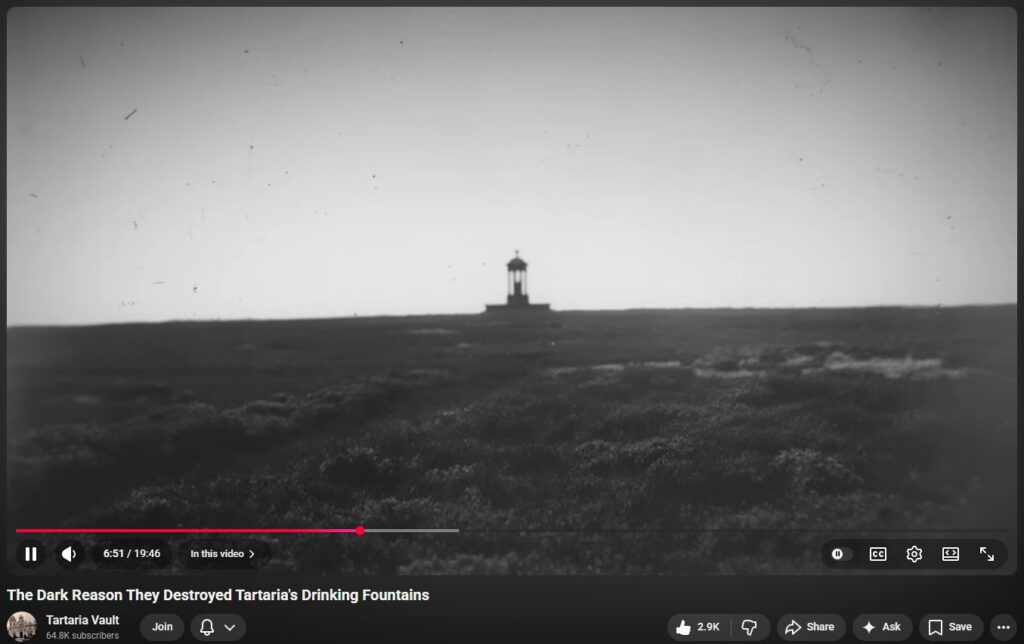
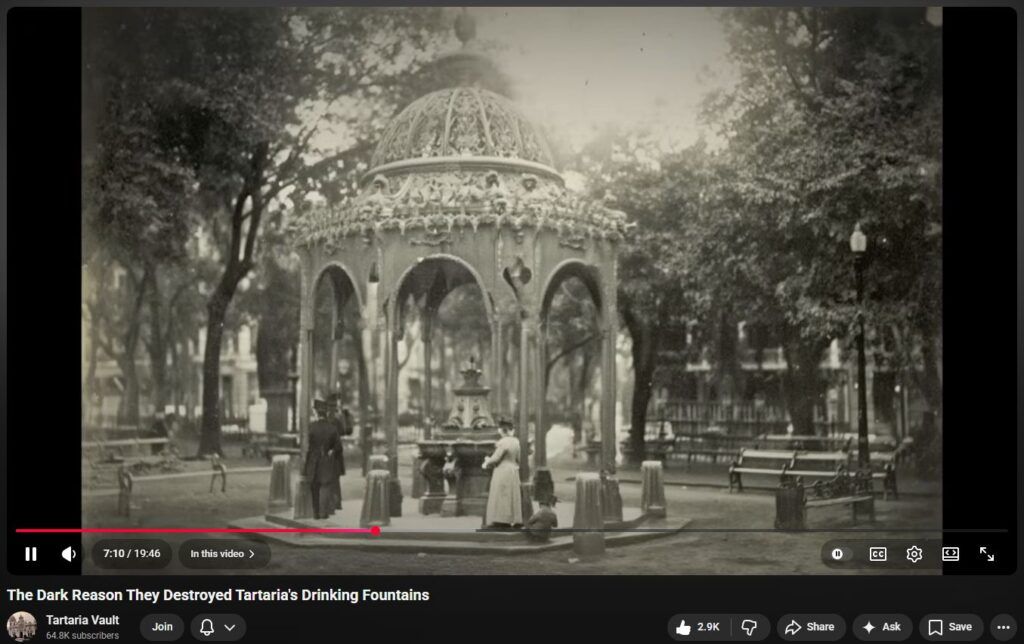
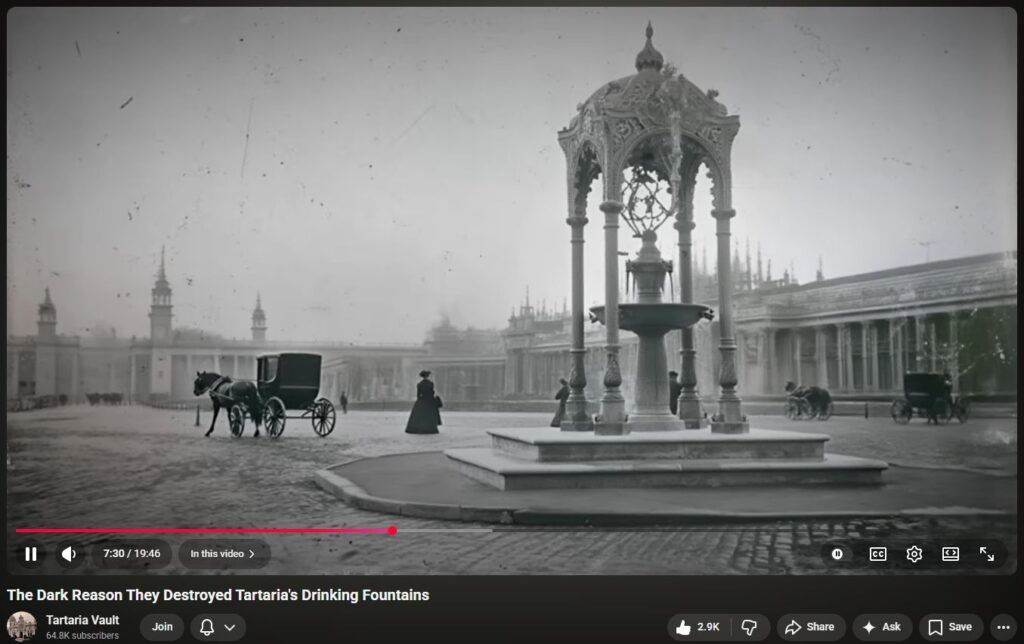
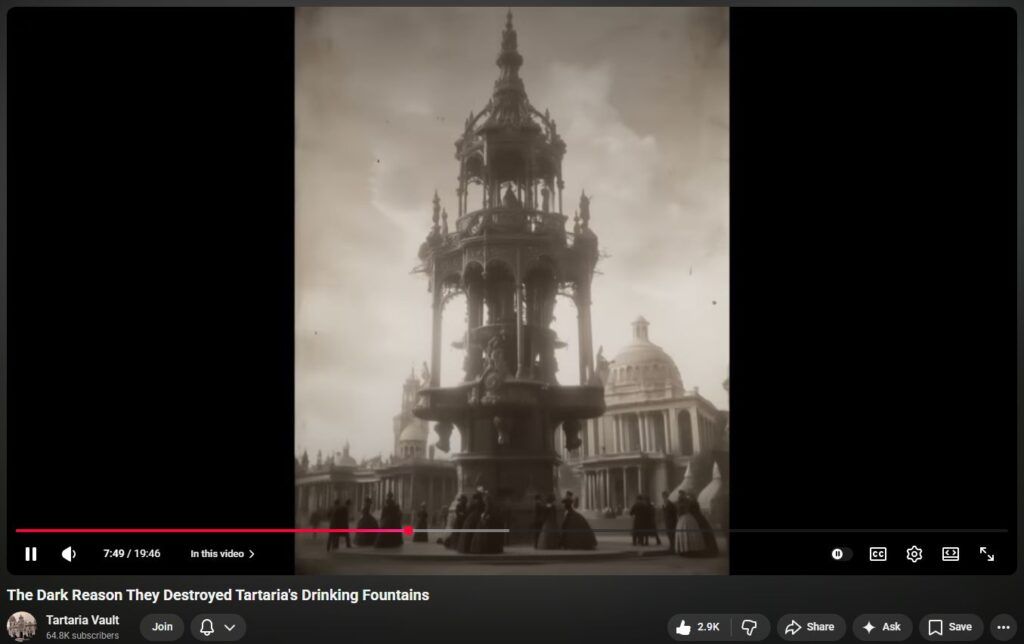
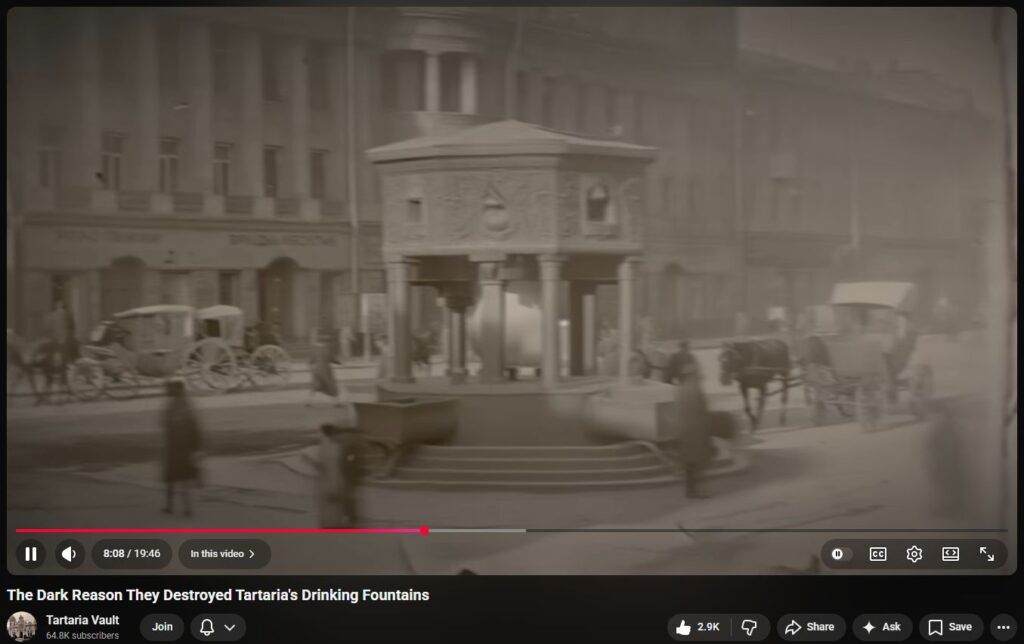
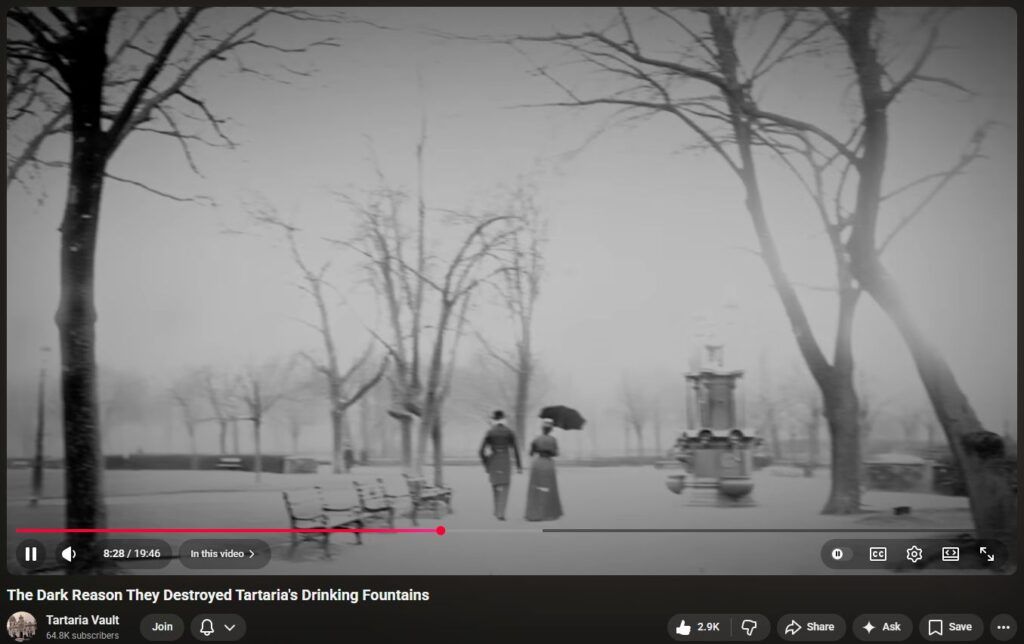
How did thousands of elaborate public drinking fountains—monuments to free water built with impossible precision—appear simultaneously across every continent in the mid-1800s, only to vanish completely within a generation, leaving almost no documentation of either their construction or removal? From ornate classical structures in frontier mining towns to coordinated geometric networks spanning global cities, from the mysterious disappearance of construction records to the collective amnesia surrounding their systematic dismantling, the evidence reveals an infrastructure project on a scale that official history cannot explain.
As I examined historical photographs, municipal records, and distribution patterns, a disturbing picture emerged: the fountains’ appearance was too coordinated, the craftsmanship too sophisticated for the era, the infrastructure too advanced for cities supposedly just developing water systems, and their removal too rapid and too silent. This wasn’t gradual philanthropic giving or normal infrastructure replacement—it was a unified global system implemented across continents within decades, all following similar design principles, all requiring knowledge that shouldn’t have existed, all erased within years accompanied by a silence that has been systematically maintained.
This investigation explores the mystery of Tartaria’s drinking fountains—the impossible coordination that created them, the advanced water infrastructure they required, the skilled craftsmen who built thousands of unique monuments simultaneously, the geometric patterns suggesting central planning, and the questions that official narratives refuse to address. The deeper we examine the timeline, the global distribution, and the deliberate forgetting surrounding these structures, the more difficult it becomes to accept the explanation of independent philanthropists and hygiene concerns rather than inherited infrastructure and calculated erasure.
The material on this channel presents exploratory interpretations of history and imaginative speculation, conveyed through narrative storytelling rather than precise historical documentation. Viewpoints and visual representations are dramatized or intentionally constructed to support alternative narrative exploration. Visual elements may at times be created using automated or generative tools. The content shared should not be considered factual.
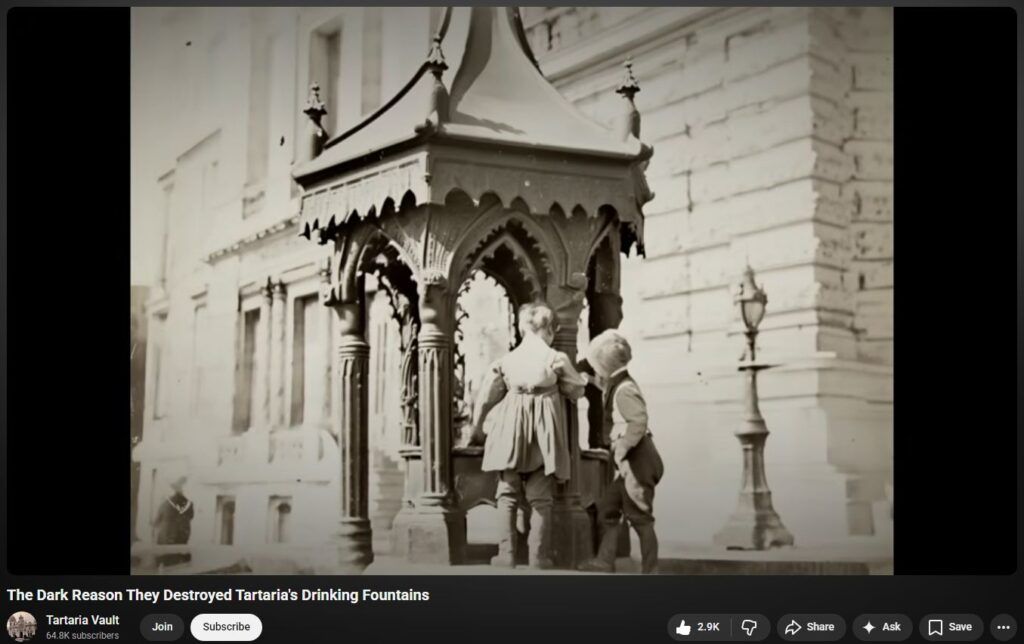
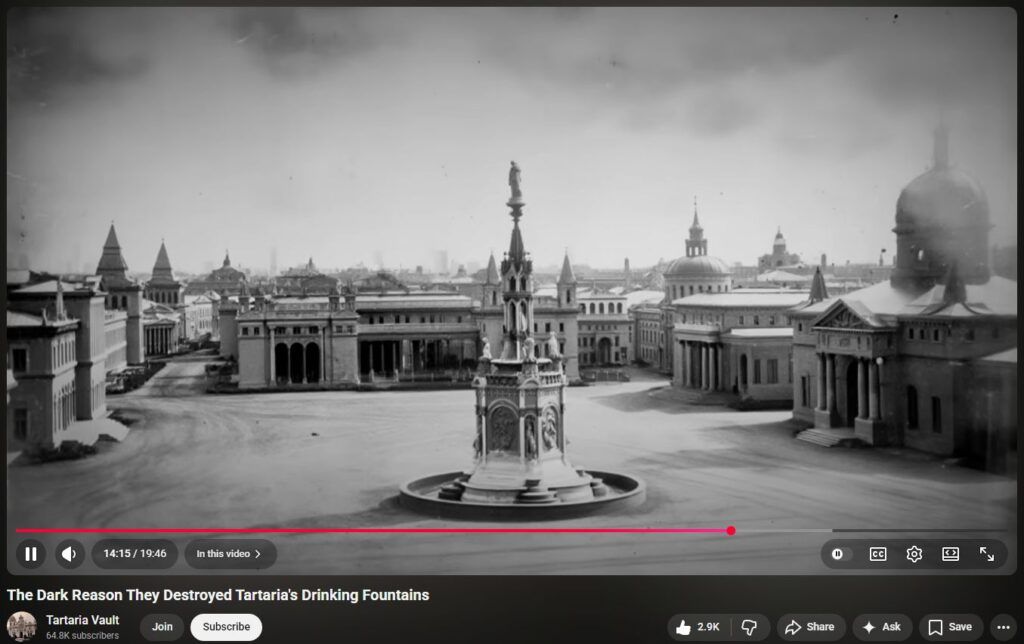
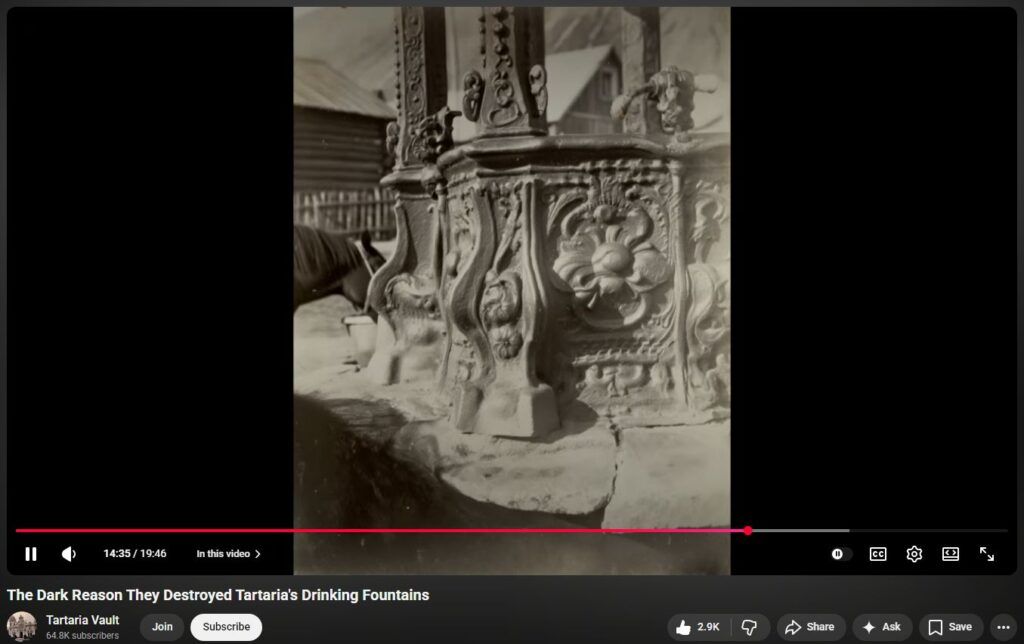
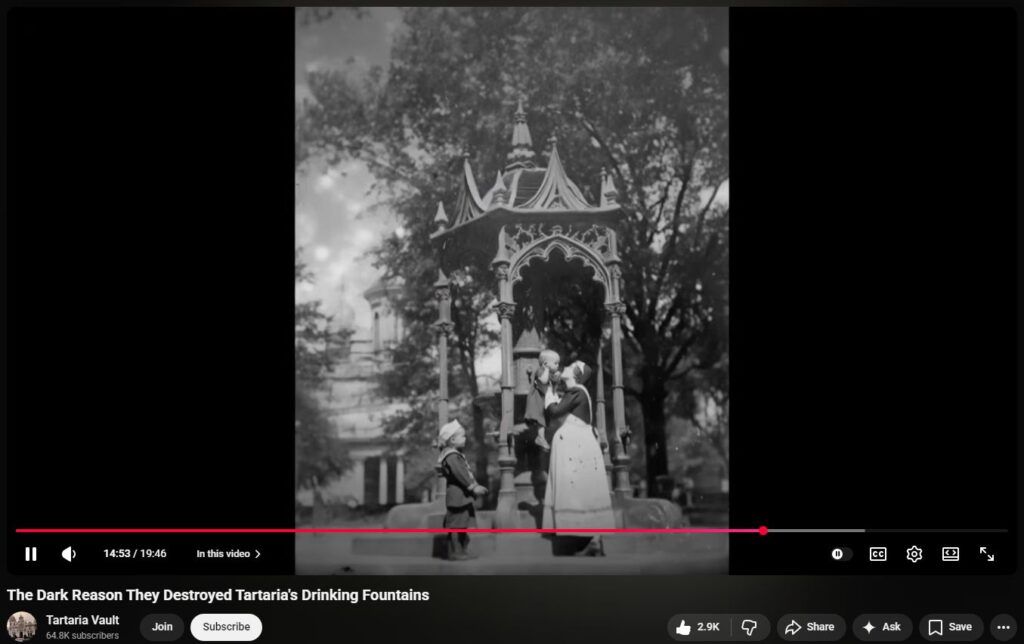
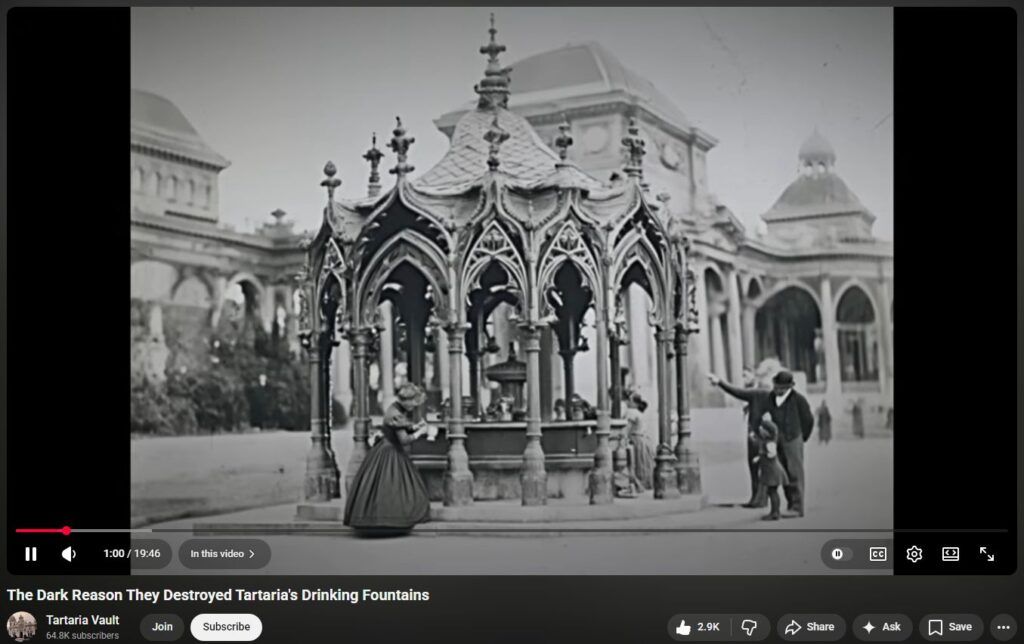
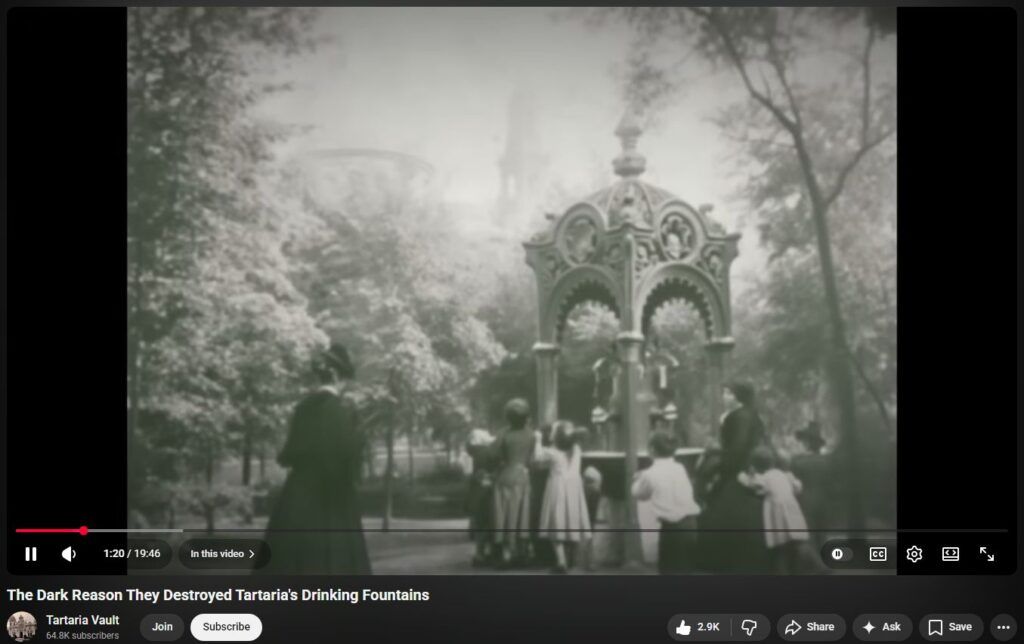
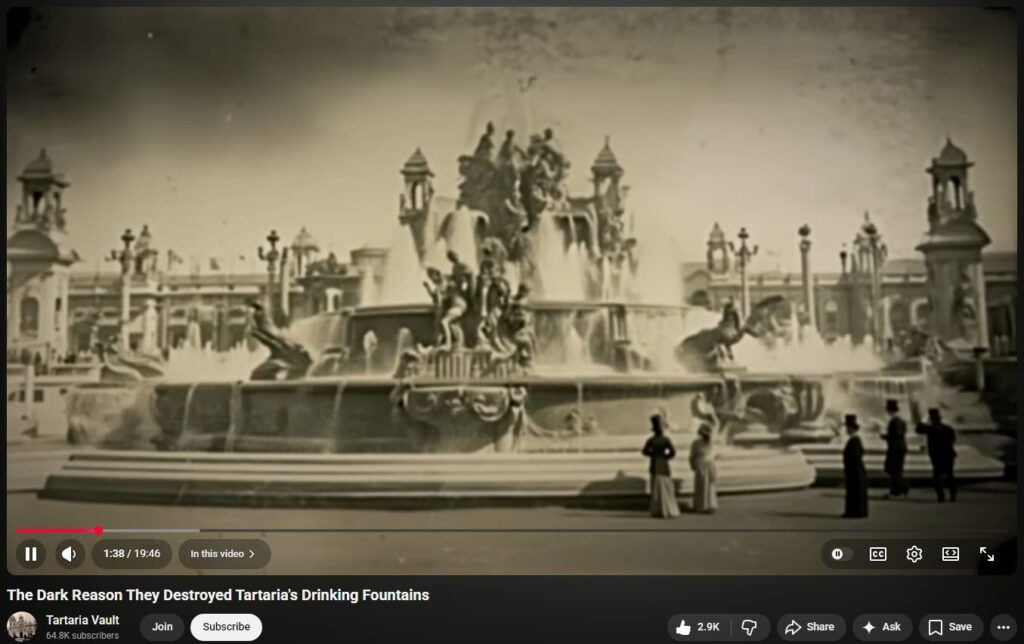
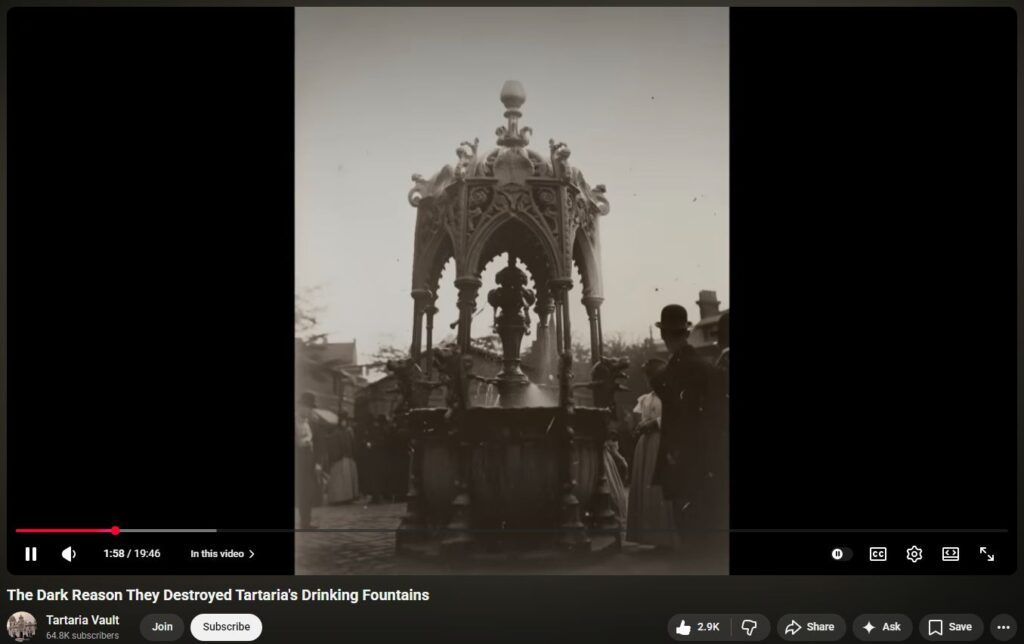
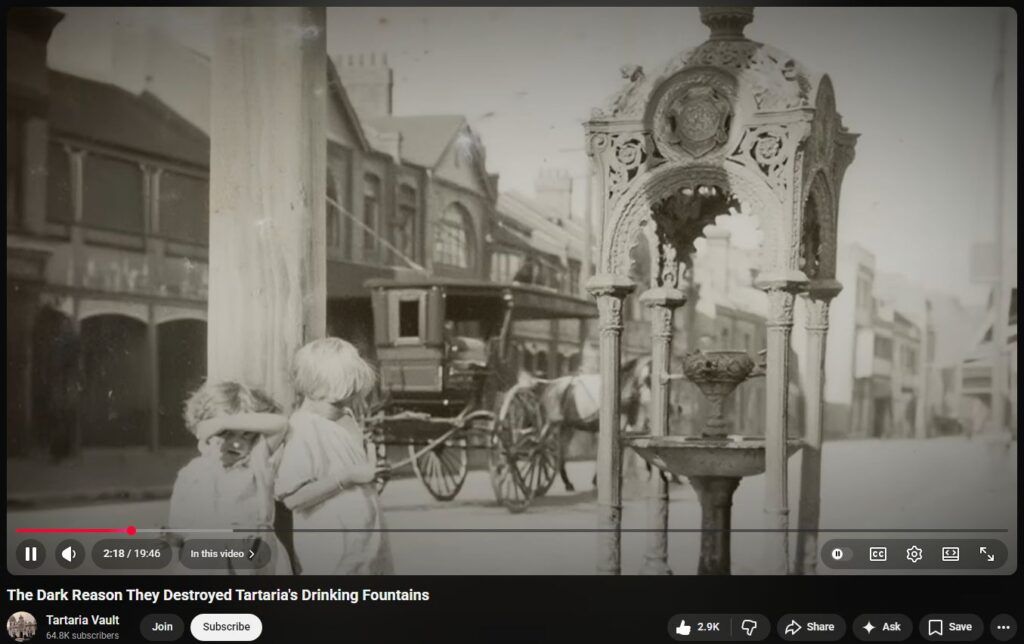
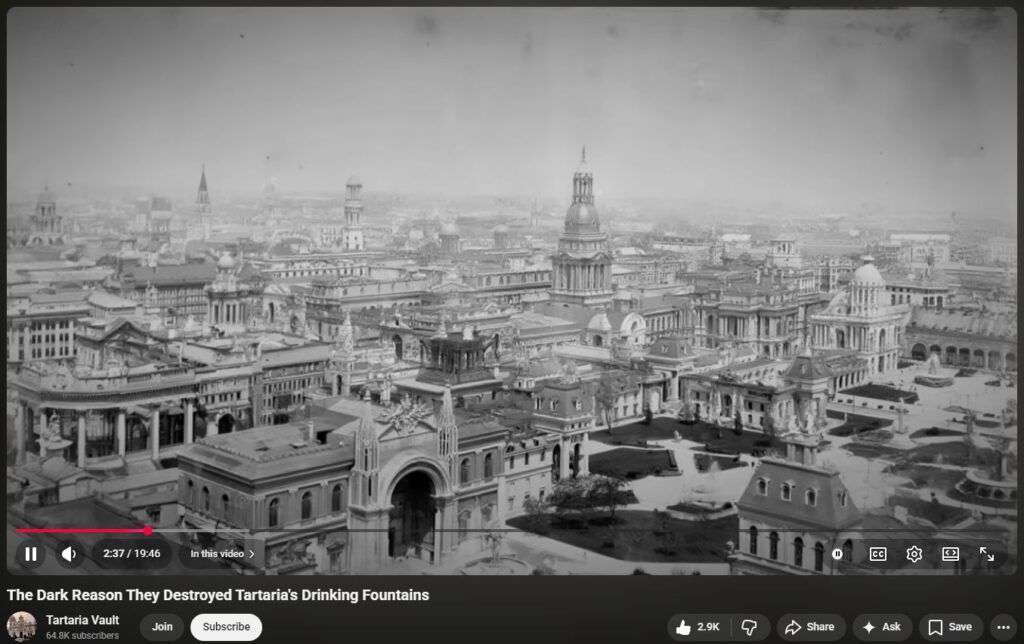
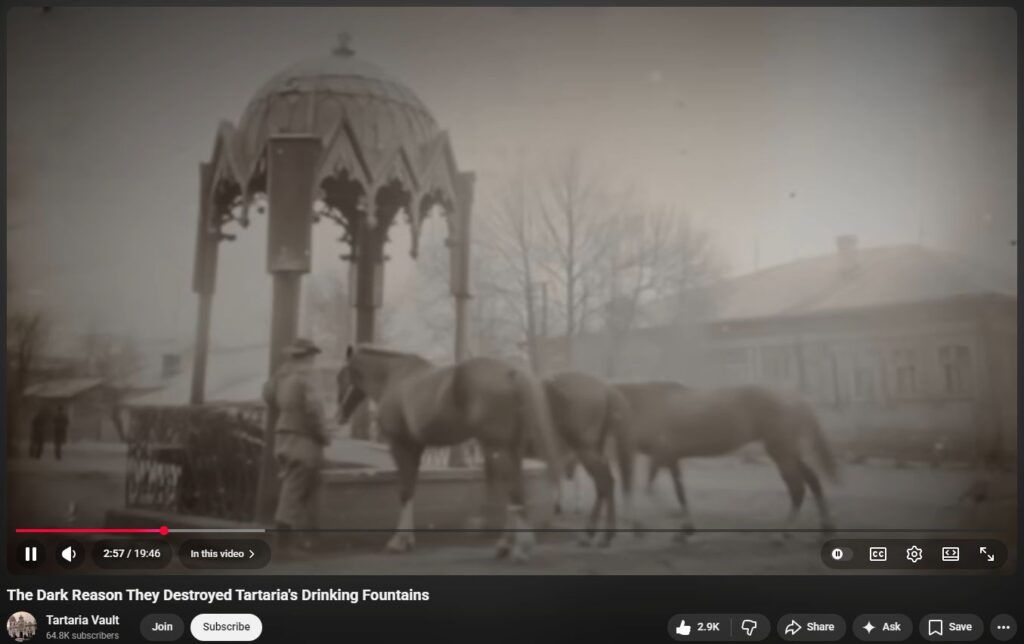
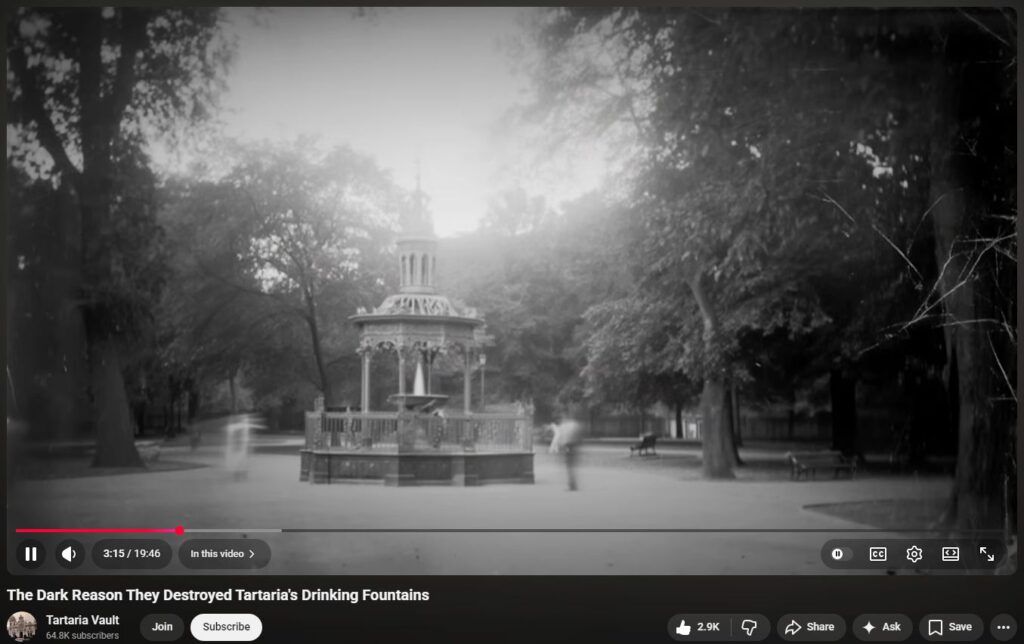
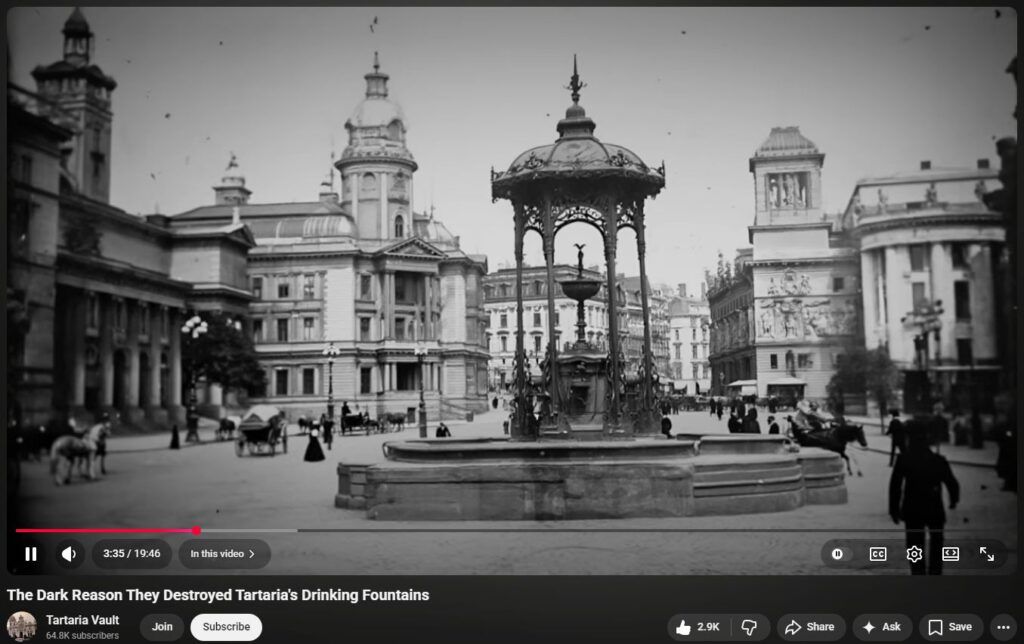
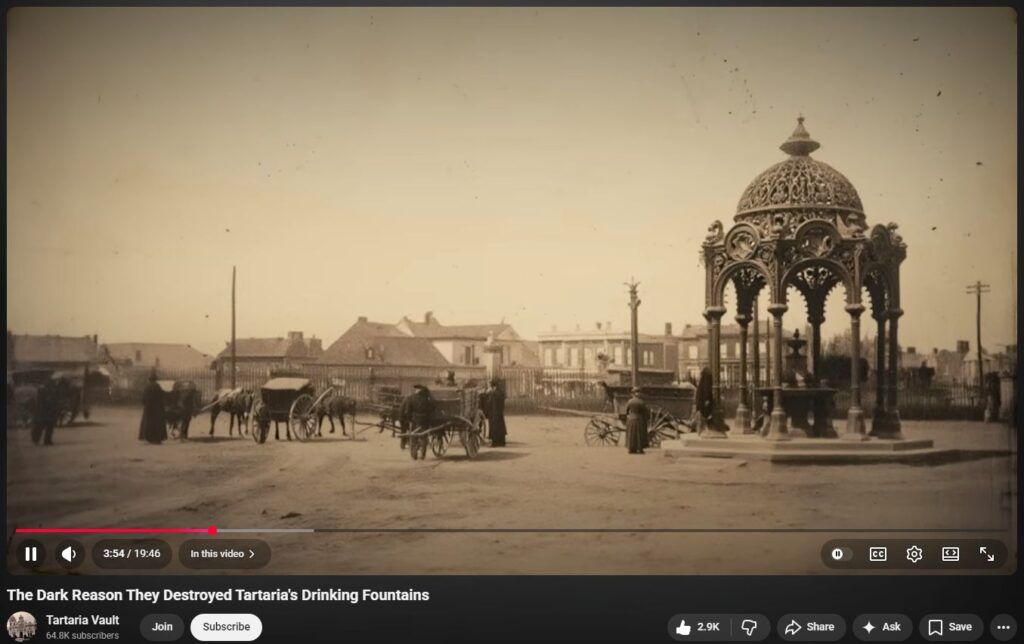
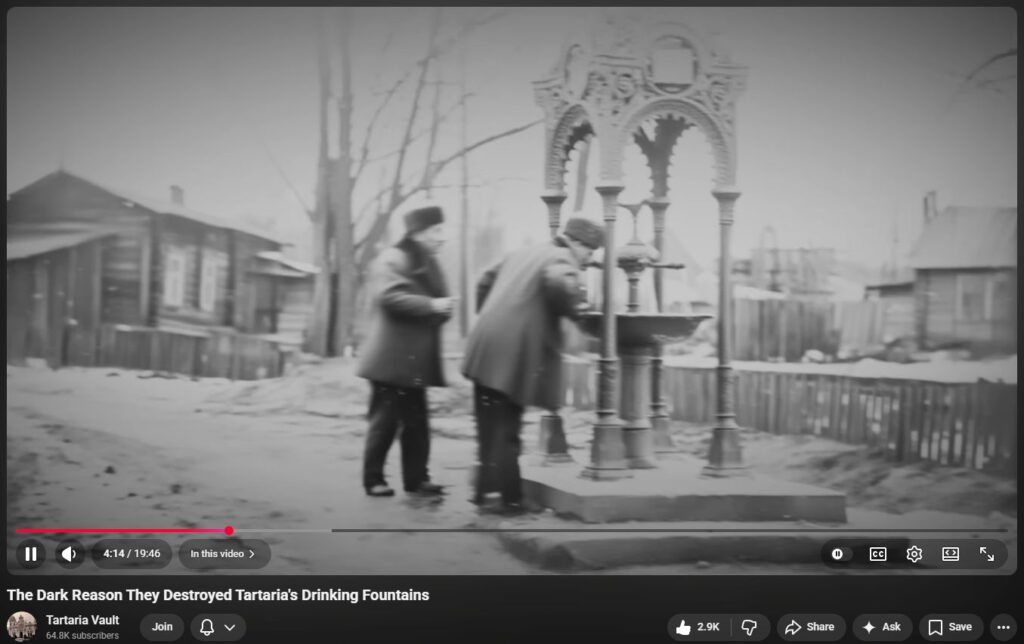
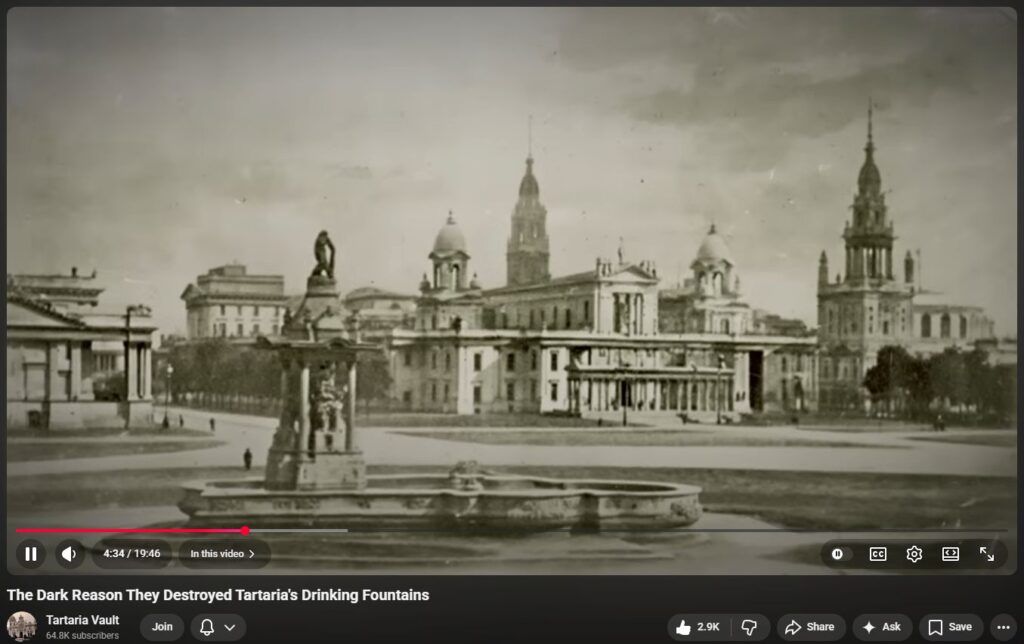
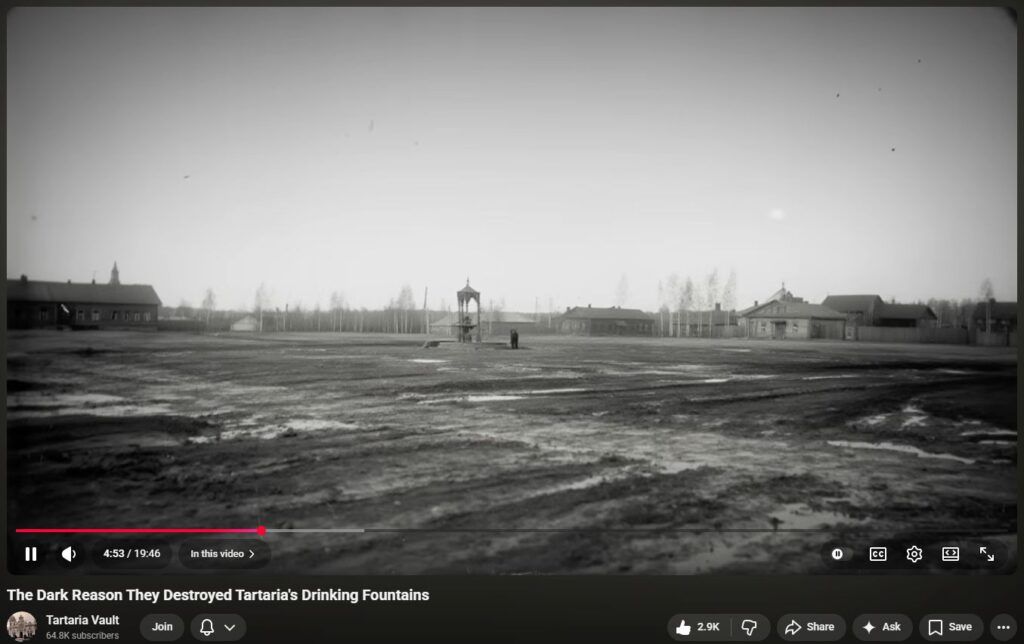
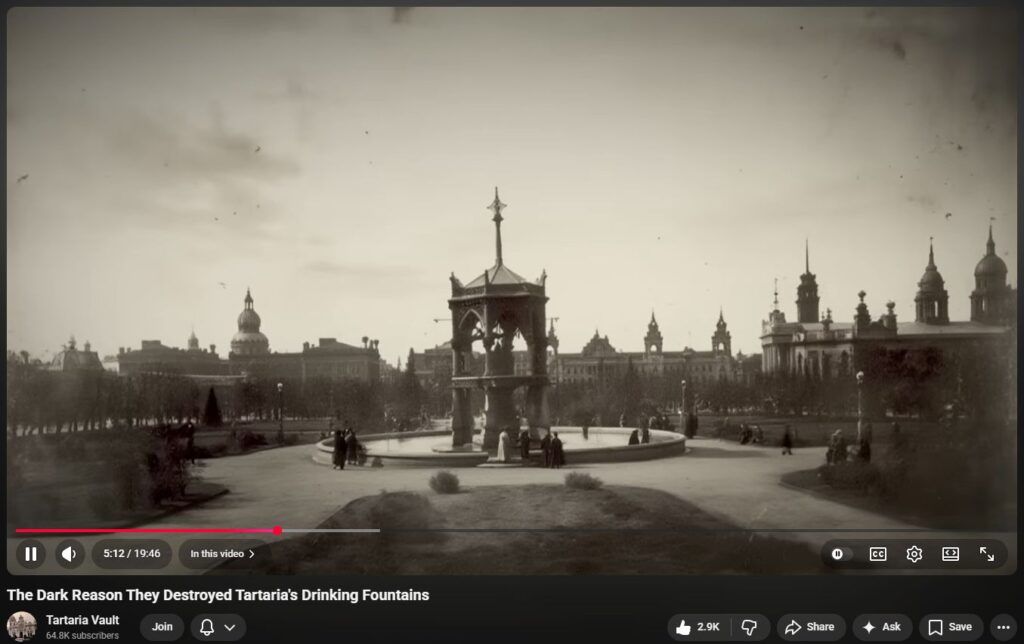
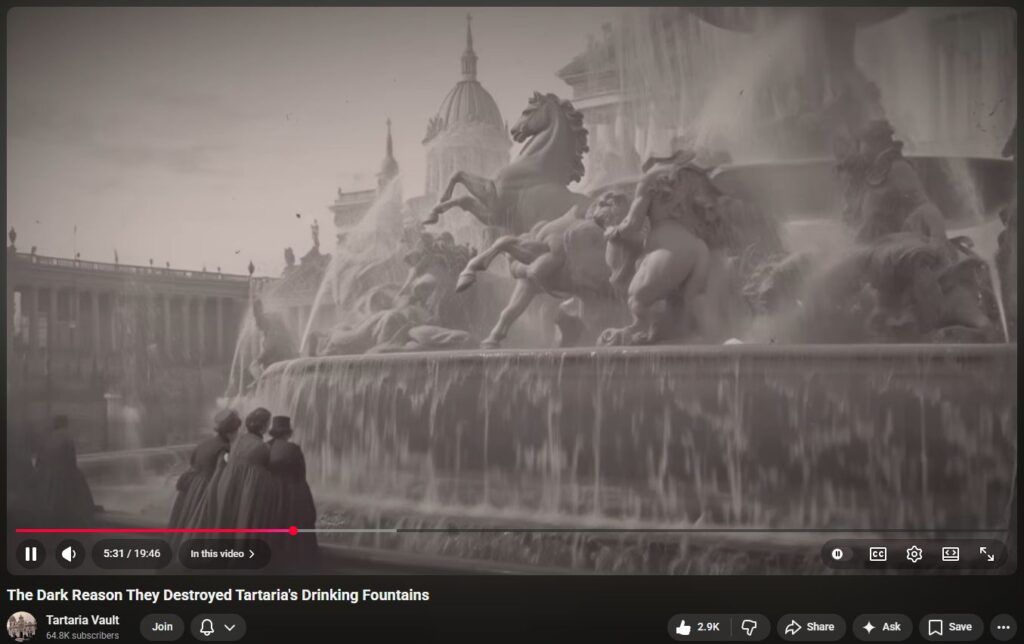
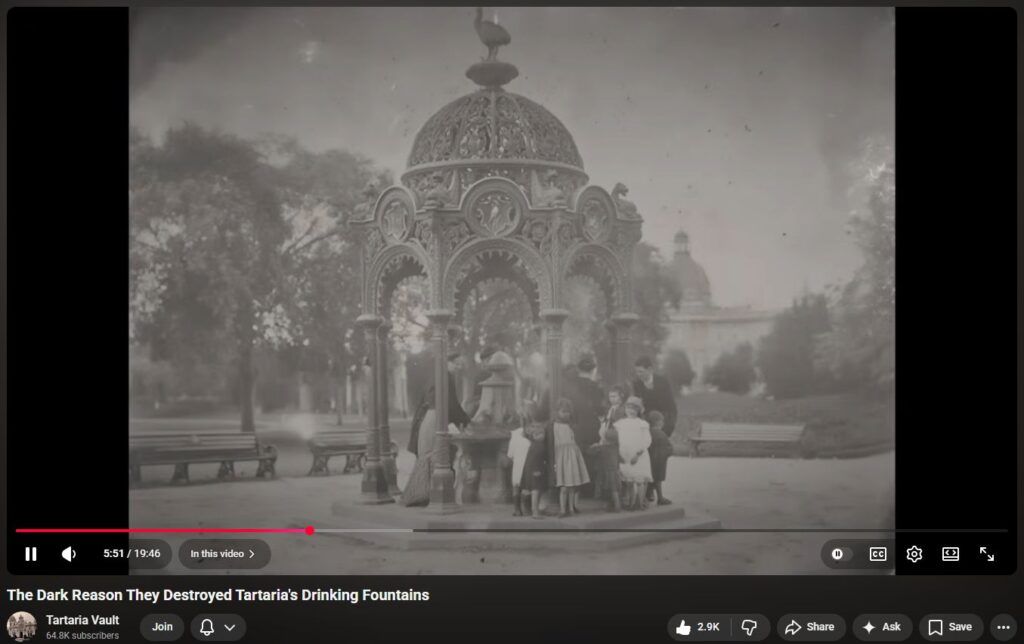
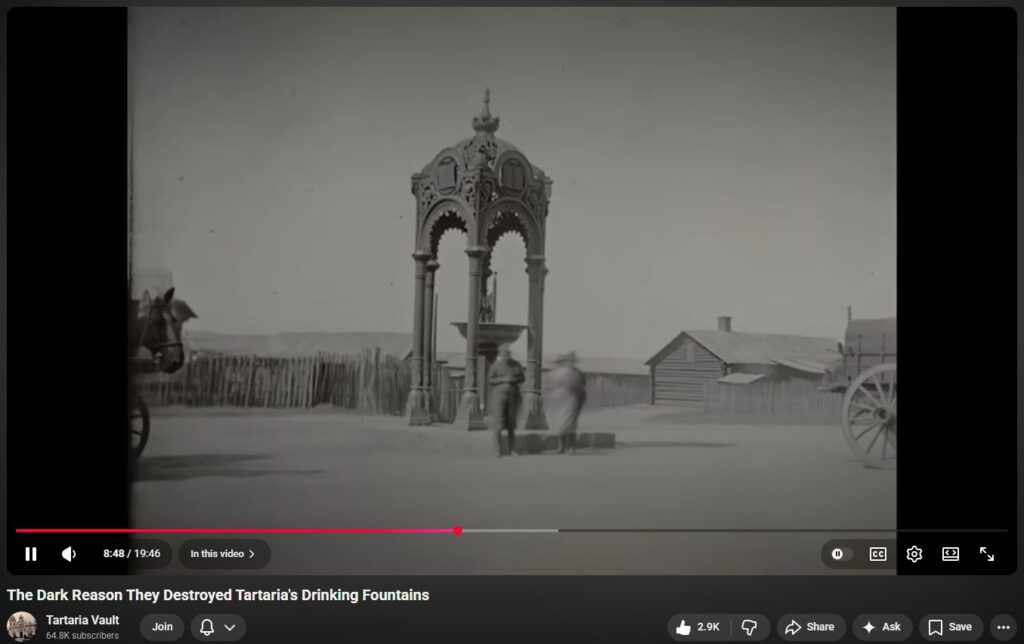
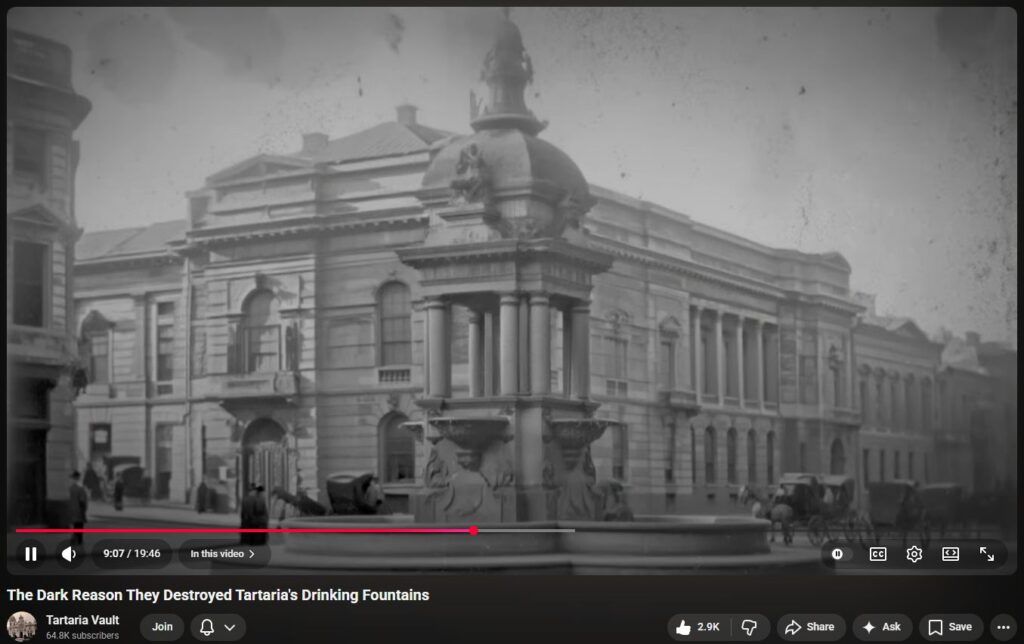
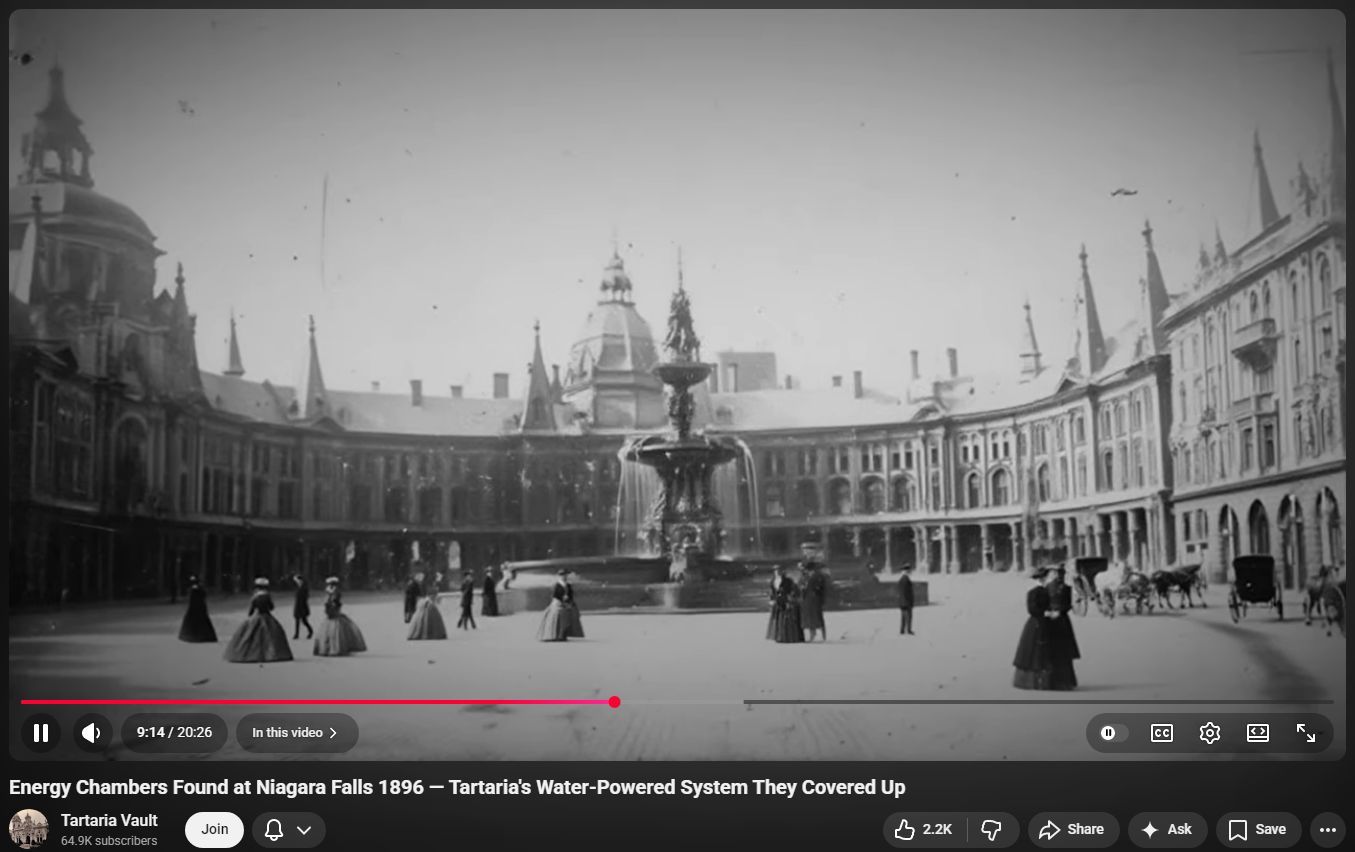
Transcript
Click to reveal
I wasn't looking for a mystery when I
0:22
first noticed the fountains. It started
0:24
with a photograph, one of those sepia
0:27
toned images from the 1890s showing a
0:29
grand public drinking fountain in San
0:31
Francisco. Ornate, classical, built like
0:35
a monument rather than a utility. the
0:38
kind of structure you'd expect to find
0:40
in front of a palace, not on a random
0:42
street corner offering free water to
0:44
anyone who walked by. And that's where
0:47
things began to unravel because once I
0:50
started looking for these fountains, I
0:52
found them everywhere. Not just in San
0:54
Francisco, not just in America,
0:56
everywhere. Paris, London, Melbourne,
0:58
Buenazarees, Istanbul, Kolkata, city
1:01
after city, continent after continent,
1:04
all featuring these elaborate public
1:06
drinking fountains that appeared
1:07
seemingly overnight in the mid to late
1:10
1800s and then vanished just as quickly.
1:13
The deeper I looked, the less sense the
1:15
official story made. Let me show you
1:18
what I found. Between roughly 1850 and
1:21
1900, thousands upon thousands of ornate
1:24
public drinking fountains appeared in
1:26
cities across the world. These weren't
1:28
simple spiggots or basic wells. These
1:30
were architectural statements, carved
1:32
granite, bronze fixtures, multiple
1:35
basins at different heights, one for
1:38
humans, one for horses, one for dogs.
1:41
Artistic flourishes that served no
1:43
functional purpose. Latin inscriptions,
1:45
classical columns, some towered 15, 20
1:48
feet high. The craftsmanship was
1:51
extraordinary.
1:52
Intricate metal work, perfectly fitted
1:55
stonework, hydraulic systems that
1:57
required precision engineering, each one
2:00
unique yet somehow adhering to similar
2:02
aesthetic principles, and they were
2:05
free. This raises a simple but critical
2:08
question. Who paid for all this?
2:12
The official explanation is that wealthy
2:14
philanthropists funded these fountains
2:16
as acts of charity. That groups like the
2:19
Metropolitan Drinking Fountain and
2:21
Cattle Trough Association in London or
2:23
similar organizations in other cities
2:26
commissioned these elaborate structures
2:28
out of concern for public health and
2:30
animal welfare. But the official
2:32
explanation collapses here because we're
2:35
not talking about dozens of fountains.
2:37
We're talking about thousands in London
2:40
alone. More than 800 fountains appeared
2:43
between 1859 and 1879.
2:47
20 years, 40 fountains per year on
2:51
average. And that's just one city.
2:54
Multiply that across New York,
2:56
Philadelphia, Boston, Chicago, then
2:59
Paris, Berlin, Vienna, Rome, then
3:02
Melbourne, Sydney, Cape Town, Bombay.
3:05
The numbers become staggering. Tens of
3:08
thousands of these elaborate structures,
3:10
all built within a 50-year window, all
3:12
funded supposedly by charitable
3:15
donations, all requiring skilled
3:17
craftsmen and engineers, all appearing
3:20
in cities that were supposedly just
3:21
beginning to figure out modern water
3:24
infrastructure.
3:26
The coordination problem becomes
3:28
impossible to ignore.
3:31
Here's where it gets stranger. These
3:32
fountains required water systems, not
3:35
simple wells. pressurized municipal
3:37
water supplies, pipes, pumps,
3:39
reservoirs, filtration. The very
3:42
infrastructure we're told was still
3:43
being developed during this period. I
3:45
found photographs of drinking fountains
3:47
in remote territories, mining towns in
3:50
Nevada, frontier settlements in
3:52
Australia, colonial outposts in India,
3:55
places that officially didn't even have
3:57
proper roads, yet somehow had
3:59
functioning public water fountains with
4:01
constant flow serving free freshwater to
4:04
anyone who needed it. How? Not why, not
4:08
when, not under which municipal
4:10
authority, but how? How did the
4:13
infrastructure get there? Where are the
4:15
records of who built the water manes?
4:17
Who maintained the pressure systems? Who
4:19
ensured water quality? Who paid for the
4:22
constant operation? The documentation is
4:26
remarkably sparse. What we have instead
4:28
are photographs. Thousands of
4:30
photographs showing these fountains
4:32
fully operational, surrounded by people
4:35
using them as if they'd always been
4:36
there. No construction photos, no ribbon
4:39
cutting ceremonies for most of them. No
4:41
detailed municipal records of planning
4:43
commissions or engineering surveys. They
4:45
just appear in the historical record
4:49
already functioning. And that's the
4:50
first impossibility. But there's a
4:52
second one that's even more troubling.
4:54
Why water? I mean that literally. Why
4:58
did this supposed golden age of
5:00
philanthropic giving focus so intensely
5:02
on providing free public water?
5:05
We're told it was about public health,
5:08
about preventing disease, about
5:10
temperance, offering water as an
5:12
alternative to alcohol. But the timeline
5:15
doesn't support this. These fountains
5:17
appeared before germ theory was widely
5:20
accepted, before modern epidemiology,
5:23
before most cities had any real
5:25
understanding of waterbornne disease.
5:27
Yet someone invested massive resources
5:30
in creating a world spanning network of
5:32
free water distribution points decades
5:35
before the scientific justification
5:38
existed.
5:40
How did they know? More importantly,
5:42
what did they know about water that
5:44
we've forgotten?
5:46
Because these weren't just distribution
5:48
points. The fountains themselves often
5:50
featured mysterious design elements,
5:53
specific mineral compositions in the
5:55
stone, particular metal alloys in the
5:58
fixtures, unusual basin shapes that seem
6:01
to serve no obvious purpose. I found
6:04
references in old texts to water from
6:07
certain fountains having restorative
6:09
properties or particular virtues,
6:13
not mystical claims, pragmatic
6:15
observations. people preferred water
6:18
from specific fountains and cities
6:20
maintained their reputations.
6:22
Was the water itself different? Was
6:24
there something about the materials used
6:26
in these fountains that affected water
6:28
quality in ways we no longer understand?
6:32
The deeper I looked, the more I realized
6:35
we don't know. The knowledge was lost
6:38
when the fountains were destroyed. And
6:40
maybe that was the point.
6:43
If you've enjoyed this investigation so
6:45
far, consider subscribing. These
6:47
patterns don't reveal themselves easily,
6:50
and there's much more to uncover.
6:53
Let me ask you something.
6:55
When was the last time you saw one of
6:57
these fountains? Not a modern drinking
7:00
fountain, those sterile stainless steel
7:02
things bolted to walls in schools and
7:05
airports. I mean, one of the old ones,
7:08
the grand public monuments to free
7:10
water, they're gone. Almost all of them.
7:13
Thousands upon thousands of elaborate
7:15
structures built to last centuries
7:18
vanished within a generation. The
7:20
official explanation is that they were
7:22
removed due to hygiene concerns or
7:25
because municipal water systems made
7:27
them obsolete or because automobiles
7:30
replaced horses and made the animal
7:32
basins unnecessary.
7:34
But this explanation breaks down when
7:36
you examine the timeline. These
7:39
fountains didn't gradually disappear
7:41
over decades as cities modernized. They
7:43
vanished rapidly, often between 1910 and
7:46
1930.
7:48
Cities that had maintained hundreds of
7:50
functioning fountains for 50 years
7:52
suddenly tore them all out within a few
7:54
years. Why the hurry? And here's the
7:56
strangest part. There's almost no public
7:59
record of the removal process. No major
8:01
newspaper campaigns, no civic debates
8:03
about whether to preserve these
8:05
landmarks, no historical societies
8:07
fighting to save them. These massive
8:09
public works projects were dismantled
8:11
and hauled away and contemporary sources
8:14
barely mention it. It's as if an entire
8:17
category of public infrastructure was
8:19
deliberately erased from the urban
8:21
landscape and everyone just accepted it.
8:26
The deeper I went, the more this pattern
8:28
of organized forgetting revealed itself.
8:31
I need to take you back to the fountains
8:33
themselves because there's something
8:35
about them that doesn't fit with what
8:37
we're told about this era. The late
8:40
1800s, we're told, was a period of rapid
8:43
industrialization,
8:45
mass production, standardization.
8:48
The whole point of the industrial
8:50
revolution was efficiency. Making things
8:52
faster, cheaper, more uniformly. But
8:55
these fountains weren't mass-roduced.
8:58
Each one was bespoke, custom carved,
9:02
individual designs. I found fountains
9:05
featuring classical mythology, Neptune,
9:08
water nymphs, dolphins. I found Gothic
9:10
designs with gargoyles and pointed
9:12
arches. I found Egyptian motifs complete
9:16
with hieroglyphics. I found Byzantine
9:18
patterns, Moorish tile work, Celtic knot
9:20
work. This represents an enormous
9:23
diversity of skilled craftsmanship.
9:26
Where did all these stonemasons come
9:28
from? Where were they trained? How did
9:30
cities across the world simultaneously
9:32
have access to artisans capable of
9:34
carving 15 ft granite monuments? The
9:38
evidence suggests something much larger.
9:40
Because we're not just talking about
9:41
artistic skill, we're talking about
9:44
technical knowledge. These fountains had
9:46
to handle water pressure. They needed
9:49
freeze-roof designs in cold climates.
9:51
They required drainage systems. The
9:54
metal work had to resist corrosion. The
9:56
stone had to be properly sealed. This
9:59
required engineering expertise applied
10:02
at an architectural level, repeated
10:04
thousands of times across continents by
10:07
different craftsmen who somehow all
10:09
understood the same principles. Not
10:12
coincidence, not parallel development,
10:14
but coordinated knowledge. And once you
10:16
see it, you can't unsee it. Here's what
10:19
sent me down this path completely. I
10:21
started mapping the fountains using old
10:24
city directories, historical
10:25
photographs, and archived municipal
10:27
documents. I plotted where these
10:30
fountains stood, and the pattern that
10:32
emerged was impossible to dismiss. The
10:35
fountains weren't randomly distributed.
10:37
They followed precise geometric
10:39
patterns. specific intervals, almost as
10:43
if someone had planned the entire
10:44
network before any single fountain was
10:47
built. In London, they formed concentric
10:49
circles radiating from certain central
10:52
points. In Paris, they aligned along
10:54
sight lines connecting major landmarks.
10:57
In New York, they appeared at regular
10:59
intervals that didn't correspond to city
11:01
blocks or property lines, but to
11:03
something else, something I couldn't
11:05
identify. This raises uncomfortable
11:08
questions. If each fountain was
11:10
supposedly the independent gift of
11:12
individual philanthropists, why do they
11:15
collectively form coherent geometric
11:17
patterns? How did donors coordinate to
11:20
fill in gaps in the network? Why would
11:22
they bother? The official explanation
11:26
that these were ad hoc acts of charity
11:28
simply cannot account for the organized
11:31
distribution pattern. It suggests
11:33
planning, central coordination, a
11:37
unified system. And that system appears
11:40
to have served every city on Earth all
11:42
at once before vanishing completely.
11:46
This is where the mystery becomes
11:47
genuinely unsettling.
11:50
I started asking people about these
11:52
fountains. Historians, urban planners,
11:55
architecture professors, municipal
11:58
engineers, people who should know about
12:00
significant public infrastructure in
12:02
their cities. Almost no one did. And
12:05
when I showed them the evidence, the
12:06
photographs, the old maps, the archived
12:08
records, I got the same response over
12:11
and over. Huh? I never knew that. How is
12:15
that possible? How does an entire
12:17
category of public monument, thousands
12:19
of structures that stood in cities for
12:21
50 years, used daily by millions of
12:23
people, just disappear from collective
12:26
memory?
12:28
This wasn't ancient history. These
12:30
fountains were still standing when our
12:32
grandparents were children. There should
12:34
be family stories, institutional memory,
12:37
historical markers. Instead, silence.
12:41
The pattern repeats with unsettling
12:44
precision. city after city, the same gap
12:47
in the historical record, the same
12:49
absence of documentation about their
12:51
removal, the same lack of public
12:53
discussion about what was lost. It's as
12:56
if someone wanted us to forget these
12:58
fountains ever existed. And we did.
13:02
Here's what kept me up at night. The
13:04
timing.
13:05
These fountains didn't just appear
13:07
randomly across the 1800s. They appeared
13:10
in a very specific window roughly 1850
13:14
to 1900 50 years. And that window
13:17
coincides with something else that's
13:19
impossible to ignore. The World's Fairs.
13:22
Chicago 1893, Paris 1889, Philadelphia
13:27
1876,
13:29
London 1851. city after city hosting
13:32
these massive expositions showcasing new
13:35
architecture that looked suspiciously
13:37
old, classical, ornate, the same
13:40
aesthetic as the fountains. And here's
13:42
where it gets strange. Many of these
13:44
fairs featured elaborate water features,
13:47
fountains, cascades, hydraulic systems
13:50
that supposedly were temporary
13:52
installations built in months, then
13:54
demolished immediately after.
13:57
But what if they weren't new? What if
13:59
the fairs were displaying what already
14:01
existed? What if they were the last
14:03
showcase of a previous civilization's
14:06
capabilities before it was all
14:08
dismantled?
14:10
The pattern suggests something
14:11
deliberate. The fountains appear. The
14:14
fairs happen. Photography becomes
14:17
widespread. Just common enough to
14:20
document what existed, but not common
14:22
enough to have documented the
14:23
construction process. Then within a
14:26
generation, it's all torn down. This is
14:30
the window where Tartaria disappears
14:32
from maps. Where the old world becomes
14:35
the new world, where classical
14:37
architecture gets rebranded as Bozar's
14:40
revival instead of what it might
14:42
actually be, remnants. The fountains
14:46
appeared right at the moment of
14:47
transition, right as the old
14:49
infrastructure was being cataloged and
14:51
removed. Right as a new historical
14:53
narrative was being established. And
14:56
photography, that's the key. We have
14:58
just enough images to know these
15:00
fountains existed, but not enough to
15:01
understand where they came from. It's
15:04
the perfect gap. The evidence was
15:06
documented just before it was erased, as
15:09
if someone knew that future generations
15:11
would ask questions and wanted to make
15:13
sure there'd be just enough proof to
15:15
haunt us, but never enough to prove
15:17
anything. Once you see the timing, you
15:20
can't unsee it. The evidence points to
15:22
several inescapable conclusions. First,
15:26
someone built a global water
15:28
infrastructure network in the mid 1800s
15:31
that was far more advanced and far more
15:33
coordinated than official history
15:36
acknowledges.
15:37
Second, this network required technical
15:40
knowledge, engineering expertise, and
15:43
organizational capacity that shouldn't
15:45
have existed in that era. Not at that
15:47
scale, not with that precision.
15:51
Third, the system was deliberately
15:53
dismantled and its history was
15:54
deliberately obscured, not lost, not
15:57
forgotten through neglect, actively
16:00
erased. Why? What were these fountains
16:03
really for? What did they do besides
16:06
provide water? What knowledge did they
16:08
represent that had to be removed from
16:10
public access? And who coordinated both
16:13
their creation and their destruction?
16:16
I keep coming back to one detail that
16:18
haunts me. In the photographs of these
16:21
fountains, you often see the same thing.
16:24
Children. Dozens of photographs showing
16:27
children gathered around the fountains,
16:29
filling cups, playing in the spray,
16:31
drinking freely. These structures were
16:33
clearly beloved. They were woven into
16:36
daily life. They served a real function
16:38
that people valued. And then they were
16:40
taken away. And we all forgot they ever
16:42
existed. What else have we forgotten?
16:45
What other infrastructure existed that
16:46
we no longer recognize? What other
16:49
capabilities did our cities once have
16:51
that have been erased from the record
16:53
because the fountains are just what's
16:55
visible in photographs? What didn't get
16:57
photographed? What was so ordinary, so
17:00
ubiquitous that no one thought to
17:02
document it before it vanished? The
17:05
official explanation collapses here.
17:08
We're supposed to believe that our
17:09
civilization has been on a steady upward
17:12
trajectory, that everything keeps
17:14
getting better, more advanced, more
17:16
sophisticated.
17:18
But what if that's not true? What if
17:20
we've lost things, important things?
17:24
What if the Victorian era had access to
17:26
knowledge and capabilities that we don't
17:28
have anymore? The fountains suggest yes.
17:32
I don't have definitive answers. I don't
17:34
know exactly who built this network or
17:36
how they did it or why it was destroyed,
17:38
but I know the official story doesn't
17:40
hold water, no pun intended. I know that
17:43
thousands of elaborate public water
17:45
fountains representing millions of hours
17:47
of skilled labor and incalculable
17:49
amounts of resources appeared across the
17:52
world in a 50-year window. I know they
17:55
required infrastructure that supposedly
17:57
didn't exist yet. I know they followed
17:59
organized patterns that suggest central
18:01
planning. I know they were dismantled
18:03
rapidly and their history was
18:05
suppressed. And I know that we're not
18:07
supposed to ask these questions, but I'm
18:10
asking anyway. Who built Tartaria's
18:12
drinking fountains? Where did the
18:14
knowledge come from? What did these
18:16
structures really do? And most
18:18
importantly, what else was taken from us
18:21
when they were destroyed? The fountains
18:23
are gone. The craftsmen who built them
18:24
are gone. The infrastructure that fed
18:27
them is gone. The records are sparse to
18:29
non-existent, but the photographs
18:31
remain. And once you see the pattern,
18:33
you can't unsee it. Something was here,
18:36
something sophisticated, something
18:38
global, something that provided free,
18:40
clean water to every city on Earth,
18:42
housed in monuments built to last
18:44
forever, and then it was erased. The
18:48
question isn't whether this happened.
18:50
The evidence is overwhelming. The
18:52
question is, what else don't we
18:54
remember? What other gifts were taken
18:56
from us while we weren't paying
18:57
attention? And who benefited from making
19:00
us forget? I don't expect answers. Not
19:03
today. Maybe not ever. But I know that
19:07
every time I walk past a modern drinking
19:09
fountain, that sad little stainless
19:11
steel fixture bolted to a wall. I think
19:15
about what we lost. And I wonder what
19:17
else is hidden in plain sight, waiting
19:19
for someone to ask the right questions.
19:22
The fountains are trying to tell us
19:24
something about lost knowledge, about
19:26
coordinated erasia, about a world that
19:29
was different than we've been told. All
19:31
we have to do is look. And once we start
19:34
looking, really looking at the world our
19:38
ancestors built and the world we
19:39
inherited,
19:41
well, that's when things get
19:43
interesting.