New Evidence of Morphic Resonance – Rupert Sheldrake
9:45 “There is already circumstantial evidence that antibiotic resistance, when it’s evolved in one place, such turns up somewhere else [totally unrelated, distant, disconnected in all manners]. In the scientific literature on antibiotic resistance this is already known.”
Rupert Sheldrake, Ph.D., is a biologist and author of more than 90 scientific papers and 9 books, and the co-author of 6 books. His books have been published in 28 languages. He was among the top 100 Global Thought Leaders for 2013, as ranked by the Duttweiler Institute, Zurich, Switzerland’s leading think tank. On ResearchGate, the largest scientific and academic online network, his RG score of 34.4 puts him among the top 7.5% of researchers, based on citations of his peer-reviewed publications. On Google Scholar, the many citations of his work give him a high h-index of 40, and an i10 index of 120. For ten years running he has been recognized as one of the ‘most spiritually influential living people in the world’ by Watkins Mind Body Spirit magazine. His work has been featured in many magazines, newspapers and broadcast media, including New Scientist, The Guardian, Discover magazine, The Spectator, The Washington Post, Die Zeit and on BBC radio and television.
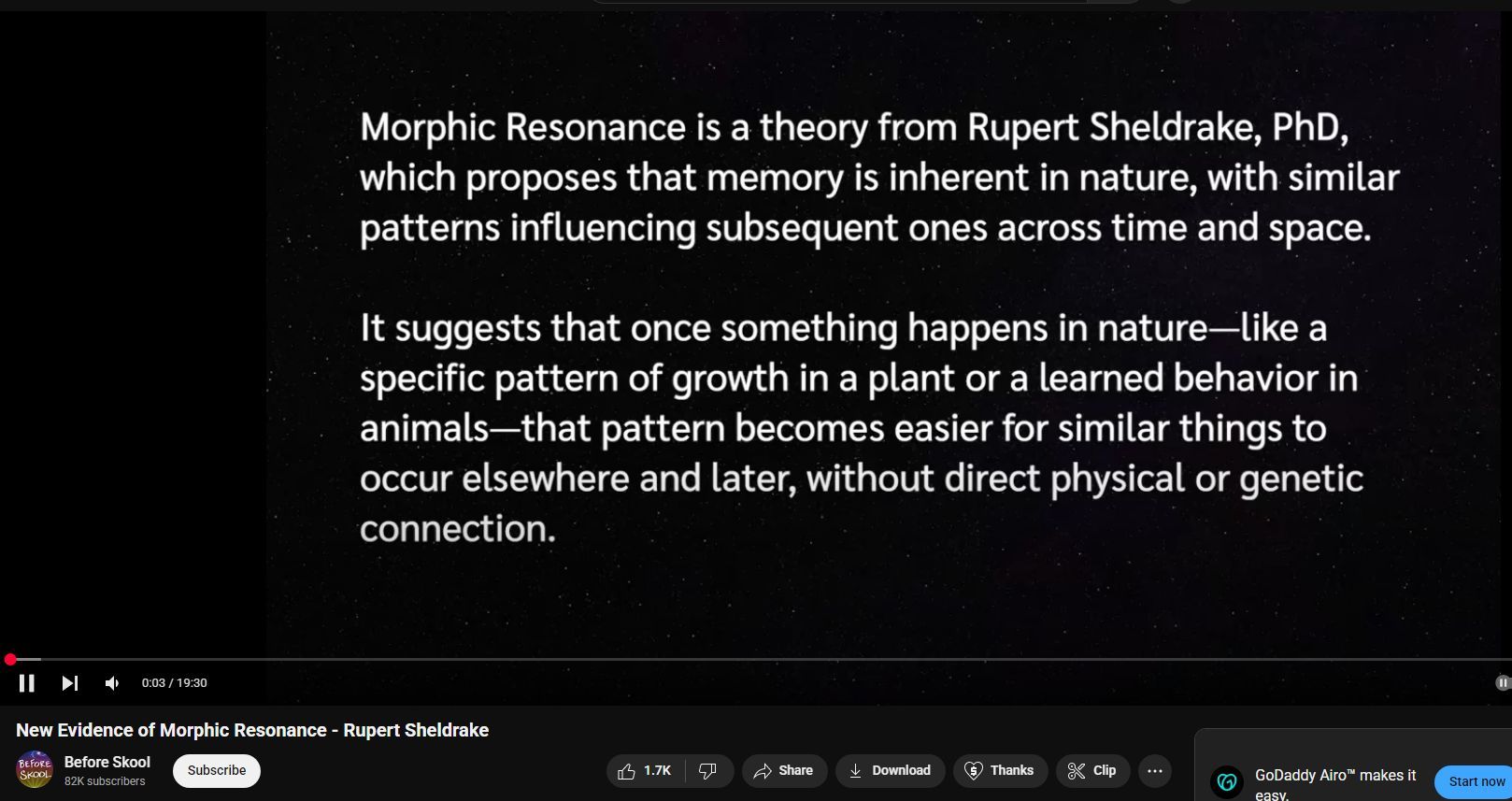
Morphic Resonance – Memory in Nature
To get any convincing evidence, you have to keep the conditions known and constant.
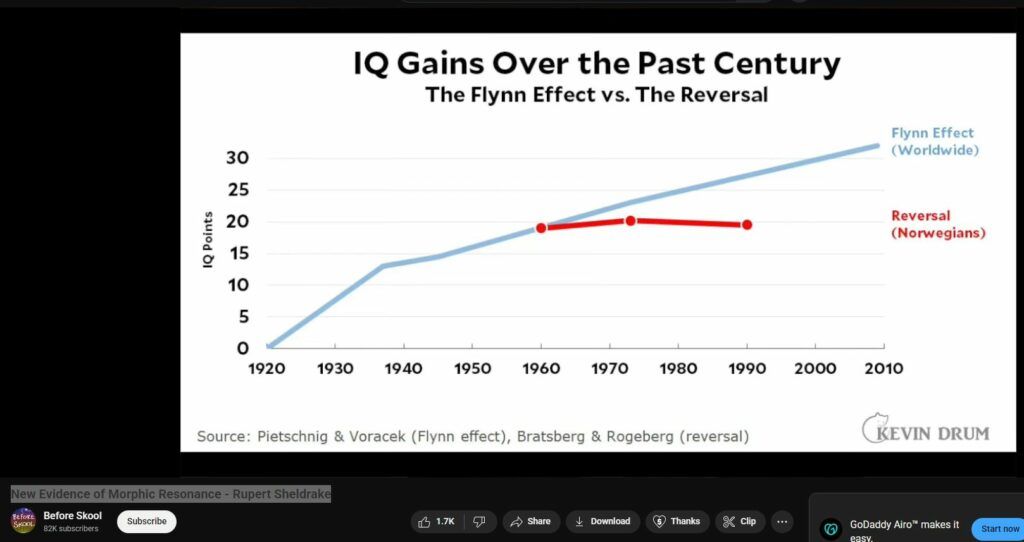
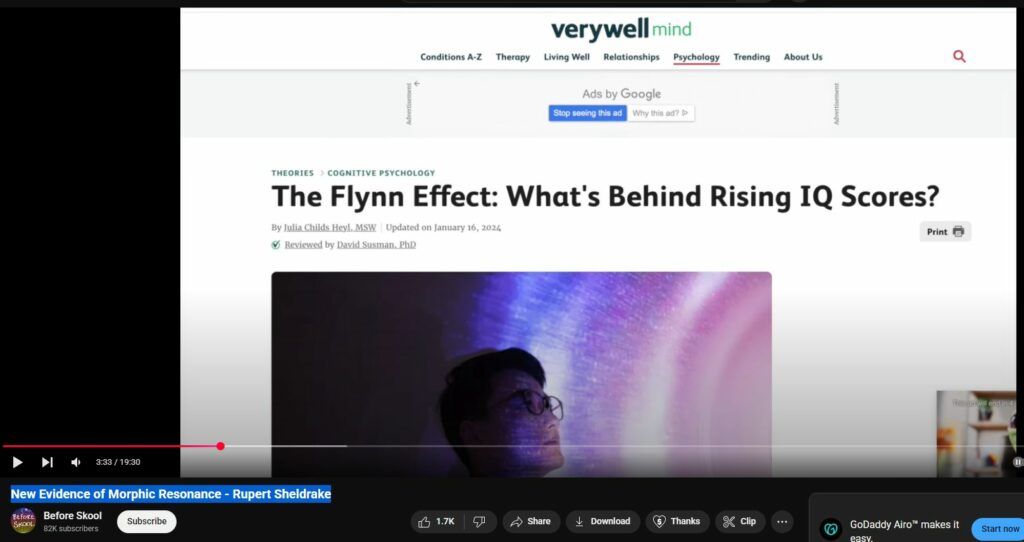
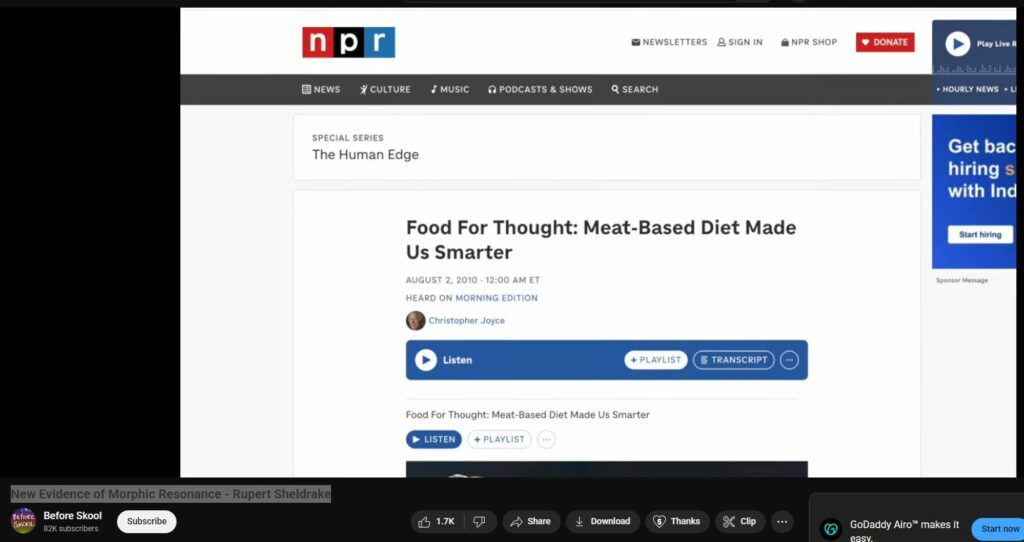
3:40 — it’s not “protein” from meat that made us all smarter by meatier diet; instead, it’s cholesterol. Brains are mostly fat, which is apparently, comparatively an electrical insulator, necessary so that the electrical impulses keep inside the neurons and do not intermingle in one nonsensical jumble…
NYTimes WORDLE game is being studied because too many people get right WORDLE the first time, far more than predicted by pure chance alone.

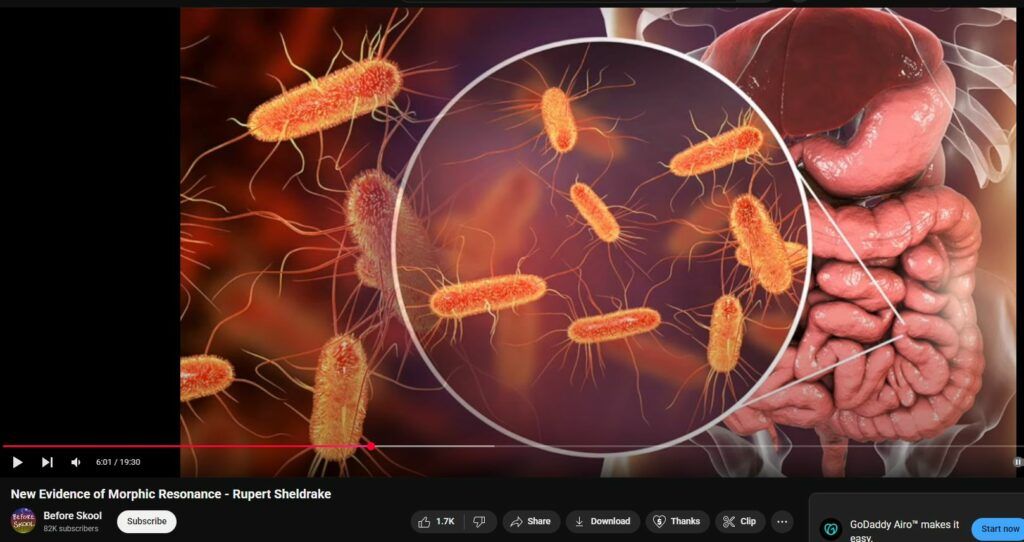
RS doing research into evoluation of antibiotic resistance developed over time by e.coli.
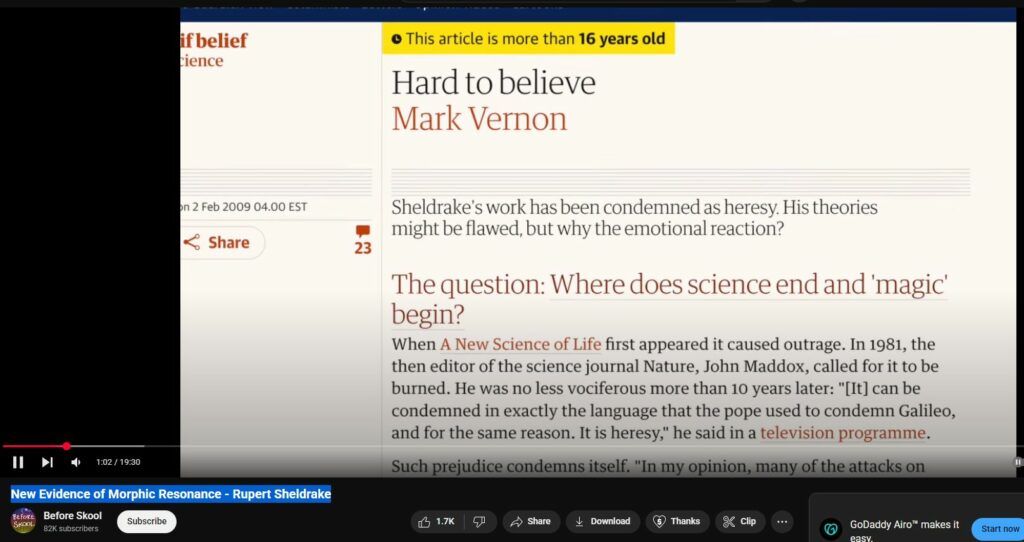
8:00 in “Dogmatic Skeptics hate uncertainty; they want a word-view that’s certain. They’re fundamentalists, really.” This apparently describes most of those persons involved in “science”.
“‘Laws’ of Nature are more like habits.”
9:45 “There is already circumstantial evidence that antibiotic resistance, when it’s evolved in one place, such turns up somewhere else [totally unrelated, distant, disconnected in all manners]. In the scientific literature on antibiotic resistance this is already known.”
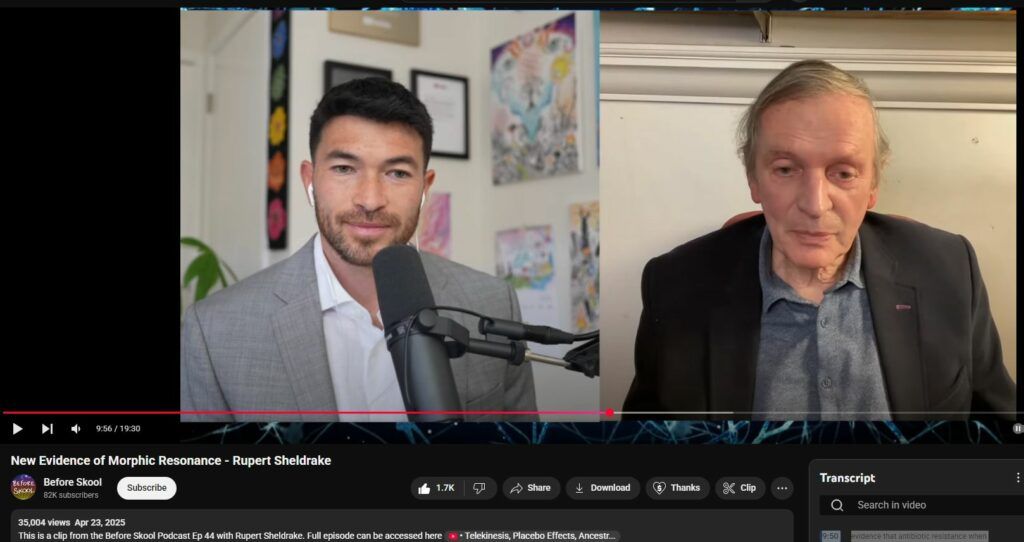
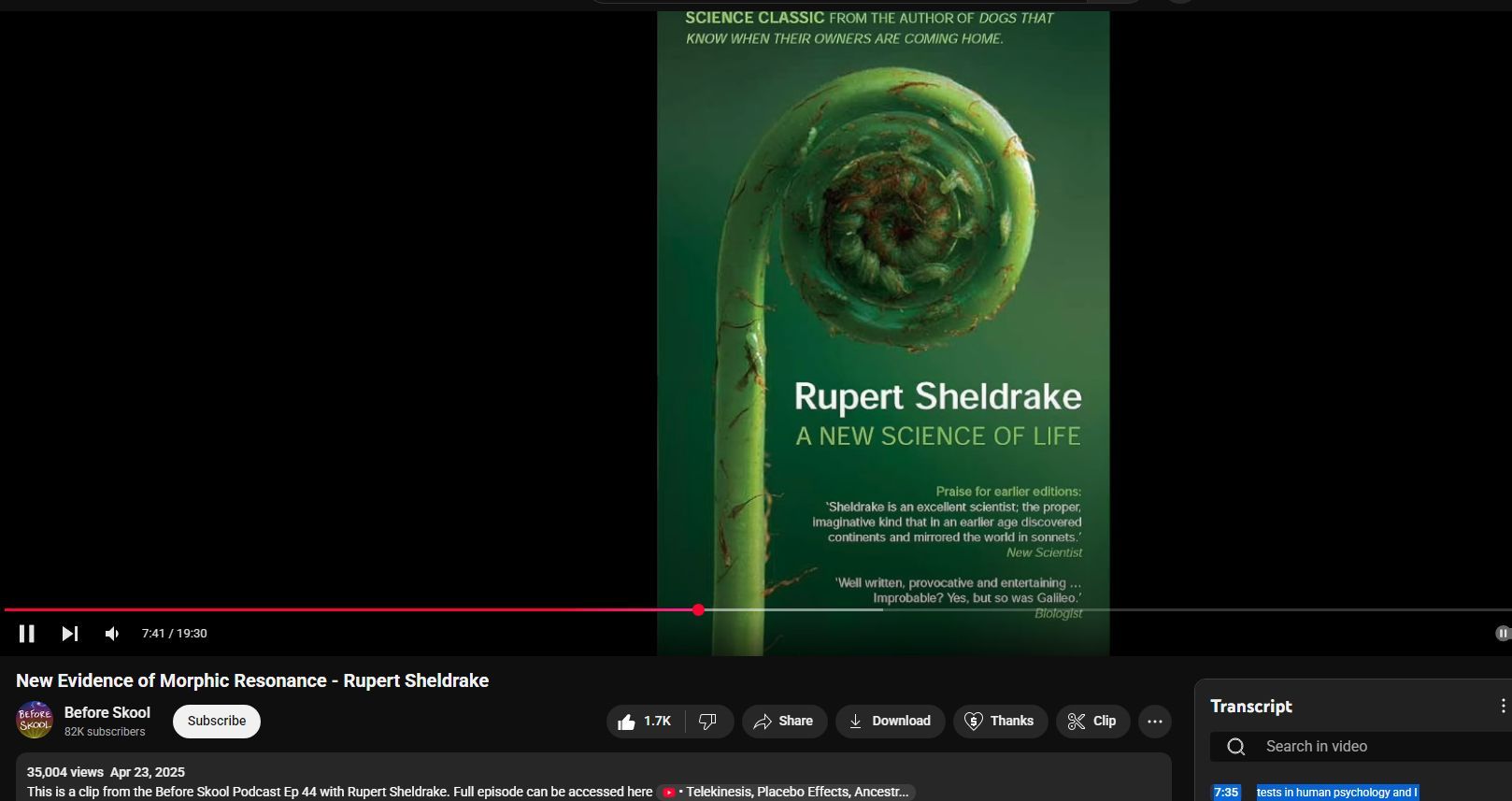
13:50 – Morphic Resonance is about spreading habits.
One example of Morphic Resonance is that it has been found easier to learn to type on QWERTY keyboard than on any other. QWERTY layout is wholly unintuitive, yet there are millions of people using it. Therefore, according to the theory of Morphic Resonance, because many are already using it, others — no matter how distant or disconnected — should be learn it more readily than any others not so widely used.
Transcript
Click to expand Transcript
0:01
[Music]
0:17
so I guess what I was getting at earlier
0:19
in this question was the morphic
0:20
resonance 50 years later have we come
0:24
around has there been more and more
0:25
evidence now stacking up saying that
0:27
there is a lot more than just this
0:30
material world
0:32
well it's a very good question and you
0:35
know if I
0:36
um have I mean to take it as the big
0:41
picture the answer is I wish there was
0:44
more evidence than there is i I've spent
0:47
all these years trying to get research
0:50
done on morphic resonance um it's been
0:53
unbelievably difficult to get anyone to
0:56
do it within universities or scientific
0:59
institutions because it's been
1:01
proclaimed a heresy anyone who does it
1:04
is afraid of losing their job their
1:06
grant you know being attacked by
1:08
skeptics and so forth so it's been
1:11
extremely difficult to get the work done
1:13
i mean I've tried in many ways to do it
1:16
i can't get lab space in universities
1:19
myself i mean I'm I'm able to do
1:21
research as long as it's field research
1:24
but for morphic resonance which is about
1:26
memory and nature to do morphic
1:28
resonance experiments you have to
1:30
compare what happened in the past with
1:32
what happens now and to get any
1:36
convincing evidence you have to keep the
1:38
conditions constant because all sorts of
1:41
things change in the world for example
1:44
morphic resonance says that it should be
1:46
getting easier to learn skateboarding or
1:49
surf or wind surfing or computer
1:51
programming or to play particular video
1:54
games
1:56
um well it is getting easier to do all
1:59
those things there's lot of evidence uh
2:02
but it's not the only factor you know
2:04
there is videos instruct there's
2:06
improvements in the technology there's
2:08
better teaching methods to tease out
2:11
morphic resonance from all those things
2:13
is difficult there are areas where there
2:17
is consistent evidence over the years
2:19
one area for example is in IQ tests
2:24
people have been doing very similar IQ
2:26
tests for more than a hundred years and
2:28
I predicted in the 1980s that with IQ
2:32
tests uh the score should be going up
2:34
the average score should be going up not
2:37
because people are getting smarter the
2:40
the not because their actual
2:41
intelligence quotient or IQ is getting
2:44
higher but because the tests are getting
2:46
easier to do because so many people have
2:48
done the tests and I couldn't get the
2:51
data when I tried to look at this in the
2:54
1980s but a psychologist called James
2:56
Flynn uh did exactly this analysis
2:59
shortly after that and found that all
3:02
around the world average scores on IQ
3:05
have been going up and up um since the
3:08
19 when they first came in 1918 all
3:11
through the 20th century these scores
3:13
were going up and up and up at least 30%
3:16
increase in average IQ spoke scores but
3:19
no evidence that people are actually 30%
3:21
smarter you know by other criteria
3:24
they're not smarter um and so there's
3:27
been a real problem for um conventional
3:30
psychologists to explain this thing
3:32
which is called the Flynn effect um some
3:36
have said that it's because you know
3:38
people have had more protein as children
3:40
but you know that might have applied to
3:42
Japan where they had more protein in
3:45
their diet through the 20th century but
3:47
not to America where lots of people were
3:49
eating meat all the time through the
3:50
20th century then some said it was
3:53
because they getting smarter because uh
3:56
they had more practice with tests uh but
4:00
evidence showed that that wasn't really
4:02
a very good explanation some said they
4:04
were getting smarter because they'd seen
4:06
more TV but the other evidence showed
4:08
that actually TV tended to have a
4:10
dumbing down effect um so there's been a
4:13
long controversy about the nature of the
4:16
Flynn effect in in IQ and I think that's
4:20
one example of a morphic resonance
4:23
effect i think morphic resonance may
4:26
also be happening before our very eyes
4:28
in phenomena like Wordle the New York
4:31
Times uh word puzzle it's a fiveletter
4:34
word puzzle a new puzzle is uh published
4:38
every day by the New York Times and
4:41
there's a student here in Britain who's
4:43
been looking into this recently one of
4:45
the anomalous things is that far more
4:48
people get word right first time every
4:51
day than you would expect by
4:54
chance why no one knows why i mean this
4:57
is an ongoing project she's looking at
5:00
this as we speak uh but this is an area
5:03
where you can actually do research in
5:05
the field you don't have to have a lab
5:06
to do research on Wordle because New
5:09
York Times produces something called a
5:11
Wordle bot every day which gives in real
5:14
time updated value on how people are
5:17
doing in the test as the day goes on and
5:19
then the next day there's a new word so
5:21
the whole thing's replicated day by day
5:24
so that's one promising area for
5:26
research
5:28
but I've now found a new way of doing
5:30
this research which gets round the taboo
5:33
in the academic world uh which is that
5:37
um there are now companies that do te
5:41
testing routine testing for corporations
5:45
usually for drug companies sort of
5:47
outsourced research companies uh and uh
5:51
I have a an experiment starting very
5:54
soon on morphic resonance in the
5:56
evolution of antibiotic resistance in
5:59
Ecoli the bacterium Eoli
6:02
um I have a funer who's paying for this
6:05
I have a lab here in Britain that's um
6:08
where they're planning to do it they
6:10
should be starting soon of course I
6:12
can't foresee what the results will be I
6:14
mean I've designed the experiments and I
6:17
hope they'll show a morphic resonance
6:19
effect but um I can't be sure the the
6:23
whole point of research is you don't
6:24
know what's going to happen you have to
6:26
wait and see what happens but this is
6:29
now the way forward I think doing
6:31
research in commercial laboratories
6:35
where their motivation is not getting
6:38
ahead in the academic world and they
6:41
simply do a good job you have a contract
6:43
you pay them and they do the experiment
6:46
to a design an agreed design um and
6:50
that's exactly as I think science should
6:52
be done and it's done by competent
6:54
technically competent people and at last
6:57
I found a way of getting around this
7:00
taboo i only discovered this last year
7:02
that this was a possible way forward um
7:05
so I'm actually quite excited about it
7:09
so the answer basically in a nutshell is
7:11
that there's a lot of circumstantial
7:13
evidence for morphic resonance some of
7:16
which I discuss in my books including
7:18
the Flynn effect in IQ test scores but
7:22
there's been very little actual
7:25
experimental research uh because the
7:28
sociological um taboo is so strong
7:30
within the scientific community there
7:33
have however been quite a number of
7:35
tests in human psychology and I
7:38
summarize those in the new edition the
7:40
third edition of my book a new science
7:42
of life which in the US has been
7:44
retitled morphic resonance there's an
7:47
appendix there with 10 new tests for
7:49
morphic resonance and a summary of the
7:52
research so far so this is very much an
7:55
ongoing research program it's a
7:58
scientific hypothesis and it's a
8:00
testable hypothesis I I think that's
8:03
what science is meant to be about one of
8:05
the problems that skeptics have is that
8:08
they what they hate uncertainty domatic
8:10
skeptics want to have a worldview that's
8:13
certain they want they're
8:15
fundamentalists really they want they
8:17
want certainty and morphic resonance
8:21
isn't certain it's not certain is true i
8:23
mean I've been working on this for
8:25
decades i'd love it to be true but
8:26
actually I'm not certain it's true it's
8:29
a hypothesis a testable hypothesis but
8:32
what the skeptics do is they frame it as
8:35
a claim that I'm claiming this is true
8:38
and they're going to say no it's not and
8:40
where's the evidence i'm not saying it's
8:43
true i'm saying it's a possibility a
8:46
hypothesis is a possibility it's
8:49
possible it's true if it's true and if
8:51
the evidence supports it it has enormous
8:54
ramifications and implications through
8:57
the whole world world of nature of
8:59
understanding chemical and physical and
9:02
biological and psychological processes
9:05
um it says that the so-called laws of
9:07
nature are more like habits it has very
9:10
very wide ranging ramifications if it's
9:13
true but the key thing is to do the
9:16
experiments and find out whether this
9:18
hypothesis is actually supported by them
9:21
as the circumstantial evidence appears
9:23
to support it but you know there's not
9:26
enough evidence yet for anyone including
9:28
me to
9:30
know wow i think you found a a brilliant
9:33
way to test this with the E.coli so the
9:36
thinking is that um if E.coli E coli
9:39
becomes resistant in one area of the
9:41
world or in one lab on the other side of
9:43
the world it will suddenly start to
9:45
become more resistant over there right
9:48
yes and there's already circumstantial
9:50
evidence that antibiotic resistance when
9:52
it's evolved in one place turns up
9:55
somewhere else um there's already in the
9:58
ep the literature on antibiotic
10:00
resistance this is already known but of
10:03
course in the real world you can't be
10:05
sure that someone hasn't just flown
10:08
around the world carried the res
10:09
resistant germs with them people working
10:12
in epidemiology
10:14
uh some of them think there really is
10:16
something mysterious and unexplained
10:19
going on but without specific evidence
10:23
you can't be sure uh nevertheless it's
10:26
very suggestive and I I think that the
10:28
evidence makes me think this may well be
10:31
happening that once um E.coli or any
10:35
other bacterium has developed antibiotic
10:38
resistance in one place it'll be easier
10:40
to develop it in another place and
10:43
morphic resonance you see also has
10:46
implications for epidemiology of
10:49
diseases like COVID morphic resonance
10:51
would say that if a lot of people
10:54
recover from a a new respiratory
10:57
infection like COVID the antibbody
11:01
system is activated and that might make
11:04
it easier for other people to activate
11:06
the antibbody system and to overcome the
11:09
disease so what does this morphic
11:12
resonance predicts is that um virilent
11:16
new viral diseases will get less
11:19
virilent over time even if you don't
11:21
have um vaccines for them um they'll
11:25
become and even if people haven't been
11:27
vaccinated they'll get less virilent
11:29
over time through a kind of morphic
11:31
resonance effect on the immune system on
11:33
the way that people respond to the
11:35
infection
11:37
and that seems to be the case with a lot
11:39
of respiratory diseases flu colds COVID
11:44
uh keep evolving um and they become much
11:47
less aggressive like the famous Asian
11:50
flu around 1918 it became um I mean it
11:55
killed millions of people but it was
11:58
before they had modern
12:00
vaccine systems to deal with it and um
12:03
it faded away um and COVID was
12:09
certainly an extremely dangerous disease
12:11
to start with but it's faded away but
12:15
you you can't actually in this case as
12:17
in most real life cases decide how much
12:21
of this is a boric resistance how much
12:24
of it because of
12:25
vaccination and some countries where
12:27
they had very little vaccination it's
12:29
also faded away so I'm certainly not a
12:32
vaccine denier um or I mean I had the
12:36
vaccines myself i'm certainly not part
12:38
of a kind of conspiracy theory about
12:41
vaccines but I do think morphic
12:43
resonance has implications for
12:46
epidemiology of respiratory viruses as
12:49
it does in many other areas
12:53
while you were saying uh all these
12:55
different ways of measuring morphic
12:56
resonance you've made me think of
12:58
possibly another different way to test
13:00
it um it sounds like a lot of the
13:02
methods are observing how people are
13:05
learning and you know they take a test
13:07
over time and they get better at taking
13:09
that test but it seems to me just
13:12
observing culture and and people that
13:14
were actually having like a a collective
13:17
amnesia we're forgetting to do things
13:19
that we used to know how to do like type
13:23
or read you know now everybody gets
13:25
their information through videos and
13:27
quick little videos they're not reading
13:29
books anymore there's a whole list of
13:31
things that kids aren't doing that a kid
13:33
100 years ago would do they're not
13:35
socializing they're not making eye
13:37
contact and it seems like we might be
13:39
forgetting how to do things so maybe if
13:42
kids in America are forgetting how to
13:45
make eye contact because they're on
13:46
their phones all day maybe kids in
13:49
Tasmania will suddenly struggle to make
13:52
eye contact i'm not sure
13:55
well I mean more resonance would spread
13:57
bad habits as well as good habits and it
14:00
would tend it tends to reinforce
14:02
patterns of behavior that are often
14:04
repeated they become it's about the
14:06
spread of habits um and I think some of
14:11
it is actually built into our everyday
14:14
life i mean it's I think a lot of
14:17
morphic resonance is hiding in plain
14:19
sight for example if you look at the I
14:22
look at the computer keyboard in front
14:24
of me the layout of the keyserty K wer
14:28
ty the querty layout was developed by
14:32
Remington typewriter company in in in
14:35
the 19th century in the 1860s or '7s and
14:38
the reason they developed this layout
14:41
was because letters that were frequently
14:44
typed next to each other if the there
14:46
were bars going to hit the page if they
14:49
were near each other they got jammed so
14:52
Q would very rarely appear next to W so
14:57
um if they'd put QU it would have got
15:00
jammed more often than he put QW so it
15:04
was to do with the actual ergonomics of
15:06
the mechanism of 19th century
15:09
typewriters with sort of bars going
15:11
across with the letters on them so they
15:14
developed through trial and error a
15:17
keyboard layout that's actually not at
15:20
all intuitive i mean there's no if
15:22
you're learning to type it's not obvious
15:24
why it should be
15:26
q y u i o p on the top row um it's not
15:33
at all obvious it would be more logical
15:35
to have it A B C D and with with the
15:39
advent of electronic uh word processors
15:42
you know all the mechanical reasons for
15:45
this layout on
15:46
typewriters no longer valid because
15:49
there's no mechanical moving parts in
15:52
the computer and interestingly when
15:55
computers first came in and word
15:58
processors a lot of psychologists tried
16:00
to develop more rational um
16:03
keyboard systems that would be easier to
16:06
learn for typing um and you know much
16:10
easier systems A B C D or ones that were
16:13
ergonomically designed to work better
16:15
with two hands they used all the
16:18
principles of ergonomic design and they
16:20
tested them out on people who hadn't
16:22
learned typing before obviously if
16:24
someone's already learned the querty
16:26
system they've got habits and it's hard
16:28
to break habits that are already
16:30
established and what they found was that
16:32
actually the querty thing was easier to
16:35
learn than these new improved ergonomic
16:38
designs completely
16:41
counterintuitive because it shouldn't
16:43
have been easier to learn but from the
16:45
morphic resonance point of view it makes
16:47
total sense that millions of people had
16:50
learned to type using these keyboards
16:52
with that layout which made it easier
16:54
for other people to learn and so one
16:57
example of morphic resonance is in front
16:59
of us every day every time we look at
17:01
our computer or our keyboard um in the
17:05
layout of the letters on on on the
17:07
keyboard so I think there's hundreds of
17:09
examples of morphic resonance around us
17:12
all the time it's that's what's so
17:14
frustrating i can see in front of me
17:17
evidence for it all the time but it's a
17:19
matter of pinning it down in a way that
17:21
is you know conclusive scientifically
17:24
that's the difficult bit which requires
17:26
special experiments
17:29
yeah it seems so hard to test this and
17:31
isolate it um for one I'm I'm never
17:34
going to look at my keyboard the same
17:35
again now um well it's not that hard to
17:38
do actually to do tests for it for
17:41
example um I was talking to someone who
17:45
developed um a music program it was
17:47
something to do with jazz and you could
17:50
learn to play jazz instruments on the
17:53
key you learn to play saxophone and
17:54
things on the computer and they had this
17:58
program that was successful a lot of
18:00
people learned it and they each time
18:04
they brought out a new version they had
18:06
to make it harder because people were
18:08
learning there was a kind of competitive
18:10
element how fast can you learn and
18:12
people were just learning quicker and
18:14
quicker so you had to make it harder and
18:16
harder to keep that kind of competitive
18:19
element of of making it hard to learn so
18:22
I think a lot of video games um are
18:25
probably showing these morphic resonance
18:27
effects all the time the thing is it's
18:29
difficult to test in that case because
18:32
if you have a new video game and you
18:35
have lots of people learn it it means
18:37
that people who've never come across it
18:38
before should learn it quicker than they
18:40
might otherwise have done but the
18:42
trouble is video games are now spread
18:44
all around the world and so you can't
18:46
actually isolate people from these
18:49
things which spread on the internet
18:51
almost immediately so everyone can see
18:54
the new game and learn by watching
18:56
videos of other people doing it so it's
18:59
very hard to tease morphic resonance
19:01
apart from all these other effects which
19:04
lead to the acceleration of learning the
19:06
acceleration of people acquiring skills
19:08
in new games including video games
19:23
[Music]
See also
https://soundquality.org/2025/04/rupert-sheldrake-slams-entire-swaths-of-wikipedia-as-being-woefully-controlled-by-anonymous-and-unchecked-cabals/