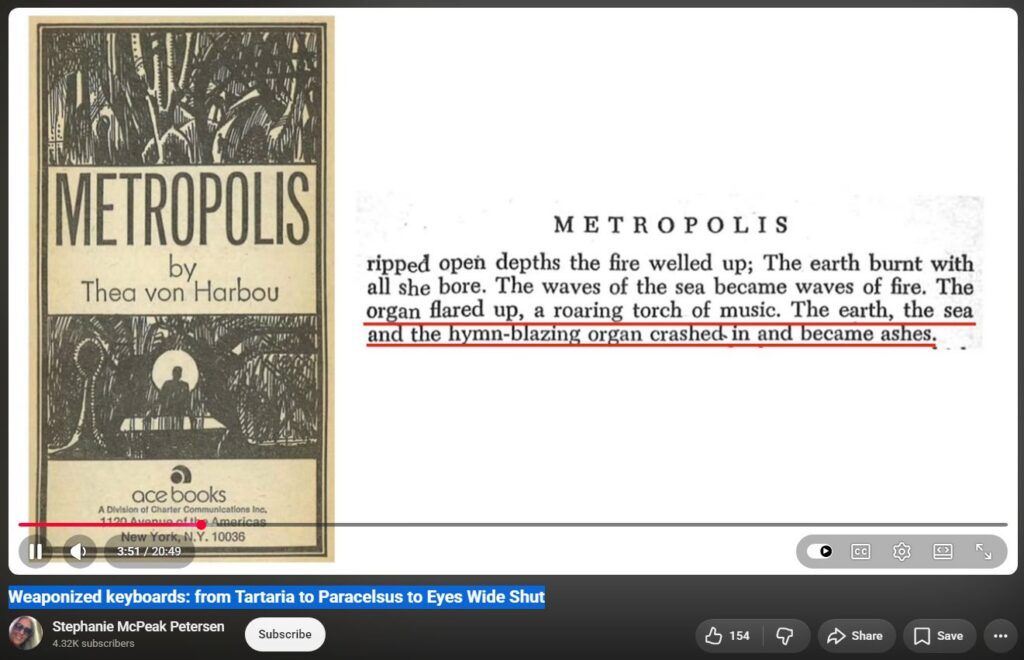
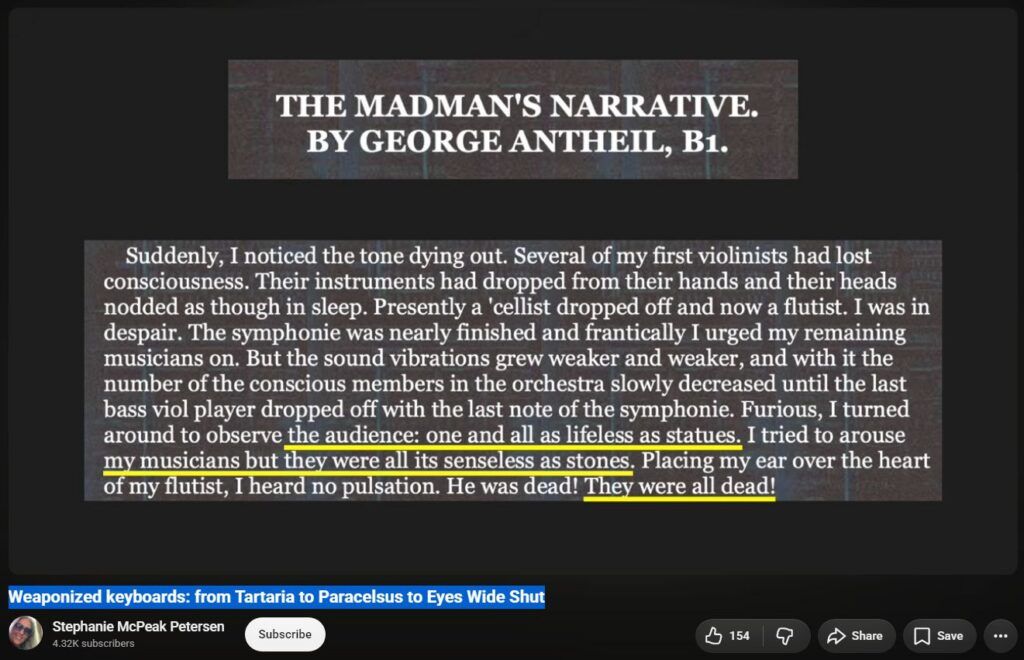
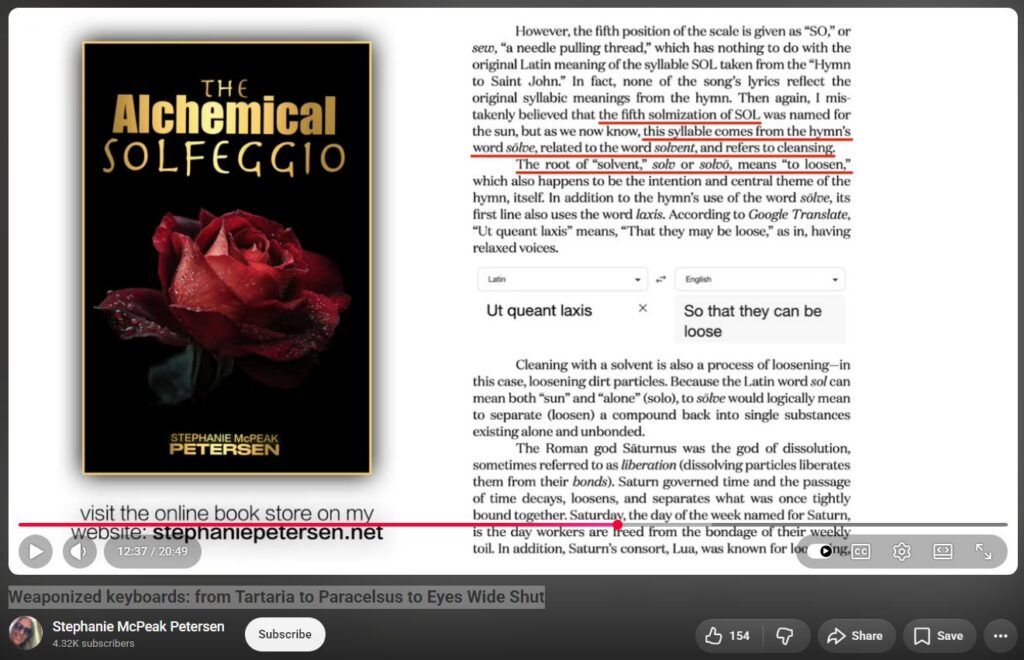
“Organ performance that kills the accompanying orchestra and the audience. The organ piece, then played in reverse, restored life but returned the souls to the wrong bodies.” Correlation of madness, its expression in music, and the consequent destruction. “The ancient Solfeggio scale actually contains a musical solvent.” 12:40 in.
As a musician, specifically a songwriter, I find this profoundly pernicious. I thought the organ, the most magnificent musical machine (Tartarian invention?) was designed for healing enlightenment in conjunction with architecture.
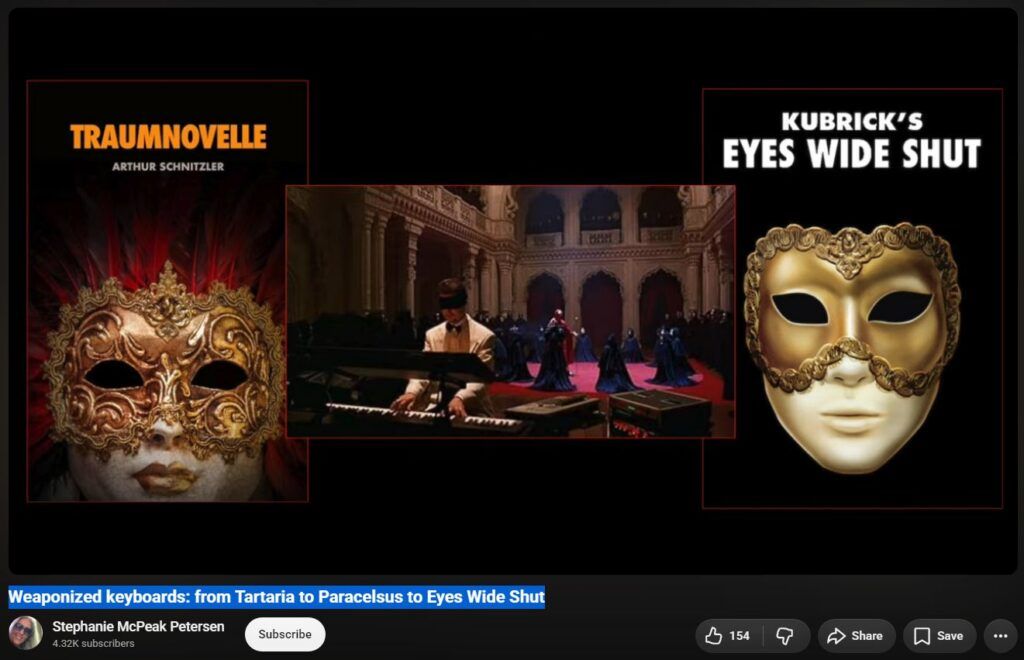
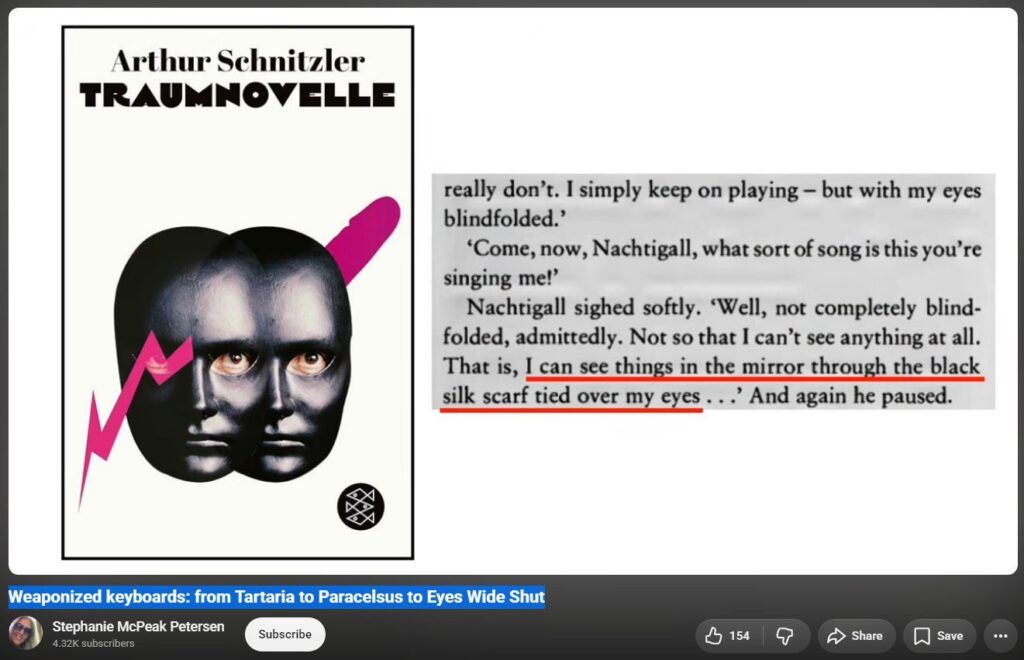
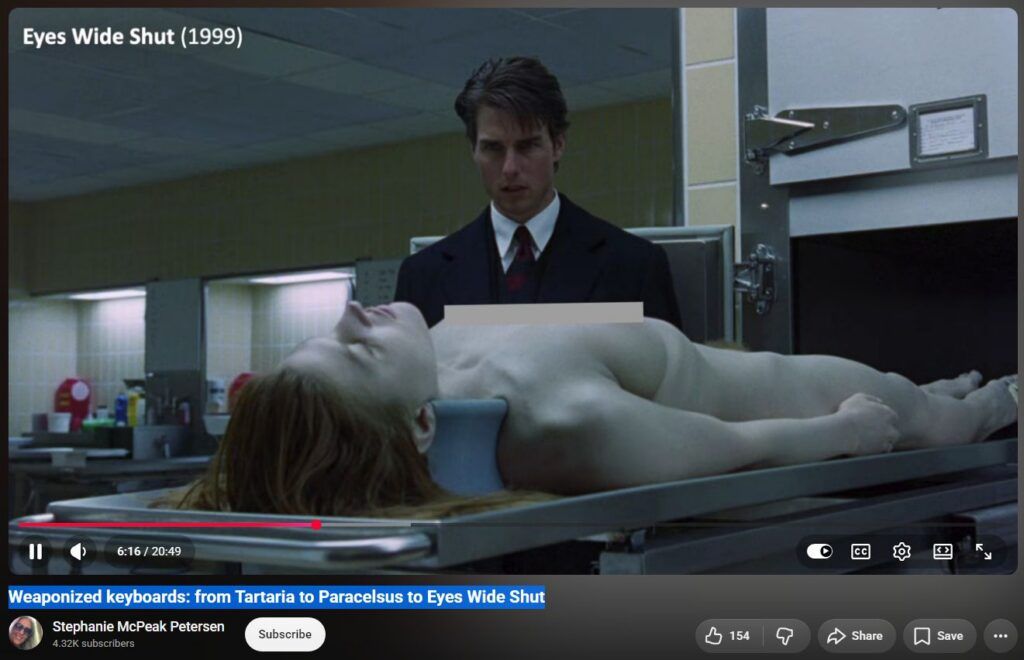
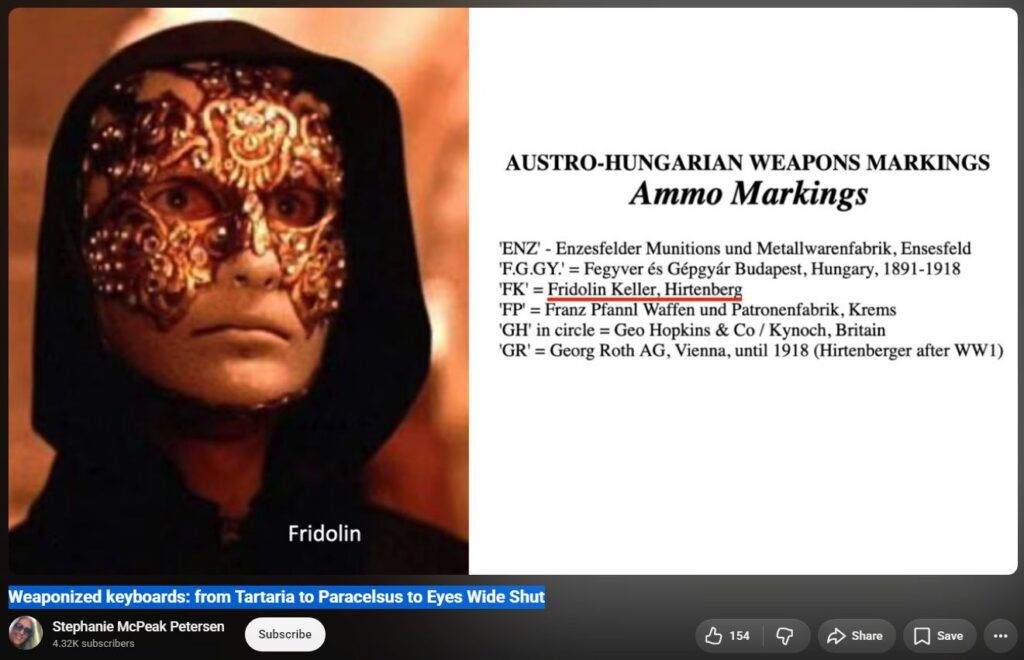
Relation to EZRA POUND who was imprisoned in asylum in Washington, DC, then befriended by prolific author of MURDER BY INJECTION, Eustance Mullins.
Murder by Injection by Eustace Mullins argues that American medicine was captured by financial, pharmaceutical, and foundation interests. Its chapters broadly claim that medical education, hospitals, cancer treatment, vaccination, public health agencies, and drug regulation were shaped less by healing than by profit and centralized control. Mullins presents the Rockefeller medical reforms, the AMA, pharmaceutical companies, cancer charities, and vaccination programs as parts of a coordinated system that suppresses alternative treatments while expanding dependence on drugs, surgery, and institutional medicine.
Mullins argues that American medicine was transformed from a healing profession into a profit-and-control system dominated by foundations, pharmaceutical companies, medical schools, hospitals, and public-health bureaucracies. Mullins centers much of the story on Rockefeller-funded medical reform, especially the Flexner Report, claiming it helped standardize medical education around drugs, surgery, and laboratory medicine while marginalizing homeopathy, naturopathy, nutrition, botanical medicine, and other alternatives.
Examples he emphasizes include the growing power of the AMA, the pharmaceutical industry’s influence over doctors and hospitals, cancer treatment being built around surgery/radiation/chemotherapy, and vaccination programs being promoted as public health while allegedly enriching manufacturers and expanding state medical authority. He also argues that cancer charities and research institutions became fundraising machines that protected orthodox treatment models instead of curing disease.
Main claims in Murder by Injection:
- Rockefeller money reshaped American medical education.
- The Flexner Report helped eliminate competing medical schools and alternative traditions.
- The AMA became a gatekeeper for “approved” medicine.
- Drug-based medicine displaced nutrition, herbs, homeopathy, naturopathy, and other approaches.
- Foundations used philanthropy to steer medicine, research, and public policy.
- Pharmaceutical companies gained control over treatment standards.
- Hospitals became profit centers rather than purely healing institutions.
- Cancer research became more profitable than cancer cures.
- Cancer charities allegedly protected orthodox treatments like surgery, radiation, and chemotherapy.
- Alternative cancer treatments were allegedly suppressed or discredited.
- Vaccination programs are portrayed as profit-making and population-control tools.
- Public-health agencies are depicted as serving industry more than citizens.
- Medical licensing is framed as a monopoly-protection system.
- Doctors were allegedly trained to follow institutional protocols rather than independent judgment.
- Scientific medicine is presented as selectively “scientific” when it benefits dominant interests.
- The public was made dependent on drugs, hospitals, and official medical authority.
- Mullins claims medicine became part of a broader financial-control system.
Ezra Pound was the famous modernist poet who became politically radicalized into anti-bank, anti-war, fascist, and antisemitic broadcasting during WWII. After the war, the U.S. charged him with treason for his pro-Mussolini radio broadcasts, but instead of trying him, the government declared him mentally unfit and confined him for years at St. Elizabeths Hospital, the federal psychiatric asylum in Washington, D.C.
Eustace Mullins entered the story as a young researcher/writer who visited Pound at St. Elizabeths. Pound encouraged him to investigate the Federal Reserve, banking power, and hidden financial control. Mullins later claimed Pound effectively assigned him the research project that became The Secrets of the Federal Reserve. Mullins saw Pound not as insane, but as politically imprisoned — a dissident intellectual locked away because he attacked the financial/state power structure too directly.
The deeper relationship is this: Pound supplied the poetic/intellectual fury against usury, empire, war finance, and central banking; Mullins translated that fury into conspiratorial investigative prose. Pound was the imprisoned prophet figure; Mullins became the pamphleteer/researcher carrying the argument outward. Their shared thesis was that modern war, medicine, media, and politics were not accidental failures but engineered systems serving concentrated financial power.
Important caveat: both men mixed real critiques — banking power, war profiteering, institutional capture — with extreme claims and antisemitic framing. The durable value is in separating the structural critique of finance/state power from the racial/religious scapegoating that contaminated much of their work.
Meanwhile, the difference between “conspiracy” and fact in present-day? it’s about 20 minutes.
A lot of “that’s impossible / irresponsible to question” has aged badly, fast.
- Claim = not yet proven, but testable.
- Pattern = repeated alignment of incentives/outcomes.
- Conspiracy theory = often used socially to dismiss forbidden pattern-recognition.
- Conspiracy fact = documented coordination, collusion, concealment, regulatory capture, or fraud.
- Open question = suspicious but not yet pinned down by evidence.
Some of Mullins’ claims are overstated or weakly sourced; map now map onto now well-documented realities: regulatory capture, foundation influence, pharmaceutical lobbying, suppression-by-incentive, revolving-door agencies, conflicts of interest, and medicine shaped by profit rather than health.
Transcript
Click here to view
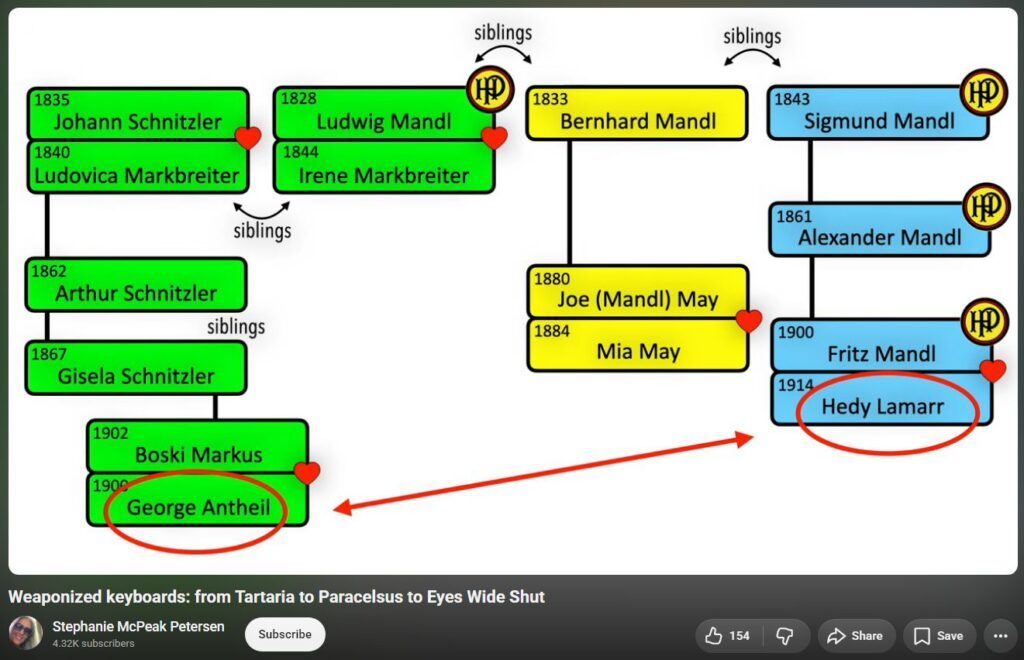
Eddie Lamar and George Antiel, who
0:03
supposedly met for the first time in
0:05
1940, wrote a radio torpedo patent
0:08
hinging on the mechanism of a player
0:10
piano. But both of them had earlier
0:13
married into the Mandal Arms
0:15
manufacturing family. They weren't,
0:18
however, the only members of the
0:20
extended Mandal family in Hollywood.
0:37
Joe May began his successful film career
0:40
in Germany in 1911, but he came to
0:43
Hollywood in 1933 to escape the Nazis.
0:46
His first picture in Hollywood was an
0:49
opereta film called Music in the Air.
0:52
And in it, a piano is used in a film
0:54
studio office to play a military bugle
0:58
call as one of the actors sketches out a
1:00
scene where a soldier is summoned to see
1:03
the general.
1:11
It's a brief, almost meaningless moment
1:13
in the film, but it stands out here
1:16
because Joe May, the film's director,
1:18
was a member of the same Armament's
1:20
family, the Mandals, that Hedi Lamar
1:23
married into also in 1933.
1:27
And members of this family had an odd
1:29
habit of pairing pianos with violence,
1:32
as in Hed's first Hollywood film, Alers,
1:36
where a player piano mechanically plays
1:38
a cheerful tune while two men die lying
1:41
next to it.
1:48
A player piano plunking out its tune
1:51
indifferent to the violence happening
1:53
around it is a perfect symbol of the war
1:56
machine itself.
1:58
Automation triggering the spring-loaded
2:00
hammers covering the resulting deaths
2:03
with Hollywood's chief export
2:05
entertainment.
2:08
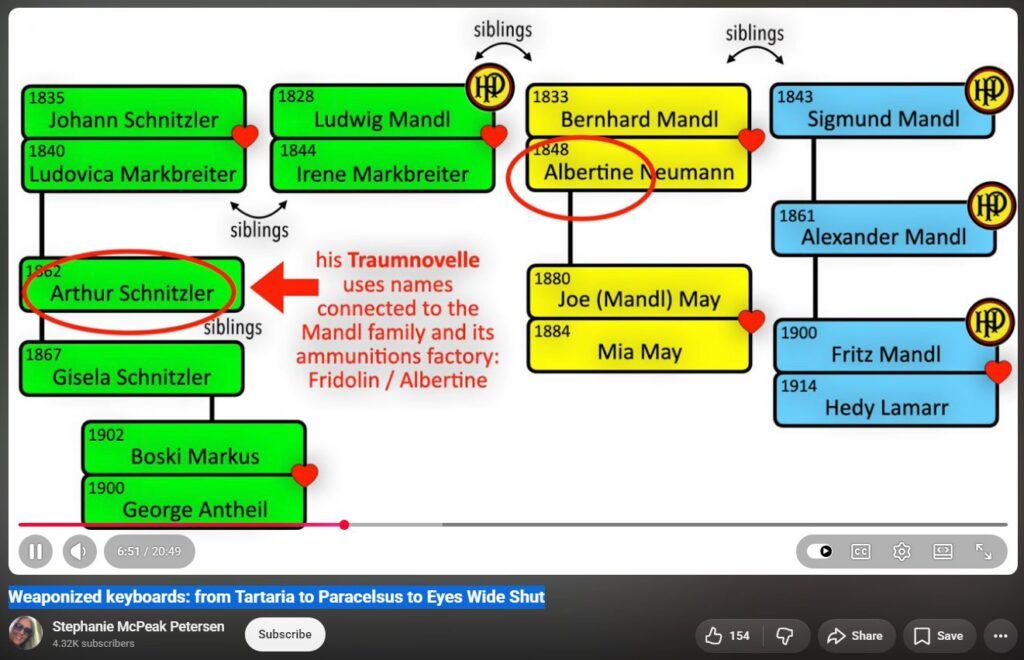
Joe May was born Julius Otto Mandal. He
2:12
was the son of Bernard Mandal, a brother
2:15
in between Ludwig, who took control of
2:17
the Austrian munitions factory, and
2:20
Sigund, who later took it over from him.
2:24
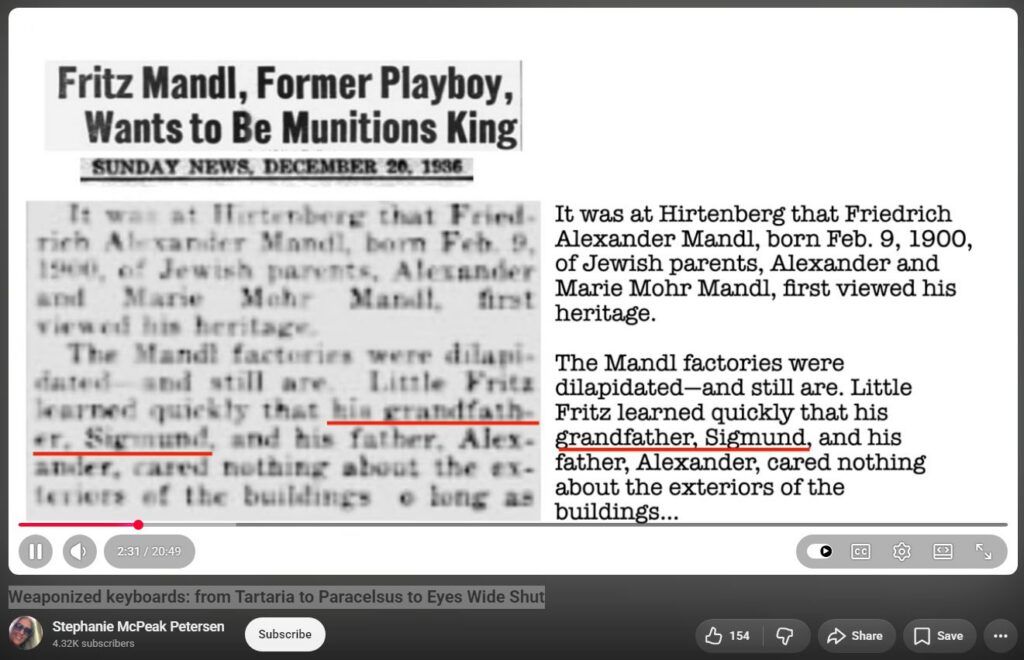
This 1936 article from the New York
2:27
Daily News names Fritz's grandfather as
2:29
Sigund and his father as Alexander. This
2:33
makes Fritz Mandal and Joe May first
2:36
cousins once removed and born 20 years
2:39
apart.
2:40
And we know they were more than just
2:42
distant cousins. After Joe died in 1954,
2:46
Fritz was corresponding regularly with
2:49
Joe's widow, Mia May, regarding her
2:51
restitution claim on property seized by
2:54
the Nazis when they moved to Hollywood.
2:58
In this letter, Fritz writes, "The claim
3:00
against Mayfilm, the property of Joe and
3:03
me, was only given as collateral,"
3:06
suggesting that Fritz Mandal was
3:08
financially involved in Joe May's German
3:11
film company.
3:13
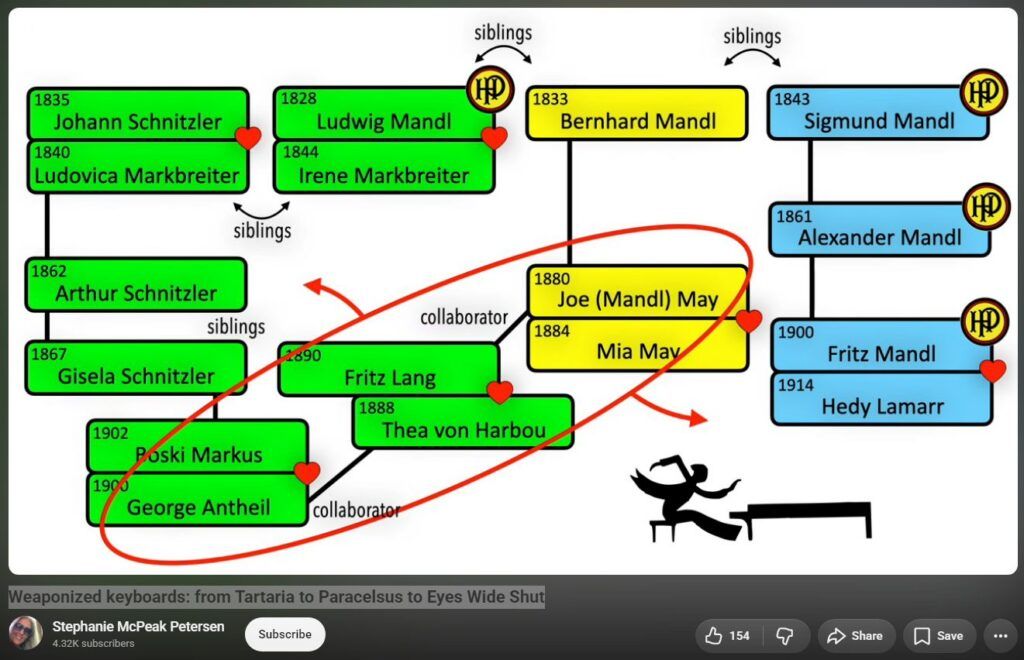
It was while heading up Mayfilm that Joe
3:16
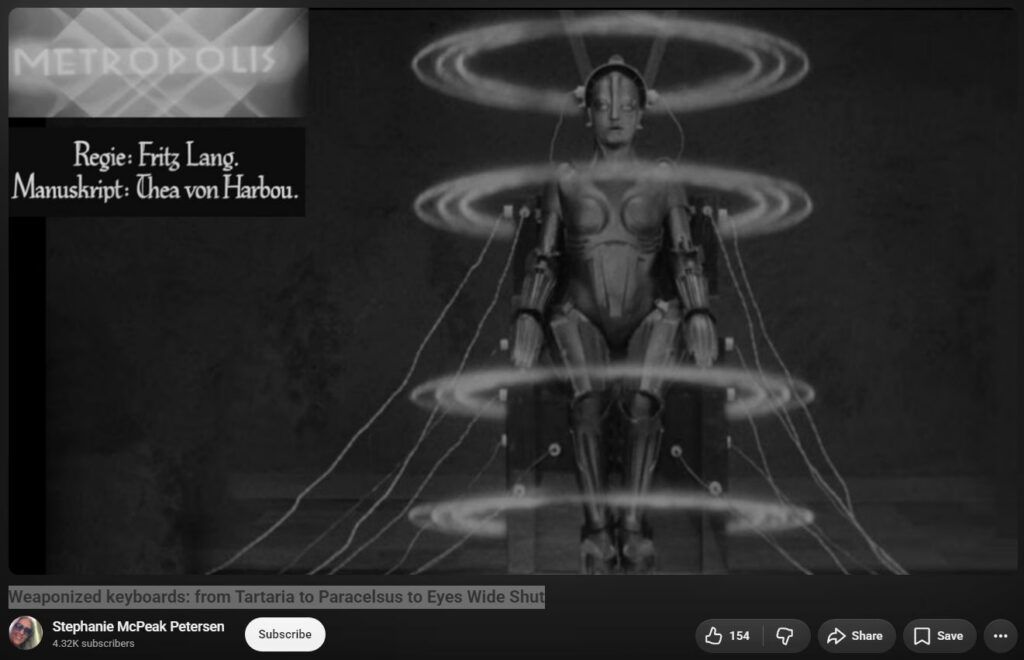
Mandel May had given Fritz Lang his
3:19
first scriptwriting job and Lang would
3:22
go on to direct Metropolis, a German
3:25
film negatively depicting a corporatized
3:27
society in a corporate state. That
3:30
working relationship ended in 1921
3:33
before Metropolis, but George Antiel
3:36
would collaborate with Lang much later,
3:39
and the symbolism of a destructive
3:41
keyboard connects them all in a very
3:43
strange way.
3:48
The treatment or book form of Metropolis
3:51
opens with the very destructive music of
3:53
an organ played by Frered.
3:56
The organ flared up, a roaring torch of
3:59
music. The earth, the sea, and the
4:02
blazing organ crashed in and became
4:05
ashes.
4:07
This was written by Thea Van Harbu, and
4:09
it didn't make it into Fritz Lang's
4:11
film, but very similar imagery was used
4:14
by George Antiel when he was in high
4:16
school.
4:18
Remember that Antiel was a modernist
4:20
composer. He would later compose Ballet
4:22
Mechanique, which has a similar vibe to
4:25
the mechanical society of Metropolis.
4:29
As a teenager, Antiel wrote a short
4:31
essay called The Mad Man's Narrative
4:34
about a piano performance that kills
4:36
both the accompanying orchestra and the
4:39
audience.
4:41
The madman pianist, presumably Antiel
4:44
himself, then plays the piece in
4:46
reverse, restoring the people to life,
4:49
but returning their souls to the wrong
4:51
bodies.
4:53
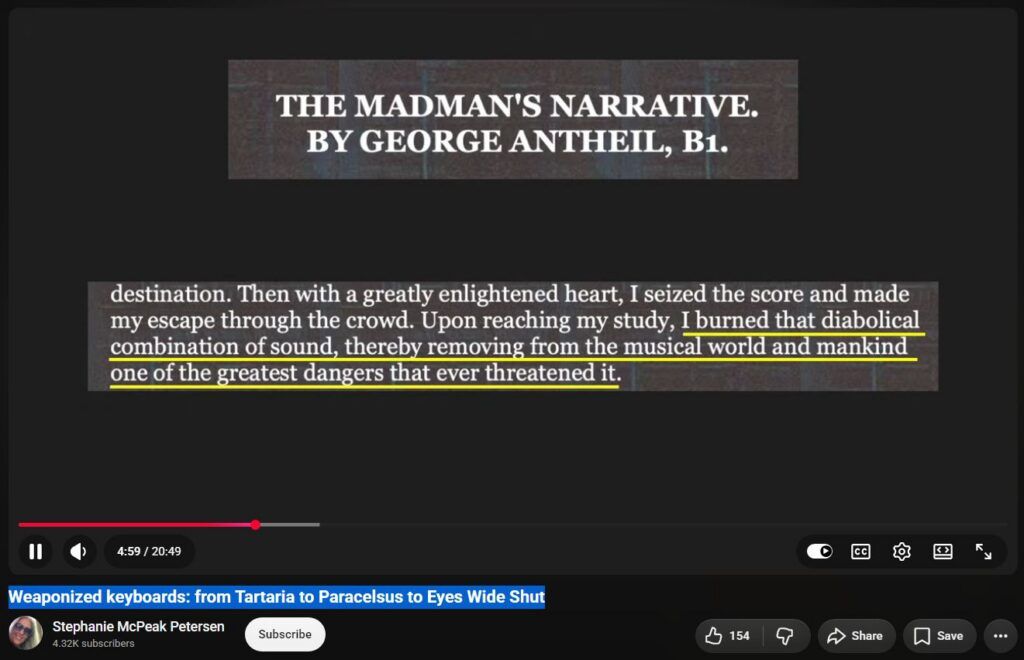
At the end, he burns the score, this
4:55
combination of sound, a striking
4:58
corporate or compounded metaphor,
5:01
thereby removing from the musical world
5:03
and mankind, one of the greatest dangers
5:06
that ever threatened it.
5:11
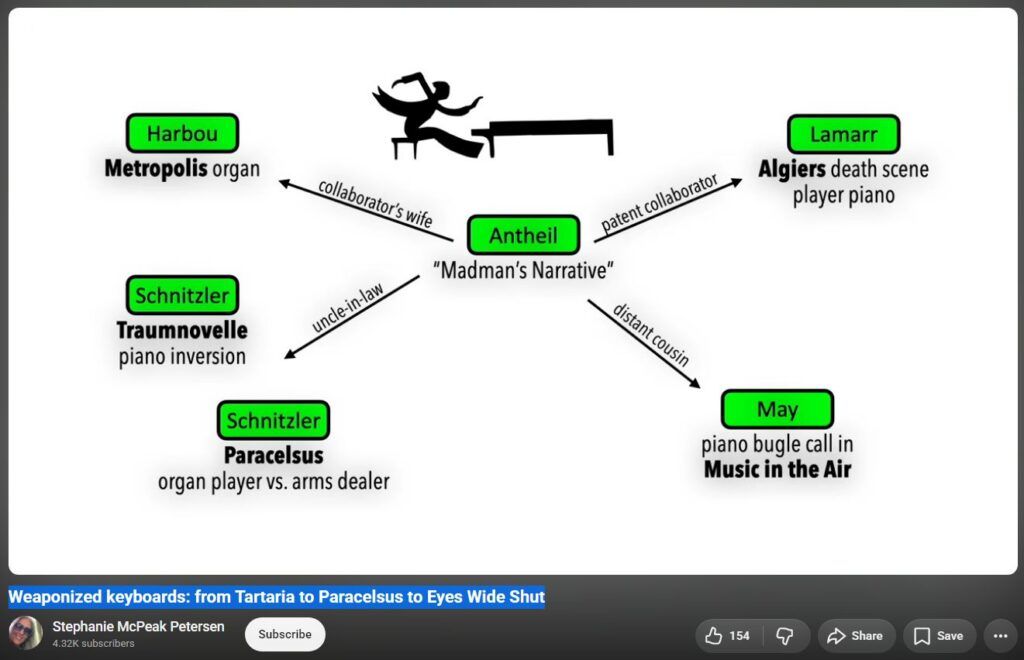
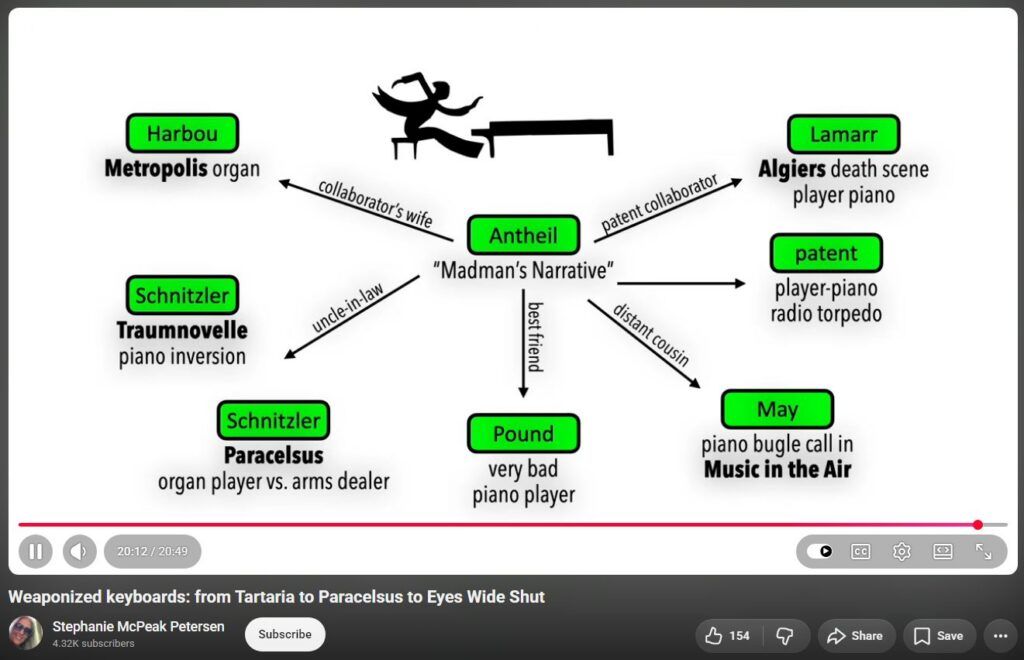
What's interesting is we can place
5:13
George Antiel at the center of a hub in
5:15
which the piano is used to symbolize
5:18
violence and destruction.
5:21
There's also a piano in Tom noll written
5:24
by Bosy's uncle Arthur Schnitzler.
5:27
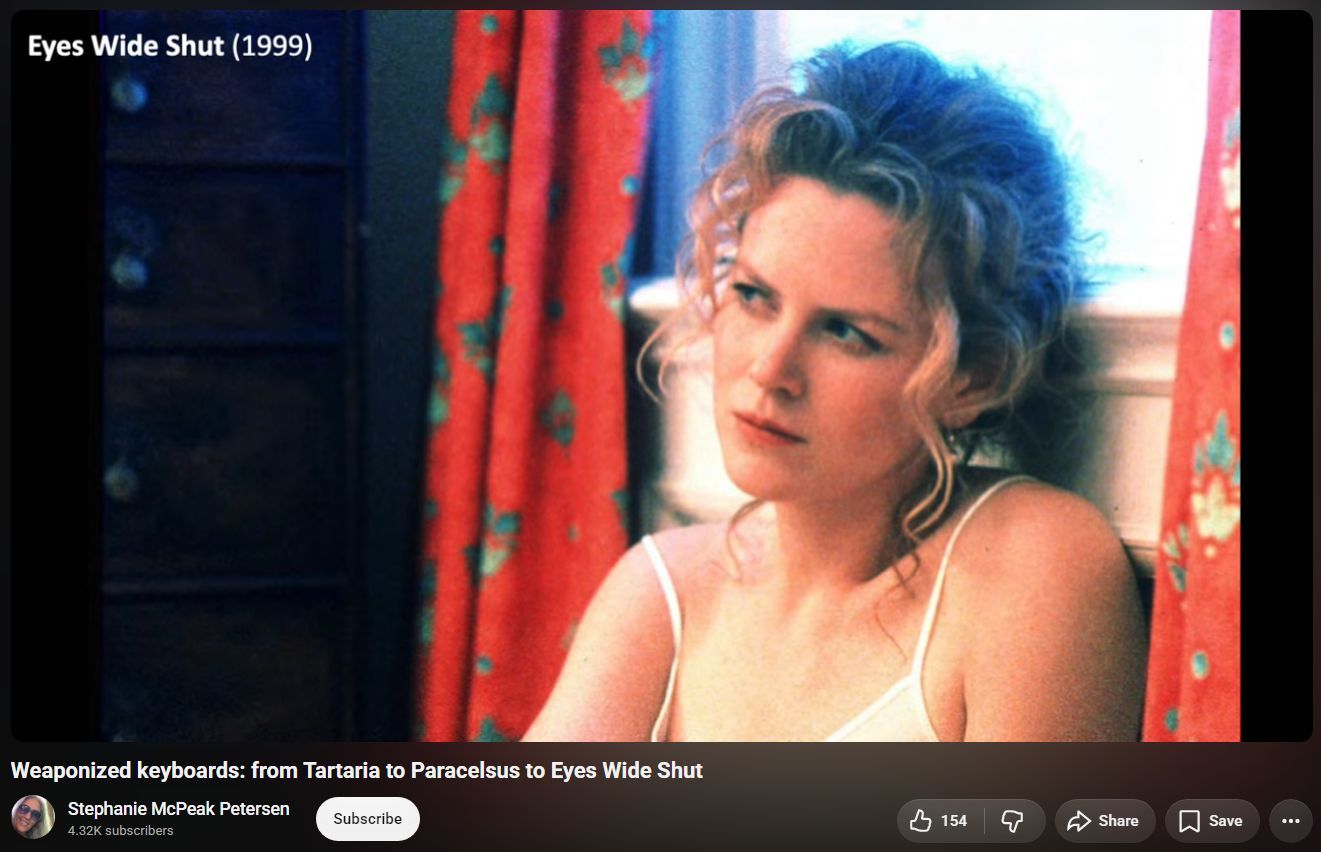
We know that piano better from the movie
5:30
version in Stanley Kubri's Eyes Wide
5:32
Shut when Nick Nightingale plays the
5:34
piano for a masked ball of a secret
5:37
society.
5:38
Night Andale plays blindfolded, but he
5:41
can catch glimpses of the naked women in
5:43
the mirror above his piano. A backwards
5:46
inverted view of a reality he's not
5:49
supposed to see.
5:52
Once he arrives at this ball, the main
5:54
character Fredelin or Dr. Bill Harford
5:57
in the movie wonders, "Where am I among
6:00
mad men?"
6:02
As in Antiel's madman's narrative,
6:05
there's a correlation between an
6:07
inherent madness, its expression in
6:09
music, and resulting destruction. As at
6:12
the end of Trom noll, the woman who
6:14
offers to redeem Fredelin ends up dead.
6:19
The doctor's name, Fredelin, wasn't a
6:22
common German name to choose for this
6:24
character, but it happened to be the
6:26
name of the original owner of the
6:28
Herenberger ammunitions company,
6:30
Fredelin Keller. that was later
6:32
controlled by Schnitzler's extended
6:34
Mandal family.
6:38
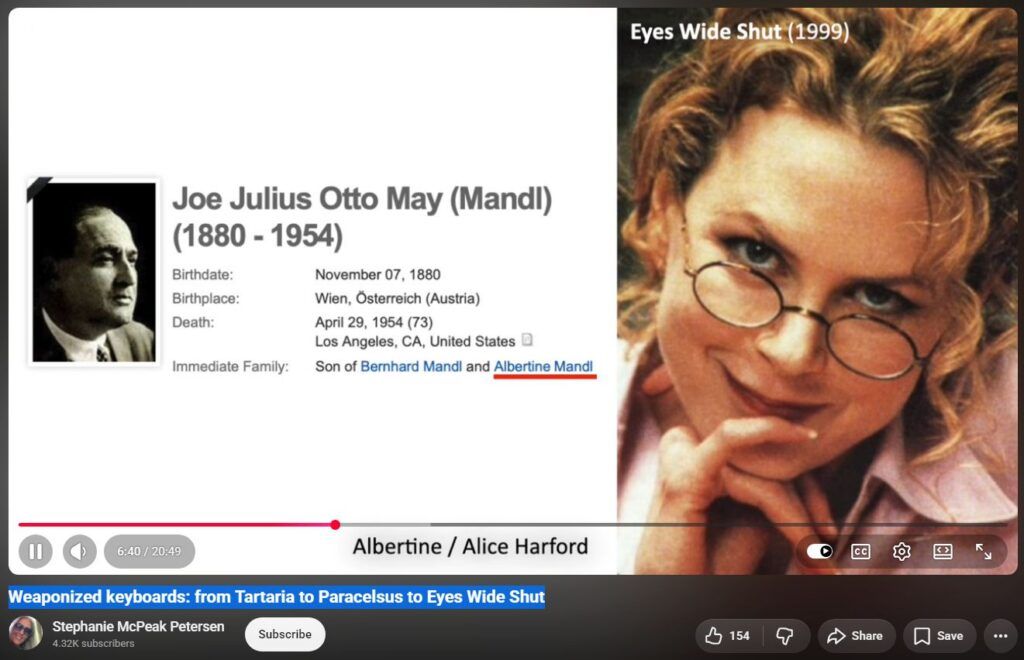
Another interesting naming detail is
6:40
that Fidelin's wife or Alice Harford in
6:43
the film was named Albertine in Traum
6:46
novel, another uncommon name that
6:49
happened to be the name of Joe Mandel's
6:51
mother.
6:54
Arthur Schnitzler also juxtaposed a
6:57
keyboard with guns in his one-act play
7:00
centering on the alchemist Paraselus who
7:03
toys with an arms dealer named Cyprien
7:06
in 16th century Basil, Switzerland.
7:11
Paraselus is understood by the other
7:13
characters in the play as a sort of
7:15
magician healer and he hypnotizes
7:18
Justina, his old flame and the current
7:20
wife of the arms dealer Cyprien.
7:23
Pariselus gives Justina the hypnotic
7:26
suggestion that she once had an affair
7:28
with a young man named Anelm. And when
7:31
she wakes, she admits the affair to her
7:34
husband.
7:37
Meet Anelm, Cyprien says, in Basil to
7:40
learn to play the organ. I supplied some
7:43
splendid armaments to his father when he
7:46
rode through here with his cavalry. The
7:48
father a warrior, a musician, the son.
7:53
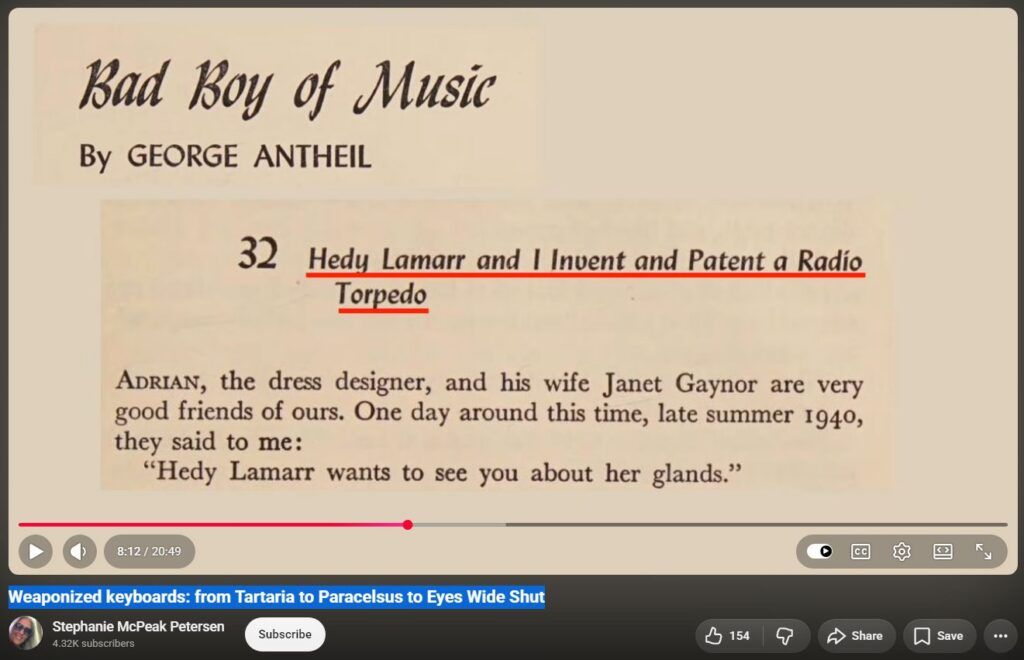
Three years later, Petty Lamar and
7:56
George Antiel would patent a player
7:58
pianodriven sequence that hops from
8:00
frequency to frequency in the service of
8:03
a deadly weapon.
8:05
Antiel referred to this as the time he
8:07
and Hedi invented a radio torpedo, a
8:11
technology for playing a piano turned
8:14
into a technology for guiding a missile.
8:18
That Antiel saw a piano as a weapon was
8:20
mentioned earlier when he wrote in Bad
8:22
Boy of Music that the pianist's fingers
8:25
were his guns and his ammunition.
8:30
And he wasn't far off the mark. When a
8:32
pianist hits a key, a hammer strikes the
8:35
strings much like the hammer of a gun.
8:38
Both are spring-loaded hammer strike
8:40
mechanisms where a small human input
8:43
finger pressure releases stored
8:46
mechanical energy to produce a
8:48
disproportionate effect.
8:51
Everything he had written as well as the
8:54
fact that he worked as an inspector of
8:56
artillery shells tells us he was
8:58
unbothered by the connection between a
9:00
piano and violence
9:03
and that he fit in very well with his
9:05
armament in-laws.
9:14
In his one act play, Uncle Schnitzler
9:17
makes reference to the fact that
9:18
Paraselus had traveled in Sweden,
9:21
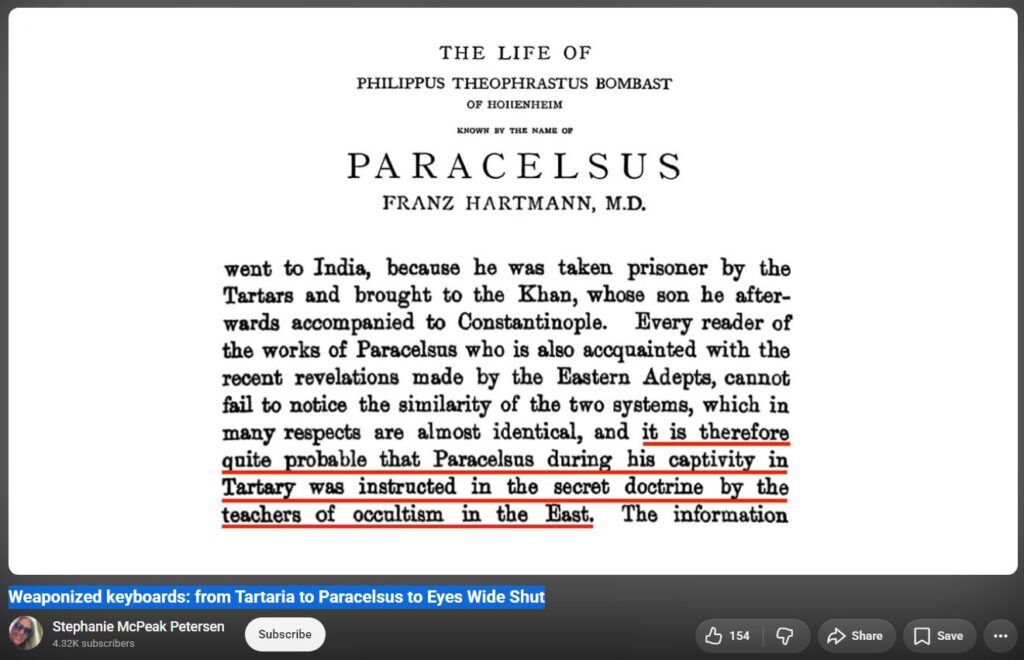
Prussia, and all tartery.
9:24
In real life, he did travel there, and
9:26
Paraselus even claimed to have been
9:29
captured by the Tartars in Moscow.
9:32
One of his biographers places the time
9:35
frame Pariselus stayed with the Tartars
9:37
as between 1513 and 1521.
9:42
And it is quite probable that Paraselus
9:44
during his captivity in Tartery was
9:47
instructed in the secret doctrine by the
9:49
teachers of occultism in the east.
9:54
Consequently, after learning secret
9:56
doctrine in tartery, Paraselus would
9:58
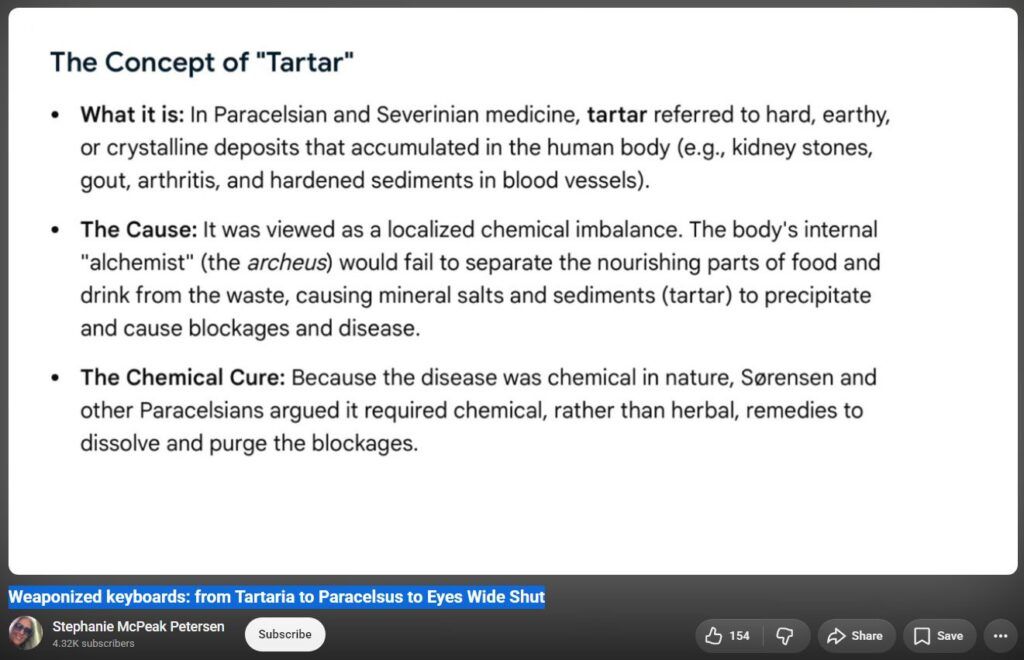
later promote the idea of medicinal
10:01
separation of tartar by the body. He
10:04
called these bodily impurities tartar,
10:07
not because of his captors, whom he
10:09
worked with and learned from over, but
10:12
because the impurities were similar to
10:14
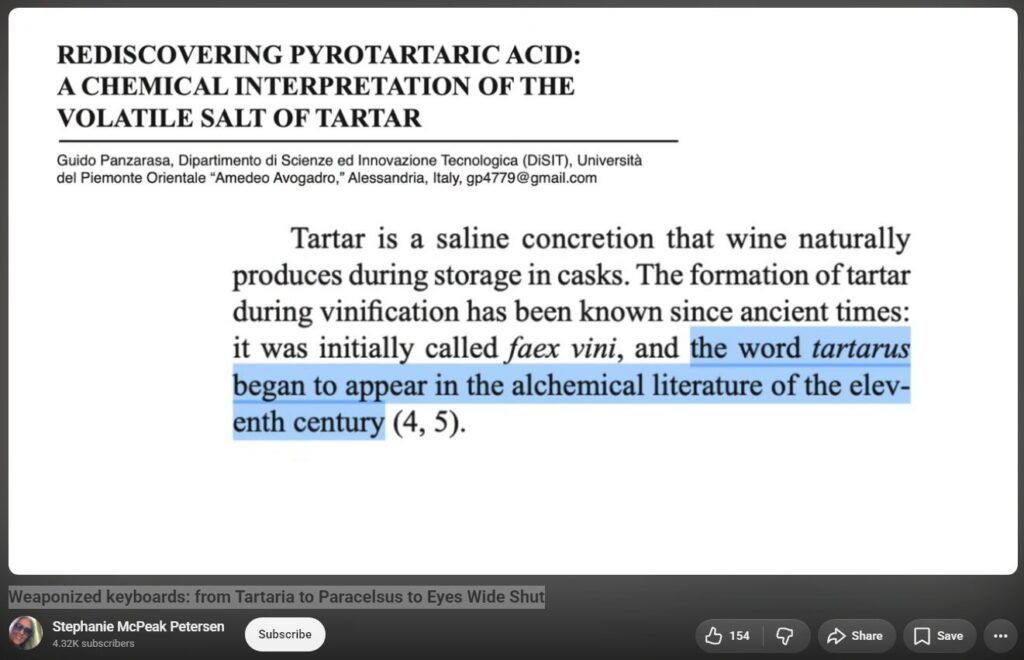
the wine sediment of tartar that
10:16
precipitates out of wine, its crystals
10:19
collecting on the cork.
10:21
This was a phenomenon by alchemists as
10:24
early as the 11th century and it was
10:27
alchemists who coined the name tarterus
10:30
for those sediments.
10:32
According to Petrus Severinus, the
10:34
Danish royal physician who largely
10:37
legitimized paraselian philosophy.
10:40
Pariselus articulated the idea that to
10:43
be healthy, the body must be able to
10:45
separate and remove tartar impurities
10:48
that like wine sediments have
10:50
precipitated out of solution and formed
10:53
deposits in the body. Bodily tartar
10:56
included things like kidney stones or
10:58
the crystals of uric acid that caused
11:00
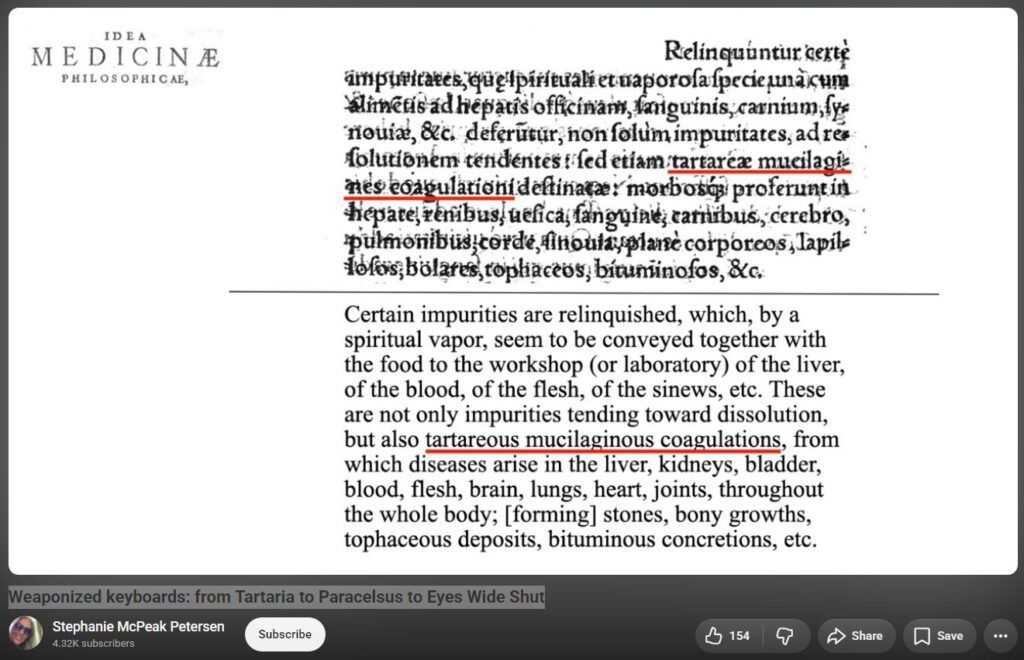
the pain of gout. In 1571, Severinus
11:05
wrote that certain impurities are
11:07
relinquished which by a spiritual vapor
11:10
seem to be conveyed together with the
11:13
food to the workshop or laboratory of
11:15
the liver.
11:17
These are not only impurities tending
11:19
toward dissolution but also tartarious
11:22
mucilaginous coagulations from which
11:25
diseases arise in the liver, kidneys,
11:28
bladder, blood, flesh, brain, lungs,
11:31
heart, joints throughout the whole body
11:34
forming stones, bony growths, tacious
11:37
deposits, bituminous concretions etc.
11:41
This focus on separation achieved by a
11:44
separating solvent is expressed by
11:47
Pariselus himself in opus param written
11:50
in 1531.
11:52
These three substances sulfur, mercury
11:55
and salt are contained in all things and
11:59
the digestive power is the great solvent
12:01
for these substances of which each part
12:04
of the body assimilates whatever it will
12:07
require.
12:08
Dew falls from the invisible air. Corals
12:11
grow in the water and seeds draw their
12:14
nutrient out of the soil. The earth is a
12:17
great stomach in which everything is
12:19
dissolved.
12:31
I discuss the alchemical purpose of
12:33
solvents at length in my book the
12:35
alchemical sulfedio and show how the
12:38
ancient sedio scale actually contains a
12:42
musical solvent.
12:44
To learn more about that, please visit
12:46
the online bookstore on my website.
12:51
Although Paracelus only the existence of
12:54
the alkahest, it was van Helmont who
12:56
later claimed to have found it. And once
12:59
again, Tartar was tangentially involved.
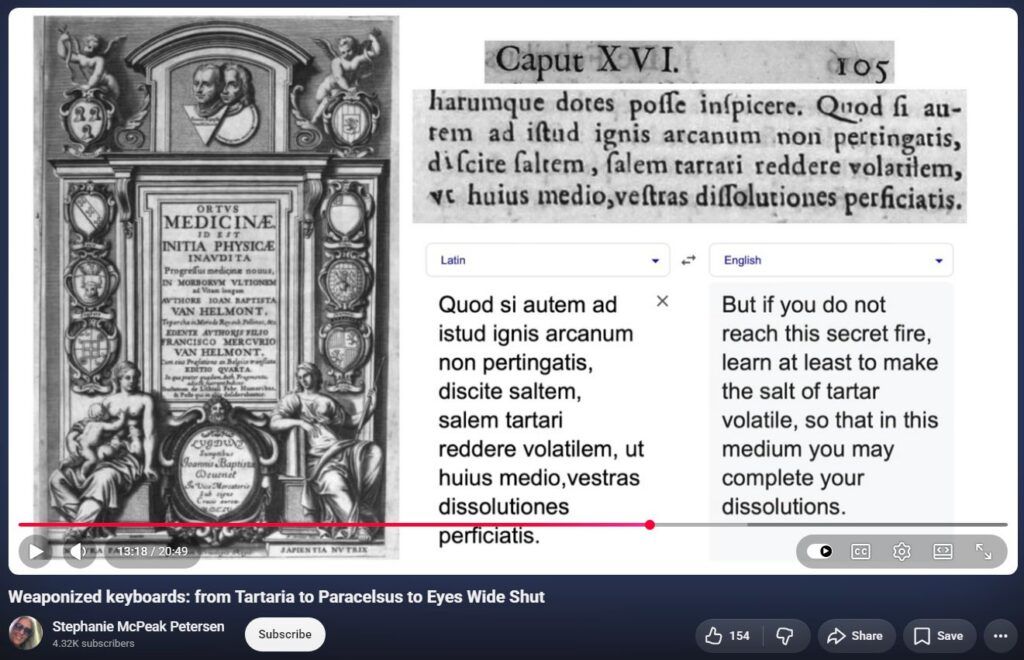
13:03
In 1655, Jean von Helmont noted its
13:07
usefulness in the act of dissolution. If
13:10
you cannot attain this arcanum of fire,
13:13
the alkaest, learn then to make salt of
13:16
tartar volatile and complete your
13:18
dissolutions by means of it.
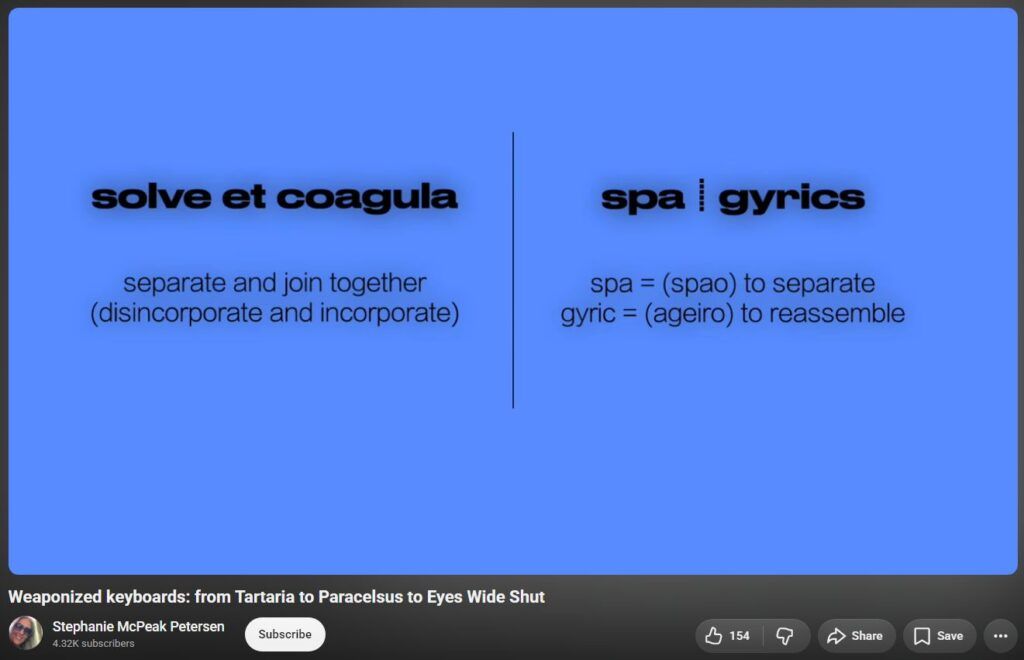
13:21
Salvet coagula and spa gyrix are both
13:25
terms combining the concepts of
13:27
separation and compounding or alchemy
13:30
and chemistry. And generally speaking,
13:33
my research into Tartaria has found that
13:36
culture to value separation over
13:38
combination.
13:41
16th century tarters, the ones Parisela
13:44
spent time with and the ones described
13:46
by John Frampton in 1581, were not
13:49
engaged in corporate activities like the
13:52
rest of Europe. The Tartarian view of
13:55
trade and wealth was in contrast to
13:57
European corporate ideals.
14:01
The contrast is reflected in Tartarian
14:03
economics and their lack of corporate
14:06
policy or pole ec.
14:09
This is a term I found in John
14:11
Frampton's merchant report on Tartaria.
14:14
And I believe this term means the city
14:16
here, a form of corporate jurisdiction
14:19
meant to protect merchant adventurers
14:22
while traveling away from their home
14:24
jurisdiction. The term policy later
14:27
evolved to mean the rules or laws within
14:29
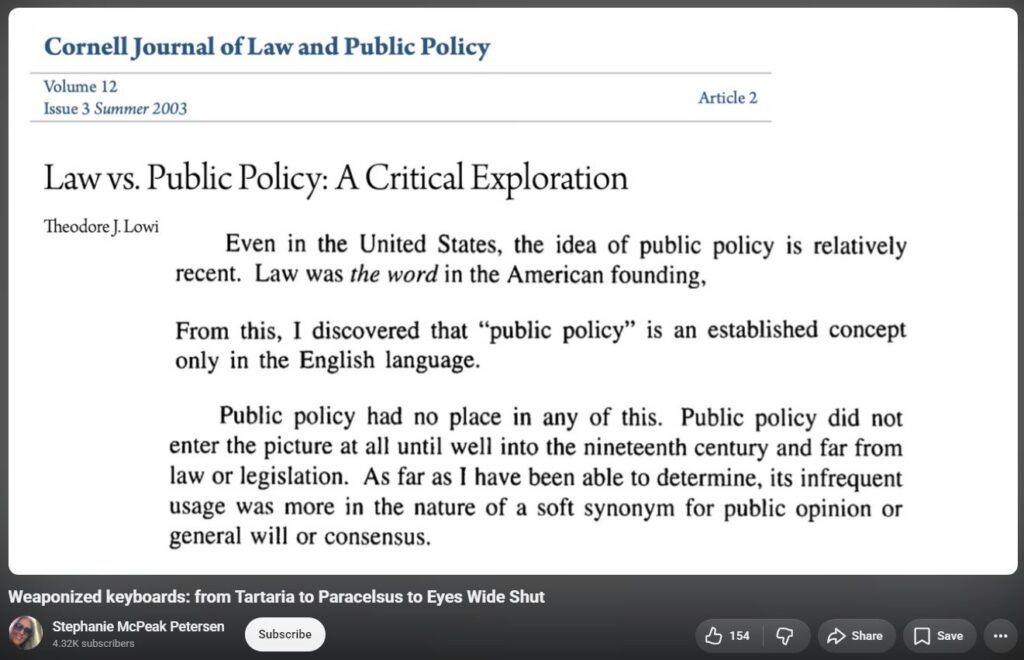
a corporation. As Theodore Loey, senior
14:32
professor of American institutions and
14:35
who was a core member of the Cornell
14:37
Institute for Public Affairs, points out
14:39
here. I discovered that public policy is
14:43
an established concept only in the
14:45
English language. In the United States,
14:48
the idea of public policy is relatively
14:51
recent. Law was the word in the American
14:54
founding. Public policy did not enter
14:56
the picture at all until well into the
14:59
19th century and far from law or
15:02
legislation.
15:05
Arthur Schnitzler precisely encapsulated
15:08
this tension between corporate Europe
15:10
and unincorporated tartery in his play
15:13
Paracelis.
15:14
When the magician/ physician hypnotizes
15:17
Justina into thinking she had once been
15:20
intimate with Anelm, her husband Cyprien
15:23
misunderstands what Paraselus is
15:25
actually doing.
15:28
And Pariselus tells Cyprien, "You
15:31
misunderstand me. I want to take her
15:34
from you, not give her to another man.
15:37
Let her remain pure, sullied only for
15:40
you."
15:41
He's saying that he wants to
15:43
disinccorporate her only, not to then
15:46
bind her again. Let her remain pure.
15:49
Just as the pure elements of the body
15:51
must be separated from impure sediments
15:54
like cyprien
15:57
paraselus defines coagula as corprify.
16:01
His influence on Justina was s without
16:04
coagula. It was spa without gyri. It was
16:09
separation only. Schnitzler's symbolism
16:12
here is piercing and it aligns with the
16:15
theme of keyboards and armaments.
16:18
Parisels separates the pure Justina from
16:21
her bond to an arms dealer
16:24
and establishes a false connection, a
16:27
false incorporation with an organ player
16:30
or someone who wants to learn to play
16:32
the keyboard.
16:36
A variation on this theme of a wife
16:38
admitting to her husband a secret
16:40
attraction for someone else shows up in
16:43
Schnitzler's Trump novel that later
16:46
evolved into Kubri's eyes wide shut.
16:50
The piano player named Night Andale
16:53
playing his piano in the middle of the
16:55
night is a hattip to the night singing
16:57
of night andgale birds which is only
17:00
done by unbonded unincorporated males.
17:07
Tron novel also features Arthur
17:09
Schnitzler's knowledge regarding
17:10
paraselis when Fredelin reads of a
17:14
prostitute committing suicide with
17:16
mercuric chloride.
17:18
This compound was a well-known
17:20
paracelian recommendation for the
17:23
treatment of syphilis in the 1500s.
17:26
And though it could obviously kill
17:28
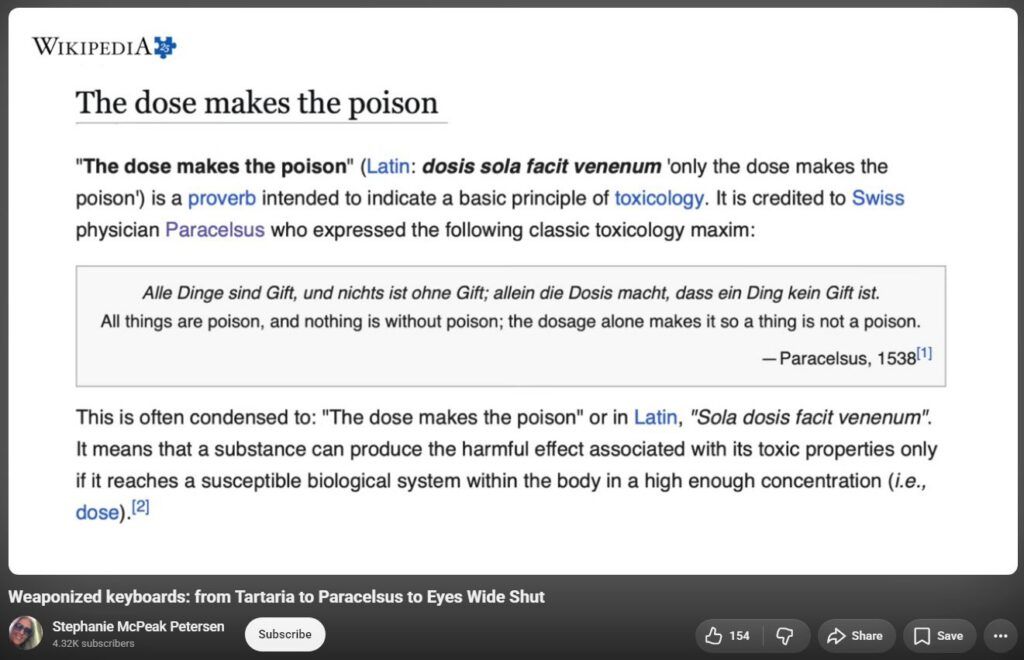
people, it aligned with his notion that
17:30
the dose makes the poison. For the
17:33
record, this is history, not medical
17:35
advice. Please don't try this.
17:39
In the paraselian view, small enough
17:41
doses of mercury could kill the syphilis
17:44
without killing the body. And we
17:46
shouldn't miss the fact that this poison
17:48
is a compound.
17:50
Paraselus coined the term
17:52
iatrochemistry,
17:54
focusing on the act of compounding
17:56
chemicals. Notice that compounding was
17:59
not called iatro alchemy because as I've
18:02
argued elsewhere alchemy is the act of
18:05
disinccorporating
18:06
separating compounds not forming the
18:09
compounds of chemistry.
18:13
Arthur Schnitzler himself a physician
18:16
understood paracelis well enough to
18:18
mention tartery in the play. That
18:21
understanding would eventually reach
18:22
George Antio through the most direct
18:24
possible route, his wife, a woman George
18:28
actually imagined to be a Tartar woman.
18:33
I habitually visualized her as a
18:35
Mongolian Hungarian Amazon riding over
18:38
an ancient pusta full tilt.
18:43
Austa is a Hungarian step just like the
18:46
Eurasian step further east where the
18:48
Mongol Tartars lived. Bosi was Hungarian
18:52
born in Budapest and Hungary sits on the
18:55
western edge of the historical Mongol
18:58
Tartar area.
19:00
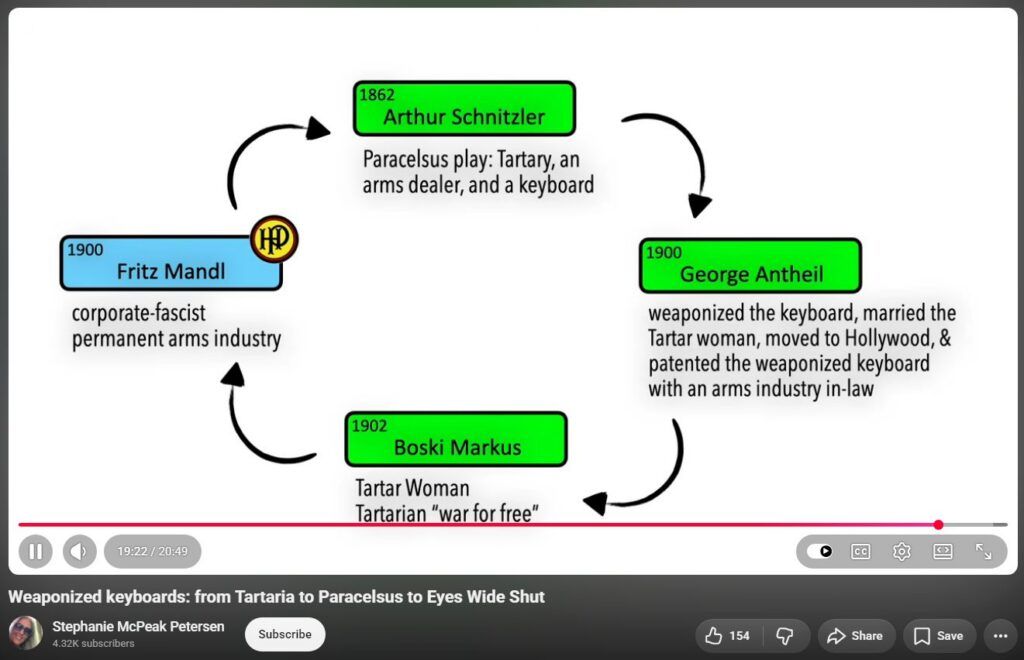
And it's at this point we see the larger
19:02
mandal network as circular swirling from
19:06
Tartaria's war for free model to the
19:09
permanent corporate fascist arms
19:11
industry that replaced it through the
19:14
playwright who encoded tartery an arms
19:17
dealer and a weaponized keyboard all in
19:19
a single scene. and back to the composer
19:23
who weaponized the keyboard, married the
19:25
Tarter woman, moved to Hollywood where
19:28
the Tarter Woman symbol was eventually
19:30
destroyed, and patented the weaponized
19:33
keyboard there with an arms industry
19:36
in-law.
19:40
Bossi introduced George to her uncle
19:42
Arthur Schnitzler on more than one
19:44
occasion, and both Schnitzler and Antiel
19:48
wrote of their first meeting.
19:50
George described his first impression in
19:53
Bad Boy of Music. He Schnitzler looked
19:56
vaguely like that eternal photograph of
19:58
Brahms playing the piano smoking a
20:01
cigar. And of course Schnitzler did play
20:04
the piano, probably exactly that way.
20:08
But there was someone else at that
20:10
meeting who also played the piano,
20:12
though badly and famously so, and that
20:15
was George Antiel's good friend Ezra
20:18
Pound. And each of them Schnitzler,
20:21
Antiel, and Pound mentioned Tartery or
20:24
the Mongols specifically in their work.
20:29
Next time we'll explore the friendship
20:31
of George Antiel and Ezra
20:32
[clears throat] Pound and their
20:34
shared interest in Tartaria.