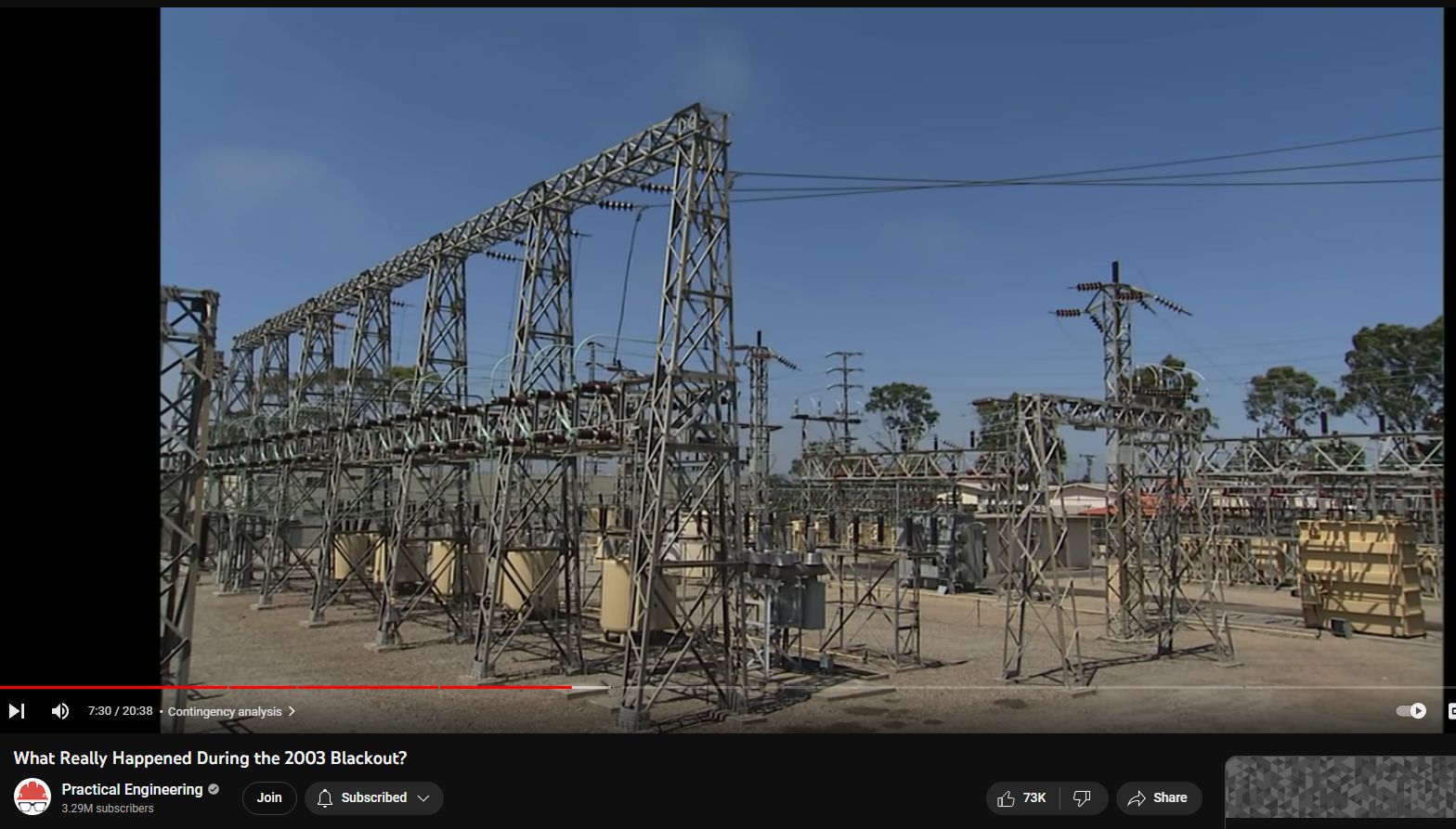
2003 Blackout Analysis Superb Edu on Power Grid
Excellent analysis and info.
“Three trees and a computer bug caused a major part of North American [power] to completely grind to a halt. If you had asked anyone working in the power industry the prior day about catastrophic loss of service the next day…”
From the comments:
—
Damn…I just remembered how amazing that outage was. A bunch of us kids in the neighborhood had sleepovers, people were just going to each other’s houses. We were playing in the streets. There was such a strange and unique coming together of humans where I was. As soon as the power came back, people started to go on about their usual business and that special moment was gone.
—
The Lift Pump Station located near Ludington, Michigan helped save the entire eastern half of the US and Canadian power grids. This facility maintained grid frequency by absorbing most of the nearly 5 GW load imbalance as the disconnects around Lake Erie engaged. The pump station filled itself to the brim, well past its safe design water surface elevation, then ran itself nearly dry, again outside of safe operating levels and at great risk of causing cavitation in the turbines to provide power afterwards. These actions helped prevent catastrophic damage cascading all the way to Denver and gave some time for other stations to reconnect. If a power station is scrammed, a rapid shutdown, and depending on its type it can take days if not weeks to get a power station back up and running. A pump station can provide nearly immediate power generation. Thank you to all of the station operators, line workers and service crews who struggled on that day, your actions and quick thinking, kept the lights on east of the Rockies and prevented a far darker outcome. Both the 2003 and the Texas outages could have been much worse if the load imbalances had been allowed to progress a few minutes or even seconds longer. The control systems in place now are night and day more robust than what was present in 2003.
—
—
—
jay152277
1 year ago